Brown Water After Water Main Break: What’s Happening in Your Pipes
You turn on the tap after a street repair and the glass fills with something the color of weak tea. Brown water after a water main break is one of the most common calls we get in Council Bluffs, and almost every time it is the same story: the work in the street changed how water moves through the pipes, and sediment that normally sits still got stirred up and carried to your faucet.
This guide covers why it happens, whether it is safe, the exact steps to clear your pipes, how to protect your water heater and laundry, and how to tell a street-side disturbance from a real plumbing problem in your home. If your issue is no water at all or water running in the street, start with our guide on what to do about a water main break or yard leak, then come back here once the water returns.
Brown water that won’t clear?
Our licensed Council Bluffs plumbers can check your side of the system today.
Call (712) 355-9187Why Water Turns Brown After a Main Break or Hydrant Flushing
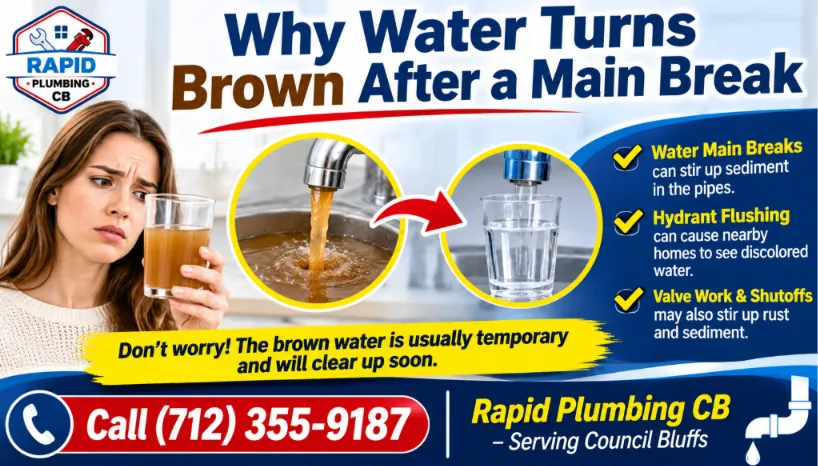
Water mains carry a thin layer of iron and mineral deposits on the inside of the pipe and a bit of settled sediment along the bottom. Under normal flow it stays put. A break, a valve closure, a hydrant being opened or a fire crew drawing heavy water changes the speed and direction of the flow, and that sudden change lifts the material into the water. When you open a tap, you are pulling that suspended material into your home.
- Water main breaks: a sudden rupture and the repair that follows reverse and surge the flow, which loosens deposits across a wide area.
- Hydrant flushing and firefighting: opening a hydrant creates a rush of water that can discolor nearby homes, and sometimes homes a few blocks away.
- Valve work and shutoffs: closing and reopening sections of main stirs the same sediment even when no pipe broke.
That is also why your neighbor may see clear water while yours is brown. If water was running in your house while the main was disturbed, discolored water entered your plumbing. Council Bluffs water is lime-softened and still finishes at roughly 9 to 10 grains per gallon of hardness, so mineral scale builds on pipe walls and in tanks over the years. You can read the numbers in our Council Bluffs water quality guide. Disturbed flow can knock some of that loose too.
Is Brown Water After a Main Break Safe to Use?
Most utilities describe this kind of discoloration as an appearance issue caused by iron and sediment rather than a health hazard, and that is consistent with what we see in the field. Even so, we recommend treating discolored water as not ready for use until it clears.
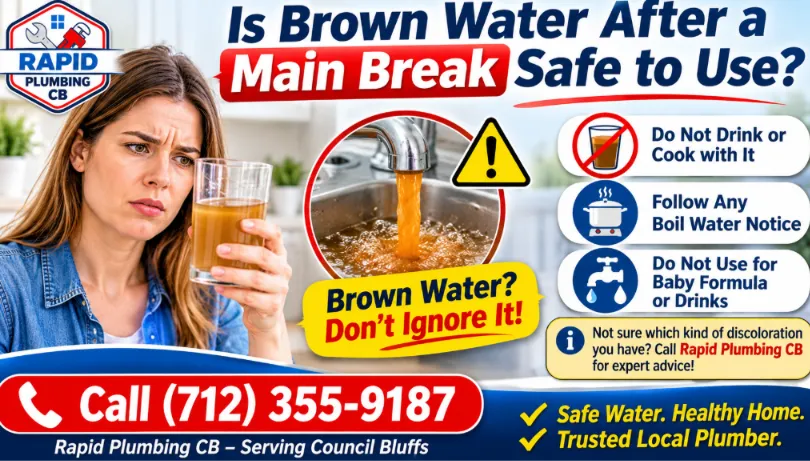
- Do not drink or cook with it while it is brown or cloudy. It tastes metallic and may carry grit.
- Follow any boil water notice. A main break can lower pressure and sometimes leads to a precautionary notice. If Council Bluffs Water Works issues one, that notice overrides any general advice. Check the Council Bluffs Water Works outage information page and its social channels for current instructions.
- Do not use it for baby formula or drinks while the tap is still discolored.
How to Clear Brown Water After a Water Main Break: Step by Step
These are the steps we walk Council Bluffs customers through. They work for brown water after main breaks, hydrant flushing and nearby construction.
- Wait until the work is done. If crews are still repairing the main or hydrants are running nearby, hold off on using water so you do not draw more discolored water into your pipes.
- Keep the hot water closed. Do not run hot taps. Hot water pulls sediment into your water heater tank.
- Run cold water from the lowest tap. A basement laundry sink, bathtub or outdoor spigot works best because gravity and flow push the sediment straight out. Let it run about 5 to 10 minutes until it clears.
- Check a clear glass. Fill a glass and hold it up to the light. If it is clear and stays clear, continue.
- Flush the remaining cold taps one at a time, kitchen and bathrooms. If a faucet runs slowly, unscrew the aerator, rinse the screen and reinstall it.
- Hold off on laundry and the dishwasher until everything runs clear, then run a first load and check it.
- Call if it does not clear. If the water is still brown after about 10 minutes of flushing or returns later, report it to Water Works at (712) 328-1006 (confirm the number on their website) and have a plumber inspect your side.
Council Bluffs Water Works also advises opening a faucet without an aerator screen, such as a tub or hose bib, when service returns after an outage, and opening it slowly so air can escape. If cloudiness is white and clears from the bottom of the glass upward, that is air, not rust. For that and more, see our main break guide.
Protect Your Water Heater, Laundry and Appliances
The tap is only part of the problem. Anything that uses water while it is brown can carry sediment into places that are harder to clean.
Your water heater
If hot water was used while the water was brown, sediment may have settled in the tank. You may notice brown hot water, popping sounds or reduced hot water afterward. A tank flush clears most of it. Our guides on how to drain a water heater and how often to flush a water heater walk through the process. If you see rust-colored hot water repeatedly, the tank or its anode rod may be corroding, and our water heater repair in Council Bluffs team can inspect it. If the heater is old, read the signs your water heater is about to fail.
Laundry
Iron can leave orange-brown stains on whites. Wait for fully clear water. If a load is stained, keep it wet and treat the stain before drying, because heat sets it.
Water softener and filters
A softener can trap iron and clog. After your water runs clear, run a regeneration or cleaning cycle as the manufacturer directs. Replace any pitcher, fridge or under-sink filter that was in use while the water was brown. If you want to improve taste and filtration long term, compare options in our reverse osmosis vs. water filter guide and our water softener installation guide.
Faucet aerators and low pressure
Fine grit often collects in aerator screens and showerheads, which makes pressure feel low even after the water clears. Cleaning them restores flow. If pressure stays weak across the whole house, see low water pressure in Council Bluffs and the pressure reducing valve guide.
Is It the City Main or Your Own Pipes?
A one-time disturbance in the street usually clears in minutes and affects several homes. A problem inside your home keeps coming back and is usually limited to your house. Use this table to tell which one you have.
| What you notice | Likely cause | What to do |
|---|---|---|
| Brown water right after street repairs or hydrant flushing, neighbors also see it, clears in minutes | Sediment stirred up in the city main | Flush the cold taps and wait. No repair needed. |
| Brown in both hot and cold, still discolored after 10 minutes of flushing | Heavy disturbance or sediment in your service line | Report it to Water Works, then call a plumber if it persists. |
| Only the hot water is brown | Sediment or corrosion in the water heater | Flush the tank. Have it inspected if it repeats. |
| Only one faucet is brown | Rust in a fixture, supply line or the aerator | Clean the aerator, then have a plumber check the fixture. |
| Brown or orange water keeps returning in an older home | Corroding galvanized or old steel pipe | Schedule a plumbing inspection and discuss repiping. |
| Brown water plus low pressure and a rising water bill | Failing service line or hidden leak | Call a plumber promptly. |
When Brown Water Points to a Bigger Plumbing Problem
Water that turns brown every time the main is disturbed, or that never fully clears, often means your home is carrying rust of its own. Older Council Bluffs homes, especially in the downtown and Old Town areas, may still have galvanized steel supply pipe, which corrodes from the inside and sheds rust whenever flow changes. Learn more in our old house plumbing guide.
- Repeated brown water in an older home is a reason to look at the pipes. Read the signs you need whole-home repiping and learn how repiping an old house without tearing out walls works. Our whole-home repiping service covers the full replacement.
- A failing service line between the meter and the house can leak and corrode. See water service line replacement and the lead service line guide for Council Bluffs.
- Hidden leaks can show up as discolored water, low pressure and wet spots. Check the signs of a hidden water leak.
If you recently bought an older house, our new homeowner plumbing checklist covers what to inspect first, and for urgent leaks or no water you can reach our Council Bluffs emergency plumber any time.
Who to Call: Water Works, the City or a Plumber
| Situation | Who to contact |
|---|---|
| Water in the street, a suspected main break, or discoloration across the neighborhood | Council Bluffs Water Works, (712) 328-1006, and the Water Works website |
| Questions about the city water supply, trustees or utilities | Board of Water Works Trustees and City Utilities |
| Street repairs, road closures and public works activity | Council Bluffs Public Works |
| Hydrant use, fire flow and water supply for fire safety | Council Bluffs Fire Department |
| Permits for water line or repiping work on your property | Building Division, and see our plumbing permit guide |
| Brown water only at your home, hot only, or one fixture | A licensed plumber. Browse our plumbing services in Council Bluffs. |
When in doubt, make both calls. Water Works can tell you whether the main was disturbed on your block, and a plumber can check everything after the meter. If you need to know who owns which pipe, our guide to Council Bluffs sewer responsibility explains the same idea on the drain side.
How to Reduce Brown Water the Next Time
- Watch for notices. Check the Water Works outage page before heavy water use if you see crews or hydrants running on your street. Do not rely on a flushing schedule from anyone but the utility.
- Pause water use during nearby work. Skip laundry, the dishwasher and long showers while crews are on your block.
- Know your main shut-off. If water pressure collapses or the water turns very dark, you can close the main valve. If it is stuck, see our shut-off valve guide.
- Flush your water heater on schedule so less sediment is waiting in the tank when the flow changes.
- Keep the plumbing in good shape before winter using our Council Bluffs weather plumbing checklist, since cold snaps are also when mains are most likely to break.
We serve homeowners across Council Bluffs, including downtown, Old Town, North Broadway, Lake Manawa and the rest of our service areas.
Brown Water After Water Main Break: FAQs
Is brown water safe to drink after a water main break?
Brown water after a main break or hydrant flushing is usually stirred-up iron and sediment rather than a health hazard, but it is not pleasant and you should not drink or cook with it until it runs clear. If Council Bluffs Water Works issues a boil water notice, follow that notice instead of any general rule.
How long does brown water last after a water main break?
In most homes it clears within several minutes of running the cold water. If it is still brown after about 10 minutes, wait and try again later rather than running water for hours. If it has not cleared by the next day, or only your house is affected, call Water Works and a plumber.
Should I run hot water to clear brown water?
No. Run cold water only until it clears. Running the hot tap pulls sediment into your water heater tank, where it settles and can cause discolored hot water for weeks.
Why is only my hot water brown?
Brown water from the hot tap only usually points to your water heater, either sediment in the tank or a corroding tank or anode rod. Flushing the tank often helps, and a plumber can check the heater if it keeps happening.
Can brown water stain my laundry?
Yes. Iron in the water can leave rust-colored stains on light clothing. Avoid washing clothes until the water is completely clear, and if a load is stained, keep it wet and treat it before drying because heat sets the stain.
When should I call a plumber about brown water?
Call a plumber if the water is brown only at your property, only on the hot side, if it keeps returning after the cold water runs clear, or if you also have low pressure. Those signs usually mean old galvanized pipe, a failing water heater or a service line problem rather than a one-time disturbance in the street main.
Need a Council Bluffs Plumber for Brown Water?
Most brown water after a main break clears on its own with a few minutes of flushing. When it does not, our team will find out whether the cause is the street, your water heater, your service line or the pipes inside your walls, and explain your options in plain language. See everything we handle on our plumbing services page.
Brown water won’t go away?
Call Rapid Plumbing CB for a fast, honest diagnosis anywhere in Council Bluffs.
Call (712) 355-9187Related Reading