Sump Pump Discharge Line Frozen Clogged: Iowa Winter Fix Guide
Your pump is running fine — the problem is everything downstream of it. When the discharge line freezes solid, a perfectly healthy pump can still flood your basement.
The Sump Pump Discharge Line Frozen Clogged is one of the more frustrating winter plumbing problems, because the pump itself often isn’t the issue at all. It’s running, it’s trying to push water out — it just has nowhere to send it. During a hard Council Bluffs cold snap, the section of pipe that carries water away from your house is exposed to freezing air far longer than the water sitting briefly inside the pump, which is exactly why this line freezes first. Here’s how to thaw one safely, clear a clog that isn’t ice-related, and stop it from happening again this winter.
Already know why this happens? This guide is the hands-on fix — how to actually thaw the line, clear it, and prevent a repeat freeze. If you want the fuller explanation of why a frozen or clogged discharge line makes a pump run nonstop, our guide on why a sump pump runs constantly covers that side of it.
Is Your Discharge Line Frozen or Just Clogged?
| Sign | Frozen | Clogged (debris) |
|---|---|---|
| Timing | Happens during or after a hard freeze | Can happen any time of year |
| Pump sound | Runs continuously, straining against the blockage | Same — runs but doesn’t clear the pit |
| Pipe feel (where accessible) | Cold to the touch, may feel solid when tapped | Normal temperature |
| Location of blockage | Usually near the exposed, above-ground exit point | Can be anywhere along the line, often at bends |
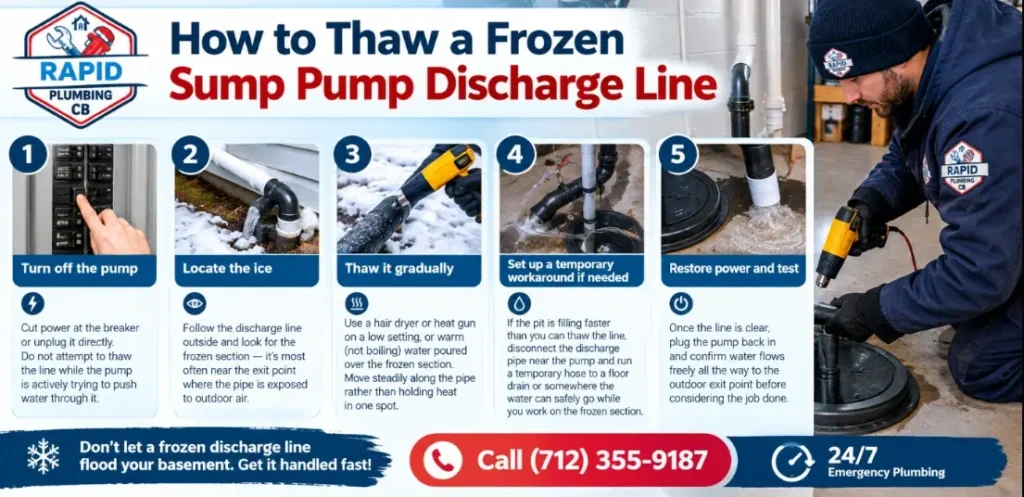
How to Thaw a Frozen Sump Pump Discharge Line
Safety first: turn off the pump at its circuit breaker or unplug it before doing anything else. Running a pump against a fully frozen line can overheat and damage the motor within minutes.
Turn off the pump
Cut power at the breaker or unplug it directly. Do not attempt to thaw the line while the pump is actively trying to push water through it.
Locate the ice
Follow the discharge line outside and look for the frozen section — it’s most often near the exit point where the pipe is fully exposed to outdoor air.
Thaw it gradually
Use a hair dryer or heat gun on a low setting, or warm (not boiling) water poured over the frozen section. Move steadily along the pipe rather than holding heat in one spot, which can warp or crack PVC.
Set up a temporary workaround if needed
If the pit is filling faster than you can thaw the line, disconnect the discharge pipe near the pump and run a temporary hose to a floor drain or somewhere the water can safely go while you work on the frozen section.
Restore power and test
Once the line is clear, plug the pump back in and confirm water flows freely all the way to the outdoor exit point before considering the job done.
Clearing a Clogged (Not Frozen) Discharge Line
If the line isn’t frozen but water still isn’t moving, the blockage is more likely leaves, dirt, or debris that worked its way in over time — often settling at a bend or elbow joint rather than a straight section. With the pump unplugged, disconnect the line at the nearest accessible joint and check for visible debris. A plumbing snake or a garden hose run backward through the pipe can often clear it. If the clog is deep in a buried section, that’s usually the point to bring in a professional with the right equipment rather than digging up the yard.
Preventing It From Happening Again This Winter
- Fix the slope. The discharge line should be angled so it fully drains between pump cycles — standing water left in the pipe is what actually freezes, not moving water.
- Add a freeze-relief fitting. A small coupling installed near the foundation gives water an escape route if the far end of the line ices over, preventing pressure buildup and backflow into the pit.
- Insulate exposed sections. Foam pipe insulation or heat tape on any above-ground portion of the line meaningfully reduces freeze risk during Iowa’s coldest stretches.
- Bury the line below the frost line. Where possible, running the pipe underground below typical frost depth protects it far better than leaving it exposed.
- Route the outlet properly. The discharge should exit at least 10 feet from the foundation onto ground that slopes away — a line that dumps water right against the house just refreezes the same water it’s trying to get rid of.
Why This Matters More in Council Bluffs Winters
Iowa and Nebraska winters bring the kind of sudden hard freezes that catch discharge lines off guard, especially on homes where the line runs along an exterior wall or across open ground with little natural windbreak. A pump that’s been quietly working all winter can go from fine to frozen-solid in a single overnight cold snap. The National Weather Service’s Omaha/Valley office issues advance cold-snap and winter storm warnings for the metro — worth checking before a hard freeze rolls in, since a line that’s already insulated and properly sloped beforehand rarely needs a mid-winter thaw at all. Our broader guide to preparing your plumbing for Iowa and Nebraska winters covers the rest of the house; this page is specifically about the one component that tends to get overlooked in a general winterizing checklist.
When to Call a Plumber
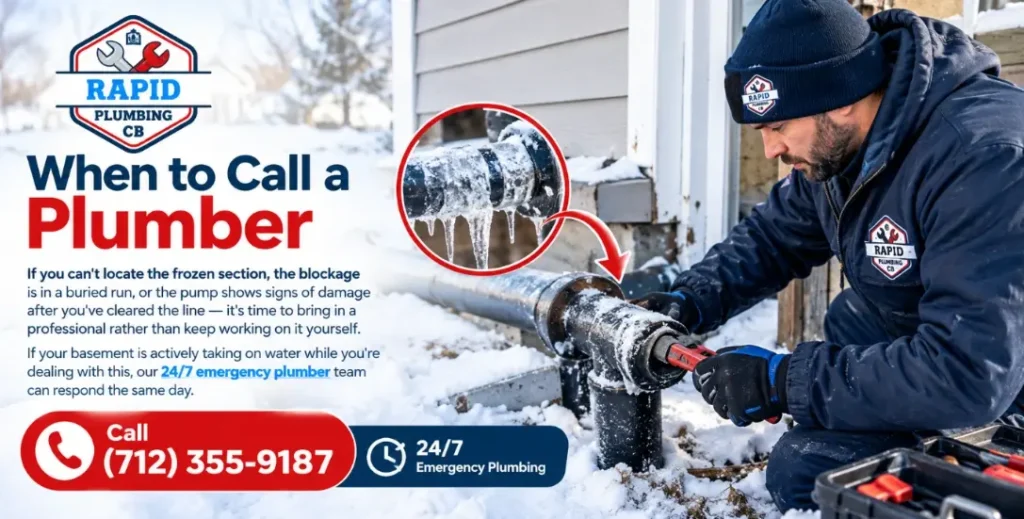
If you can’t locate the frozen section, the blockage is in a buried run you can’t easily access, or the pump shows signs of damage after you’ve cleared the line — grinding, unusual noise, or failing to build normal pressure — it’s time to bring in a professional rather than keep working on it yourself. If your basement is actively taking on water while you’re dealing with this, our 24/7 emergency plumber team can respond the same day.
Why Choose Rapid Plumbing CB
We carry the right tools to thaw a stubborn line fast and fix the routing so it doesn’t freeze again next cold snap — not just a one-time patch. If the discharge issue turns out to be a symptom of a bigger problem, our sump pump troubleshooting guide covers other mechanical causes, and our sump pump repair and installation team handles everything from a quick thaw-and-reroute to a full discharge line replacement.
Frequently Asked Questions
How do I know if my sump pump discharge line is frozen?
The pump runs but the pit doesn’t drain, and the pipe outside feels unusually cold or solid when tapped, especially right after a hard freeze. It’s the same basic symptom as a clog, but tied to recent cold weather rather than happening year-round.
Is it safe to pour hot water on a frozen discharge line?
Warm water is fine; boiling water risks cracking PVC pipe from thermal shock, especially in already-cold conditions. A hair dryer or heat gun on low is a safer, more controlled option for most of the line.
Can I prevent my discharge line from freezing every winter?
Yes — proper slope so the line fully drains, insulation or heat tape on exposed sections, and burying what you can below the frost line address the root causes rather than requiring a thaw every cold snap.
What happens if I ignore a frozen discharge line?
The pump keeps running against the blockage, which can overheat and burn out the motor, while water backs up in the pit with nowhere to go — eventually rising into the basement.
How far should my sump pump discharge line extend from the house?
At least 10 feet, onto ground that slopes away from the foundation. A shorter run, or one that empties into a low spot near the house, tends to refreeze the same water and can eventually flow back toward the foundation.
Discharge Line Frozen Right Now?
Fast response before it backs up into your basement — licensed local plumbers, available 24/7 across Council Bluffs, IA.
Call (712) 355-9187