Water Heater Anode Rod Council Bluffs: What It Does and When to Replace It
If you own a tank-style water heater in Council Bluffs, the water heater anode rod is one of the most overlooked parts of your system. Most homeowners only think about it when the hot water starts smelling like rotten eggs or the tank begins to leak. Checking it on schedule can add years to the life of your water heater.
Not sure if your Council Bluffs water heater anode rod is worn out? Our team can check it during a service visit.
Call (712) 355-9187Water Heater Anode Rod Council Bluffs: What It Does
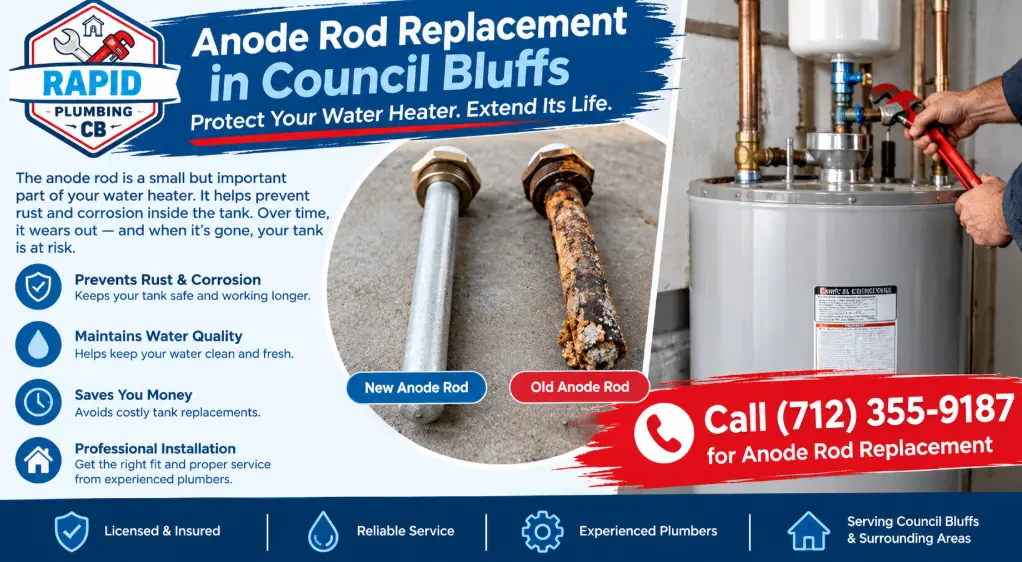
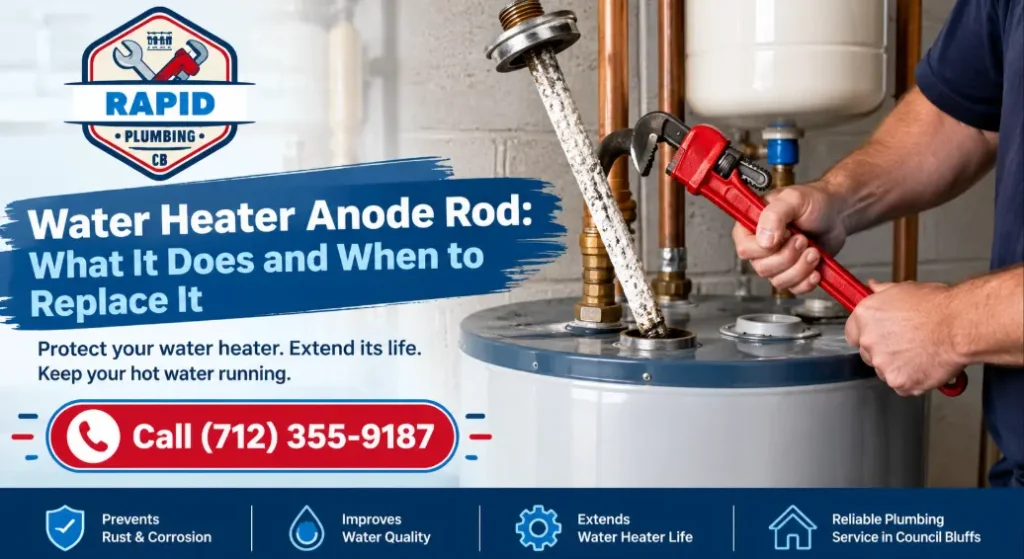
A water heater anode rod is a long metal rod that hangs inside the tank, usually made of magnesium, aluminum, or an aluminum-zinc blend wrapped around a steel core wire. It is a sacrificial anode rod, which means it corrodes on purpose. Water is a mild electrolyte, so the steel body of the tank would slowly rust without something else to react first. The anode rod gives up its own metal so the tank does not have to.
Because the rod is used up by design, it is a wear item. It does not last forever. How fast it wears depends on your water, the size of your tank, and how much hot water your household uses. Once the rod is gone, the tank has no protection left, and corrosion can start on the inside walls.
If you are still learning how your tank works, our guide to signs your water heater is about to fail is a good place to compare symptoms.
Signs Your Council Bluffs Water Heater Anode Rod Is Worn Out
The water heater anode rod rarely gives a clear warning, but a few symptoms point toward it:
- Hot water that smells like sulfur or rotten eggs, while cold water does not
- Rust-colored or cloudy hot water coming from the tap
- A tank that is failing years before its expected service life
- A rod that is visibly thin or has exposed steel wire when you inspect it
The rotten egg smell usually comes from bacteria reacting with a magnesium rod. A plumber may suggest switching to an aluminum-zinc rod or a powered anode to solve the odor. Rust-colored water can also come from the tank or the pipes, so it is worth having a professional confirm the source before you assume the anode rod is the cause.
Water Heater Anode Rod Council Bluffs: How Often to Replace It
Many anode rods last about three to five years, but that is only a starting point. A safe habit is to check the rod every two to three years, and sooner if your water is hard or your tank is already several years old.
As a common rule of thumb, replace the rod when more than about six inches of the steel core wire is exposed, or when the rod has thinned to a small fraction of its original diameter. A rod in that condition offers little or no protection, so waiting longer only shifts the cost onto the tank.
Quick version: check the water heater anode rod every two to three years, and replace it when the core wire is exposed or the rod is badly thinned.
Does Hard Water Use Up an Anode Rod Faster in Council Bluffs?
If your water is hard, you have probably already seen white scale on faucets, showerheads, or the inside of kettles. Hard water affects a water heater in two ways. Minerals settle on the bottom of the tank as sediment, which lowers efficiency and is handled by flushing. Water chemistry also changes how quickly the sacrificial anode rod is used up, so the rod on one home can last much longer or much shorter than the rod on the next.
That is why we recommend inspecting the rod rather than replacing it on a fixed date alone. For the water side of the picture, read our Council Bluffs water quality guide, and if scale is a constant problem, our notes on water softener options in Council Bluffs explain the trade-offs.
How to Check Your Water Heater Anode Rod
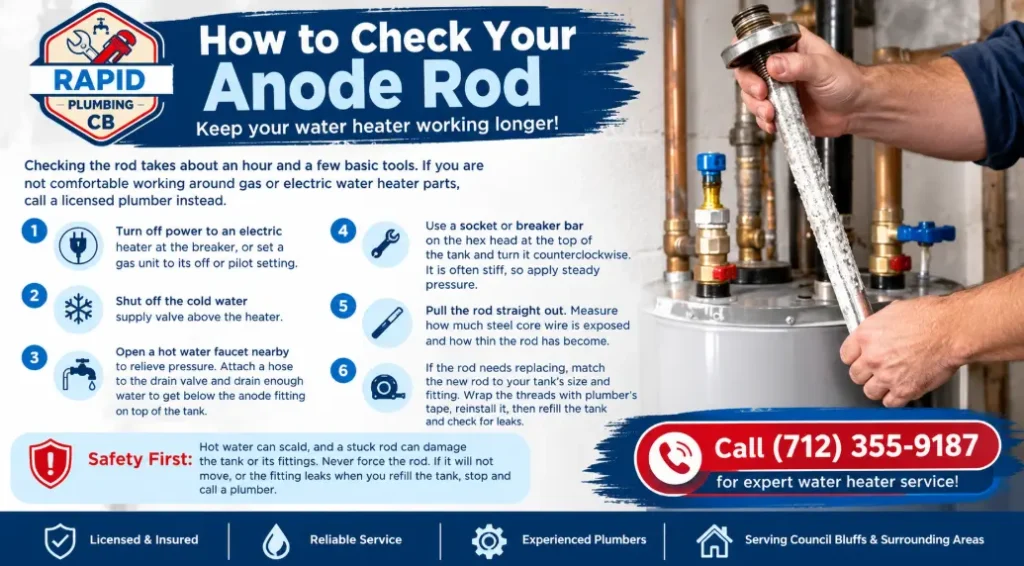
Checking the rod takes about an hour and a few basic tools. If you are not comfortable working around gas or electric water heater parts, call a licensed plumber instead.
- Turn off power to an electric heater at the breaker, or set a gas unit to its off or pilot setting.
- Shut off the cold water supply valve above the heater.
- Open a hot water faucet nearby to relieve pressure. Attach a hose to the drain valve and drain enough water to get below the anode fitting on top of the tank.
- Use a socket or breaker bar on the hex head at the top of the tank and turn it counterclockwise. It is often stiff, so apply steady pressure.
- Pull the rod straight out. Measure how much steel core wire is exposed and how thin the rod has become.
- If the rod needs replacing, match the new rod to your tank’s size and fitting. Wrap the threads with plumber’s tape, reinstall it, then refill the tank and check the fitting for leaks before restoring power or gas.
Safety first: hot water can scald, and a stuck rod can damage the tank or its fittings. Never force the rod. If it will not move, or the fitting leaks when you refill the tank, stop and call a plumber.
Water Heater Anode Rod Replacement in Council Bluffs
A professional water heater anode rod replacement is usually quicker and safer than the DIY route, especially when the rod is stuck. Rapid Plumbing CB can inspect the rod during a service visit and tell you whether it needs replacing or whether the tank itself is nearing the end of its life. If the tank is old or failing, our team can also walk you through water heater replacement options. For broader help, see our water heater repair in Council Bluffs page.
Permit requirements for water heater work are set by the City of Council Bluffs, so confirm the current rules with the City of Council Bluffs Building Division before any work begins. Our own water heater permit guide covers what homeowners usually need to know.
Water Heater Anode Rod vs. Flushing: Why Council Bluffs Homes Need Both
Flushing clears sediment from the bottom of the tank, while the water heater anode rod protects the metal from the inside. One does not replace the other, so a complete maintenance routine covers both. If you have not flushed the tank in a while, start with our guide to how often to flush a water heater in Council Bluffs, then check the anode rod at the same visit.
Tankless units generally do not use an anode rod, so this guide is written for tank-style water heaters. If you are weighing a switch, see our page on the tankless water heater option.
Frequently Asked Questions About the Water Heater Anode Rod Council Bluffs
How long does a water heater anode rod last in Council Bluffs?
Many anode rods last three to five years. Water chemistry and how much hot water your household uses both change the timeline, so checking the rod every two to three years is a safe habit.
Can I replace an anode rod without draining the whole tank?
Often you only need to drain enough water to get below the anode fitting on top of the tank. Some homeowners drain the full tank because it is easier. A stuck rod is a good reason to call a professional.
What does a bad water heater anode rod smell like?
A worn anode rod can cause hot water to smell like sulfur or rotten eggs while cold water smells normal. Other problems can cause a similar odor, so a plumber should confirm the cause.
Do all water heaters have an anode rod?
Most tank-style water heaters have one. Tankless water heaters generally do not.
Ready to find out if your Council Bluffs water heater needs attention? Call Rapid Plumbing CB today.
Call (712) 355-9187For more help across the home, you can also browse our water heater services, read about a water heater leaking from the bottom, or review water heater repair cost in Council Bluffs before you call. We serve homes across the city, from the neighborhoods we serve across Council Bluffs to the downtown area. If you have a question about your tank, contact our team and we will help you decide on the next step.