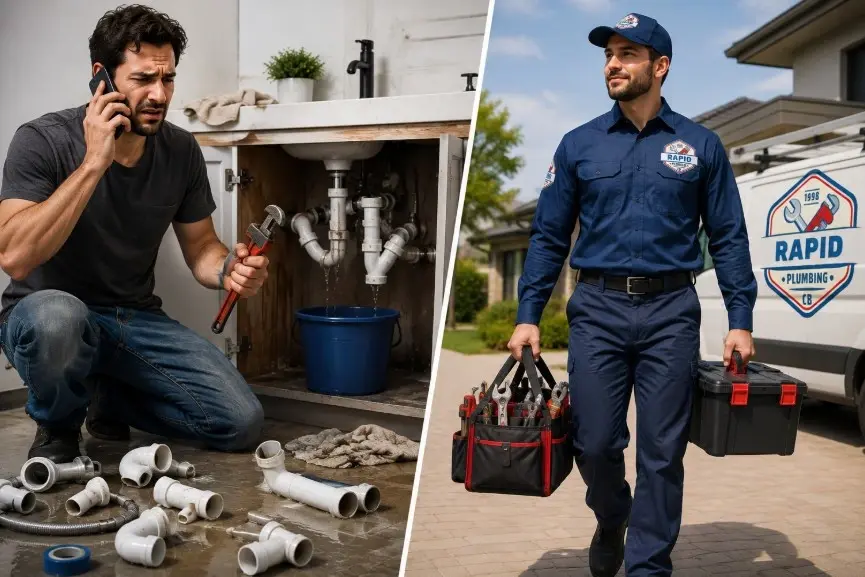
Every homeowner eventually stands over a dripping faucet or a slow drain wondering the same thing: is this a quick fix, or is it time to call a plumber? Knowing when to call a plumber vs DIY is one of the most valuable skills a homeowner can develop — the wrong call in either direction can mean an unnecessary service fee, or a small problem turning into a expensive, code-violating mess behind your walls.
When to Call a Plumber Instead of Fixing It Yourself
The real question isn’t effort — it’s risk. Some plumbing problems are small, visible, and isolated, and a confident homeowner with basic tools can handle them safely. Others involve pressure, gas, wastewater, hidden piping, or code compliance, where a mistake doesn’t just cost you a repair — it can cost you your safety, your home, or a failed inspection down the road. Here are the situations where calling a licensed plumber is the right call.
1. Burst or Rapidly Leaking Pipes
A burst pipe is a plumbing emergency, full stop. Shutting off your home’s main water valve can slow the damage temporarily, but the pipe itself needs a licensed plumber to repair or replace correctly — a rushed DIY patch job is unlikely to hold under pressure and often leads to a repeat failure.
2. Gas Line Smells or Suspected Gas Leaks
If you smell gas or hear a hissing sound near a gas appliance or line, leave the home immediately and contact your gas utility or emergency services from a safe distance — do not attempt to locate or repair the leak yourself, and do not operate any light switches or electronics on your way out.
Source: U.S. Consumer Product Safety Commission (CPSC)
Gas line work should always be handled by a licensed professional, both for safety and because most jurisdictions require it to be permitted and inspected.
3. Sewer Backups or Wastewater Exposure
A backed-up sewer line isn’t just unpleasant — it’s a health hazard, potentially exposing your home to bacteria and contaminants. This is never a DIY project; it requires professional equipment to clear safely and, often, a camera inspection to identify the underlying cause.
4. No Hot Water or Water Heater Malfunctions
Water heater issues frequently involve gas connections, high-pressure components, or electrical wiring, all of which carry real safety risk if handled incorrectly. A plumber can also tell you quickly whether the unit needs a simple repair or a full replacement — something that’s difficult to diagnose accurately without experience.
5. Recurring or Multiple-Fixture Clogs
A single slow drain might respond to a plunger. But if the problem keeps coming back, or if several fixtures throughout the house are draining slowly at the same time, that points to a deeper issue in your main line — one that store-bought tools generally can’t reach or diagnose.
6. Low Water Pressure Throughout the Home
Weak pressure at one faucet might just need cleaning. Weak pressure across the entire house often signals a leak, a failing pressure regulator, or a partially blocked main line — issues that require diagnostic tools most homeowners don’t have on hand.
7. Any Repair That Requires a Permit
Water heater replacements, gas line work, sewer line repairs, and most new plumbing installations require a permit and inspection in Council Bluffs. Skipping that process — even for a repair you’re capable of doing yourself — can create problems later when you sell your home or file an insurance claim. You can review current requirements through the City of Council Bluffs Building Division.
Dealing with one of these situations right now? Don’t take the risk — call a licensed pro.
Call (712) 355-9187 NowSafe DIY Plumbing Fixes You Can Handle Yourself
Not every plumbing issue needs a professional. These common tasks are generally safe for a homeowner with basic tools and a bit of patience:
- Plunging a clogged toilet or sink
- Replacing a worn toilet flapper or fill valve
- Clearing hair from a shower or tub drain with a simple drain snake
- Replacing a faucet aerator or showerhead
- Hand-tightening a slightly loose supply line fitting (then checking for leaks)
As long as the problem is visible, easily accessible, and doesn’t involve pressure, gas, wastewater, or hidden piping, a DIY fix is usually reasonable.
Common DIY Mistakes That Turn Into Bigger, Costlier Repairs
Even well-intentioned DIY repairs can backfire. Over-tightening fittings is one of the most common mistakes — it’s tempting to think tighter means more secure, but overtightening can strip threads, crack fittings, or warp seals, creating a leak where there wasn’t one before. Improper sealing, mismatched parts, and temporary “quick fixes” can also lead to slow leaks inside walls that go unnoticed for months, quietly causing water damage the whole time.
Already attempted a fix that isn’t holding? Let’s get it done right the first time.
Request Your Free EstimateDIY vs. Professional Plumber: A Quick Comparison
| Factor | DIY Fix | Call a Plumber |
|---|---|---|
| Visibility | Problem is visible and accessible | Hidden behind walls, under floors, or underground |
| Systems involved | No gas, pressure, or wastewater exposure | Gas lines, sewer lines, or pressurized systems |
| Frequency | First occurrence | Recurring or affecting multiple fixtures |
| Permits | Not required | Required (water heaters, gas work, repiping) |
If you’re unsure which category your situation falls into, it’s worth getting a professional opinion before you start. The Federal Trade Commission’s guidance on hiring a contractor recommends getting a written estimate and understanding the full scope of work before committing to any repair — the same principle applies whether you’re deciding between DIY and professional help, or between two competing quotes.
Source: Federal Trade Commission — Hiring a Contractor · License verification: Iowa Plumbing and Mechanical Systems Board
Still not sure which category your problem falls into? Send us a quick description and we’ll tell you straight.
Get a Same-Day QuoteWhy Homeowners Trust Rapid Plumbing CB With the Bigger Jobs
At Rapid Plumbing CB, we’d rather give you an honest answer than an unnecessary bill — if something is genuinely a simple DIY fix, we’ll tell you. But when it’s time to call a plumber, our licensed, local team handles it correctly, permitted and up to code, the first time. Learn more about our team on our About page.
Frequently Asked Questions
When should I call a plumber instead of fixing it myself?
Call a plumber for burst pipes, gas leaks, sewer backups, water heater malfunctions, recurring or multi-fixture clogs, low water pressure throughout the home, and any repair that requires a permit.
What plumbing repairs are safe to DIY?
Plunging a clogged toilet or sink, replacing a toilet flapper, clearing a simple hair clog from a shower drain, replacing a faucet aerator or showerhead, and hand-tightening a slightly loose fitting are generally safe for most homeowners to handle themselves.
What should I do if I smell gas in my home?
Leave the home immediately without operating any light switches or electronics, and contact your gas utility or 911 from a safe distance. Never attempt to locate or repair a suspected gas leak yourself.
Can a DIY plumbing mistake make a problem worse?
Yes. Over-tightening fittings, using mismatched parts, or applying temporary fixes can create new leaks or hidden damage that costs more to repair later than if a plumber had handled it the first time.
Related Reading
- The Benefits of Hiring a Local Plumber in Council Bluffs, IA — why local expertise matters once you’ve decided it’s time to call a pro.
- 7 Signs of a Hidden Water Leak in Your Home — hidden leaks are a clear example of a problem that’s not DIY-friendly.
- How Much Does Drain Cleaning Cost in Council Bluffs? — see what fair pricing looks like once you’ve decided to call a plumber.
- Residential vs. Commercial Plumbers: What’s the Difference? — DIY is rarely an option in commercial settings; here’s why.
- 5 Signs Your Water Heater Is About to Fail — a good example of a problem best left to a licensed professional.
- Tankless vs. Traditional Water Heaters: Which Is Right for Your Home? — installation is never a safe DIY project, so it’s worth planning ahead.
- How to Prepare Your Plumbing for Iowa & Nebraska Winters — a burst pipe is never a DIY repair; here’s how to avoid one.
- What to Ask Before Hiring a Plumber in Council Bluffs — vet your plumber with the right questions before any of this work begins.
Not sure if it’s a DIY job? Ask us before you start.
Contact Rapid Plumbing CB Today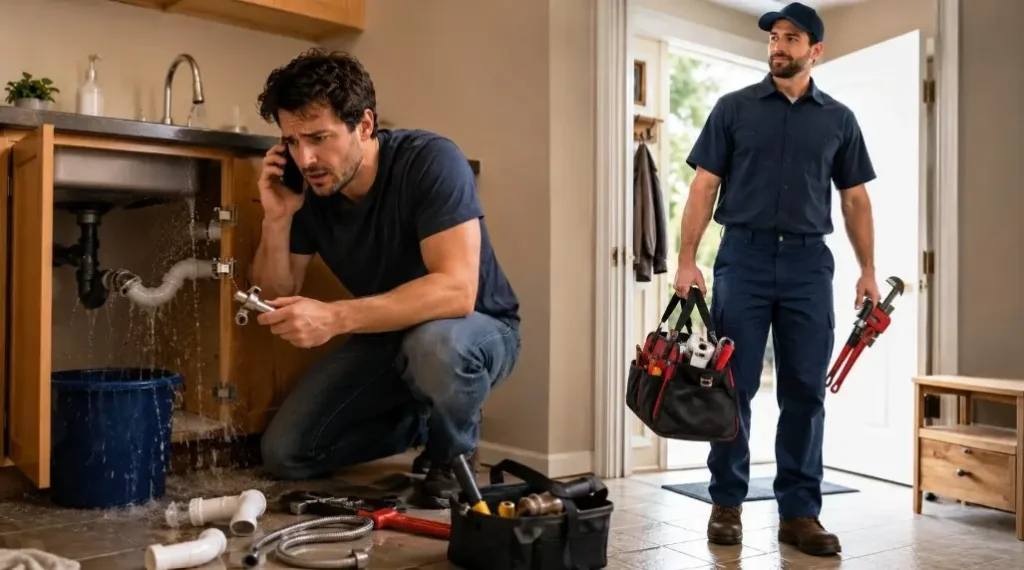
All Blog Posts
- What to Ask Before Hiring a Plumber in Council Bluffs
- How to Prepare Your Plumbing for Iowa & Nebraska Winters
- Tankless vs. Traditional Water Heaters: Which Is Right for Your Home?
- When to Call a Plumber Instead of Fixing It Yourself
- 5 Signs Your Water Heater Is About to Fail
- Residential vs. Commercial Plumbers: What’s the Difference?
- How Much Does Drain Cleaning Cost in Council Bluffs?
- 7 Signs of a Hidden Water Leak in Your Home
- The Benefits of Hiring a Local Plumber in Council Bluffs, IA