Do You Need a Crawl Space Sump Pump Council Bluffs? Guide
If your crawl space smells musty, feels damp, or has ever had standing water after a storm, you’re not imagining it — and you’re not alone in Council Bluffs.
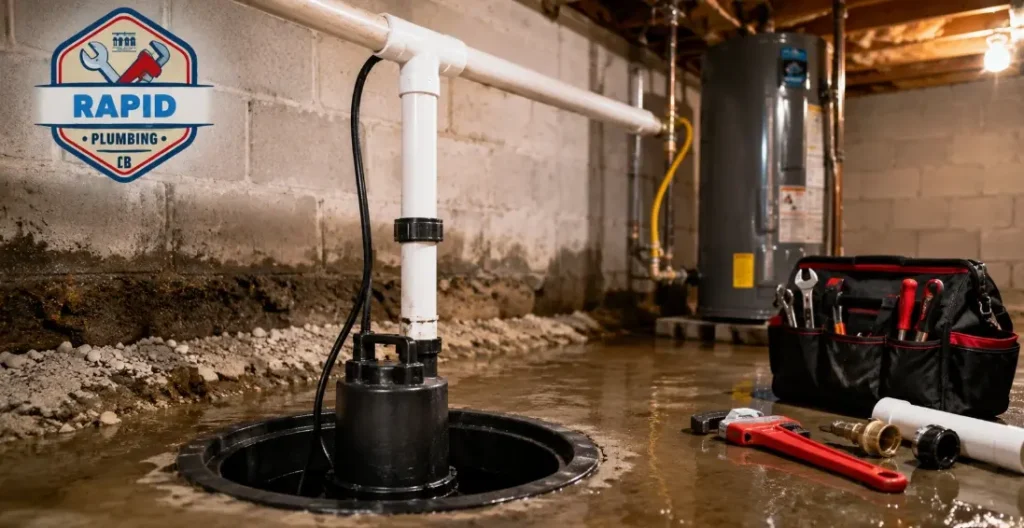
A crawl space is easy to ignore — until it isn’t. It’s the one part of the house most homeowners never actually look at, which is exactly why water damage down there tends to go unnoticed until it’s already affecting the floors, the air quality, or the framing above it. If you’ve caught a whiff of something musty near a floor vent, or you’ve peeked under the house after a heavy rain and seen standing water, you’re probably asking the same question a lot of Council Bluffs homeowners eventually ask: do I actually need a crawl space sump pump, or am I overreacting?
Crawl Space Sump Pump: The Short Answer
If your crawl space regularly collects standing water, stays damp long after it rains, or smells musty even in dry weather, the answer is almost always yes — a properly installed crawl space sump pump is the most reliable way to keep groundwater from sitting under your home. Not every crawl space needs one; homes on higher ground with good exterior grading and functioning gutters sometimes handle surface water fine on their own. But once water is actually reaching the crawl space floor, gutters and grading alone usually aren’t enough to solve it.
Quick gut-check: if you can smell your crawl space from inside the house, or you’ve ever seen a flashlight beam reflect off standing water under there, that’s your answer — it’s time to talk to a plumber, not wait for it to dry out on its own.
Signs Your Crawl Space Needs a Sump Pump
Some of these show up all at once after a storm. Others creep in slowly enough that homeowners live with them for a season or two before connecting the dots.
Any one of these on its own might be worth just monitoring. Two or more together — especially standing water plus a musty smell — is usually enough reason to get it looked at before the next heavy rain.
Why Council Bluffs Crawl Spaces Are Especially Prone to Water
A lot of homes throughout Council Bluffs — particularly in older neighborhoods and areas closer to the Missouri River bottomland — sit on clay-heavy soil that’s common across Pottawattamie County. Clay doesn’t drain the way sandier soil does; instead of water moving down and away from the foundation, it tends to spread out and pool, which is exactly the setup that turns a crawl space damp instead of dry. Homes near Lake Manawa and other lower-lying pockets of the city tend to see this more than homes on higher ground, especially during spring snowmelt or a string of heavy spring storms.
It’s also worth knowing that a lot of homes with crawl spaces here are older builds that were never designed with today’s grading standards or vapor barriers in mind — which is part of why a sump pump ends up doing work that better site drainage might have handled decades ago.
Crawl Space vs. Basement Sump Pumps: What’s Different
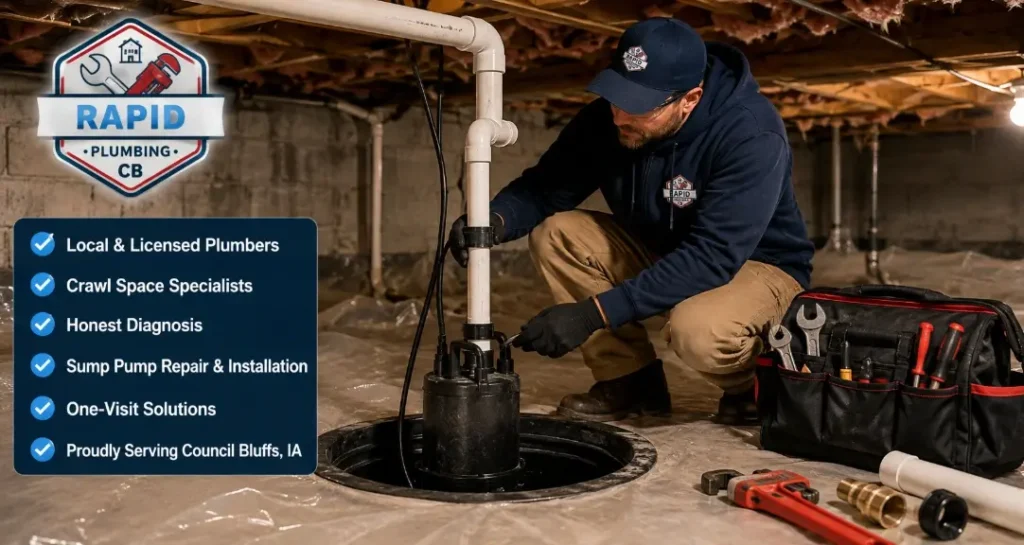
A crawl space sump pump isn’t just a smaller version of a basement pump — the whole setup is different because of how little room there usually is to work with.
- Vertical float switch, not a tethered one. Basement pumps often use a float that swings on a cable, which needs room to move freely. Crawl space basins are usually too tight for that, so a vertical float — one that rides straight up and down a narrow rod — is the more reliable choice.
- Smaller basin, faster cycling. Crawl space pits are typically shallower and narrower than a basement sump pit, which means the pump cycles on and off more frequently rather than holding a large reserve of water.
- Clearance matters. In an 18–24 inch crawl space, a tall pedestal pump with an exposed motor often won’t physically fit — a low-profile submersible unit is usually the only realistic option.
- Discharge routing is trickier. The line has to run through a tight, often uneven space and still end up 10–20 feet from the foundation outside, which sometimes takes more planning than a basement discharge line does.
This is one of the more common mistakes homeowners run into with a DIY crawl space sump pump kit: buying hardware designed for a basement pit and then fighting the clearance and float-switch problems that come with trying to force it into a crawl space instead.
What a Crawl Space Sump Pump System Costs
Pricing depends heavily on access. A crawl space with 3+ feet of clearance and an existing basin is a straightforward job; a tight, muddy 18-inch space with no existing drainage is a different project entirely.
| Scope | Typical Cost Range |
|---|---|
| Pump swap into an existing crawl space basin | $400 – $900 |
| New basin + submersible pump, decent access | $1,000 – $2,500 |
| Full system with interior French drain + pump | $2,500 – $5,000+ |
| Add battery backup | +$600 – $2,000 |
These ranges track close to what homeowners nationally report for crawl space work, and Council Bluffs pricing generally falls within that same band. If you already have a sump pump elsewhere in the home — say, a basement unit that’s aging out — our sump pump installation cost guide breaks down basement-specific pricing in more detail, and our sump pump replacement cost guide covers what it looks like when an existing unit needs to be swapped rather than newly installed.
A pump alone is often a partial fix. If water is actively flowing in from multiple directions rather than just collecting in one low spot, a pump paired with a perimeter drain does a better job of actually solving the problem than a pump by itself.
Should You Pair It With a Vapor Barrier or French Drain?
A sump pump handles water that’s already arrived. A vapor barrier and interior French drain address two different parts of the same problem, and most professionals treat all three as a system rather than separate purchases:
- Interior French drain — a perforated pipe running along the crawl space perimeter, surrounded by gravel, that channels groundwater to the sump basin before it has a chance to spread across the floor.
- Vapor barrier — heavy plastic sheeting laid across the crawl space floor (and often partway up the walls) that stops ground moisture from evaporating up into the space and, eventually, your home’s air.
- Sump pump — the piece that actually removes the water the drain collects, rather than letting it accumulate.
Installing a vapor barrier over a crawl space that still has an active water problem tends to trap that moisture rather than fix it — which is why sorting out drainage first, then encapsulating, is usually the right order of operations.
DIY Crawl Space Sump Pump Kits: Worth the Risk?
Retail crawl space sump pump kits exist, and for a homeowner comfortable working in a tight, damp space, installing one isn’t impossible. But a few things make this a job where a mistake is expensive to undo: the pump sits near standing water and runs on electricity, the check valve has to be installed correctly or water will just flow back into the pit, and the discharge line needs the right pitch and distance from the foundation to actually work. Our breakdown of licensed vs. unlicensed plumber risks covers why electrical work near water is one of the areas where a shortcut can cost far more than it saves.
Council Bluffs Drainage & Permit Considerations
How your crawl space handles water is tied to the same citywide drainage system that affects basements and yards throughout Council Bluffs. The city’s Engineering Division reviews grading plans and works alongside the Storm Water Management program to manage runoff citywide — which is part of why some streets and neighborhoods deal with crawl space and basement water more than others nearby. A new sump system, an added battery backup, or any change to how your discharge line connects to the outside of your home may require a permit through the Building Division; we handle that coordination as part of every installation so you’re not left figuring it out on your own.
Why Choose Rapid Plumbing CB for Crawl Space Sump Pump Service
We diagnose the actual water source before recommending a pump, a drain, or both — not the other way around. Our licensed plumbers work in crawl spaces across Council Bluffs regularly, including the tighter, older builds near Downtown and North Broadway where access is rarely straightforward. If your basement has sump pump questions too, our sump pump repair and installation team handles both under one visit.
Frequently Asked Questions
How do I know if my crawl space actually needs a sump pump?
Standing water after rain, a musty smell that reaches your living space, or visible water stains on the foundation walls are the clearest signs. If gutters and grading changes haven’t solved it, a sump pump is usually the next step.
How much does a crawl space sump pump cost in Council Bluffs?
A pump swap into an existing basin typically runs $400–$900. A new system with a basin and submersible pump is usually $1,000–$2,500, and a full system with an interior French drain can run $2,500–$5,000 or more depending on access and crawl space size.
Can I install a crawl space sump pump myself?
It’s possible for an experienced DIYer, but the electrical work near standing water, the check valve installation, and discharge line routing are all places where a mistake gets expensive fast. Most Council Bluffs homeowners have a licensed plumber handle it.
Do I need a vapor barrier if I already have a crawl space sump pump?
They solve different problems — the pump removes water that’s already collected, while a vapor barrier stops ground moisture from evaporating into the space. Most professionals recommend both, installed in that order, for a truly dry crawl space.
Do I need a permit for a crawl space sump pump in Council Bluffs?
A straightforward pump installation often doesn’t require one, but adding a battery backup or changing your exterior discharge line connection may. We confirm this with the city’s Building Division as part of every quote.
Not Sure What Your Crawl Space Needs?
Free inspection, honest recommendation, licensed local plumbers — available 24/7 across Council Bluffs, IA.
Call (712) 355-9187