Why Draining Your Water Heater Actually Matters
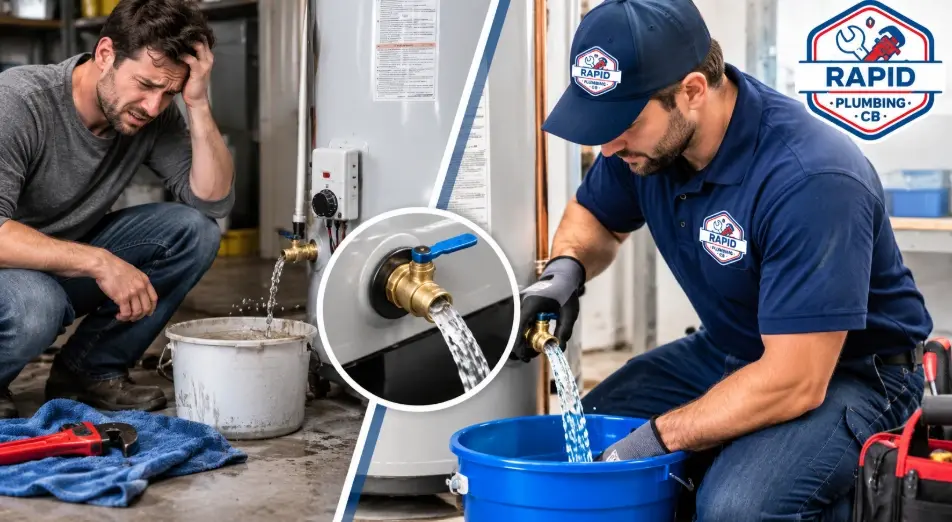
Most Council Bluffs homeowners never think about their water heater until the shower runs lukewarm or the tank starts making a popping or rumbling sound. Both of those are usually pointing to the same culprit: sediment. Minerals in the water supply settle to the bottom of the tank over months and years, insulating the burner or heating element from the water above it and slowly eating into how much hot water you actually get. Knowing how to drain a water heater — and how to drain a hot water heater the safe way — is one of the few pieces of home maintenance that genuinely pays for itself, extending the life of the unit and keeping your hot water running the way it should.
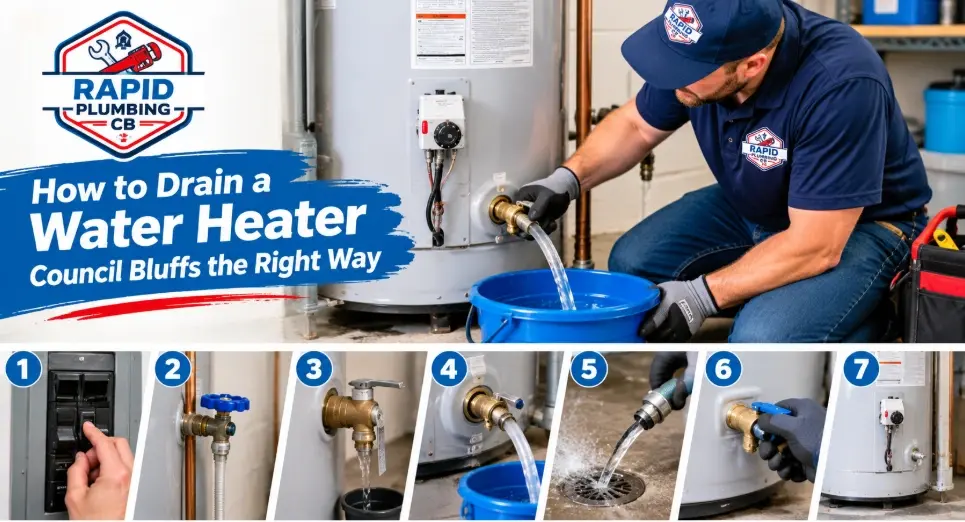
How to Drain a Water Heater Council Bluffs the Right Way (Step by Step)
These steps apply whether you’re learning how to drain a water heater or specifically how to drain a hot water heater with a standard storage tank — the process is the same either way.
- Turn off the power. Switch off the breaker for an electric water heater, or turn the gas control to “pilot” for a gas unit. Never drain a tank that’s still actively heating — an empty tank with the power still on can permanently damage the heating element.
- Let the water cool. Give the tank a couple of hours to cool if you’ve used hot water recently, or turn off the cold water supply valve above the tank and run a hot faucet for a few minutes to relieve pressure and cool things down faster.
- Check the pressure-relief valve first. Lift the lever briefly and listen for a release of air or a bit of water. If nothing happens, the valve may be stuck or failed — worth flagging before you go further, since this valve is what keeps the tank from over-pressurizing.
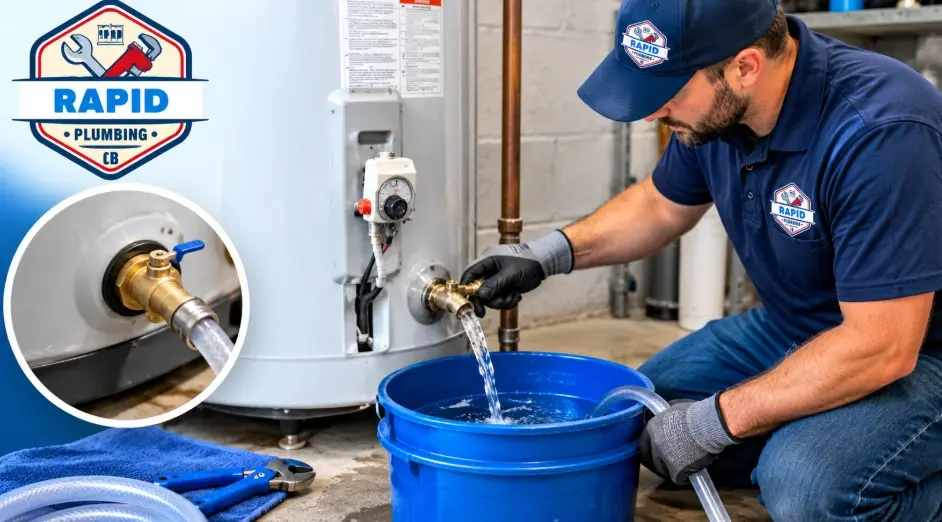
- Connect a hose to the drain valve. Attach a standard garden hose to the drain valve near the bottom of the tank and run it to a floor drain, tub, or outside.
- Open a hot water faucet in the house to let air into the system so the tank drains properly, then open the drain valve.
- Let it drain completely, then briefly open the cold water supply in short bursts to stir up and flush out any remaining sediment, repeating until the water runs clear.
- Close everything back up in reverse order — drain valve, then supply valve, then let the tank refill before turning the power back on.
If your water heater hasn’t been drained in three years or more, sediment may be built up enough that draining it now could actually cause a clog or a slow leak in an aging drain valve. If it’s been that long, it’s worth having a plumber handle the first flush rather than risk it yourself.
Low Hot Water Output? Sediment Might Be the Reason
If your water heater isn’t producing enough hot water the way it used to, sediment buildup is one of the most common — and most overlooked — causes. As sediment accumulates at the bottom of the tank, it takes up space that used to hold hot water and acts as an insulating layer between the burner and the water itself, meaning the unit works harder for a smaller usable hot water supply. Other common causes of reduced hot water include a failing heating element, a thermostat set too low, or a unit that’s simply undersized for your household’s demand. If a drain-and-flush doesn’t restore your hot water output, that’s usually a sign of one of these other issues — our signs your water heater is about to fail guide walks through what else to look for.
Understanding Your Water Heater’s Pressure-Relief Valve
The pressure-relief valve (sometimes called a T&P valve) is a small but important safety part sitting near the top of the tank. It’s designed to open automatically if pressure or temperature inside the tank climbs too high, preventing a dangerous buildup. Test it once a year by lifting the lever for a second and confirming water or air is released, then letting it snap back. If it doesn’t reseat properly, drips continuously afterward, or doesn’t respond at all, that’s a repair that shouldn’t wait — a relief valve is one of the few water heater components we’d always recommend having a licensed plumber replace rather than DIYing.
When to Call a Plumber Instead of Draining It Yourself
- The drain valve won’t open, or water stops flowing partway through
- The tank hasn’t been drained in 3+ years and you’re worried about the valve failing
- The pressure-relief valve doesn’t respond when tested
- Water still isn’t hot enough after a full drain and flush
- You hear popping, rumbling, or cracking sounds during heating — a sign of heavy sediment buildup already affecting the tank
Council Bluffs’ water carries enough hardness that we generally recommend flushing every six months to a year rather than waiting the full manufacturer-suggested interval — if you’re not sure it’s ever been done, that’s a good reason to have it inspected. For repair costs if a flush reveals a bigger issue, our water heater repair cost guide breaks down what to expect, and pairing a softener with regular flushing cuts sediment buildup dramatically — see our water softener guide for details.
Council Bluffs Water Quality & Utility Resources
Frequently Asked Questions
How to Drain a Water Heater Council Bluffs?
Most manufacturers recommend once a year. In Council Bluffs, where water hardness contributes to faster sediment buildup, flushing every six months to a year is a safer target, especially if you’ve noticed reduced hot water or popping sounds.
How do I drain a hot water heater safely?
Turn off the power and let the tank cool, test the pressure-relief valve, attach a hose to the drain valve, open a hot faucet in the house to let air in, then open the drain valve and let it empty fully before flushing with short bursts of cold water until it runs clear.
Why is my hot water heater not producing enough hot water?
Sediment buildup is the most common cause — it insulates the heating element and takes up tank space. Other causes include a failing heating element, a low thermostat setting, or a unit that’s undersized for your household.
Is it safe to drain a water heater myself?
For most homeowners, yes, as long as the power is off and the tank has cooled. If it hasn’t been drained in several years, or the drain valve or relief valve seems stuck, it’s safer to have a plumber handle it to avoid damaging an aging part.
What happens if I never drain my water heater?
Sediment keeps building up, reducing hot water capacity, straining the heating element, and shortening the unit’s overall lifespan — often leading to an earlier-than-necessary replacement.