Sewer Smell in Bathroom Council Bluffs: Why It Happens
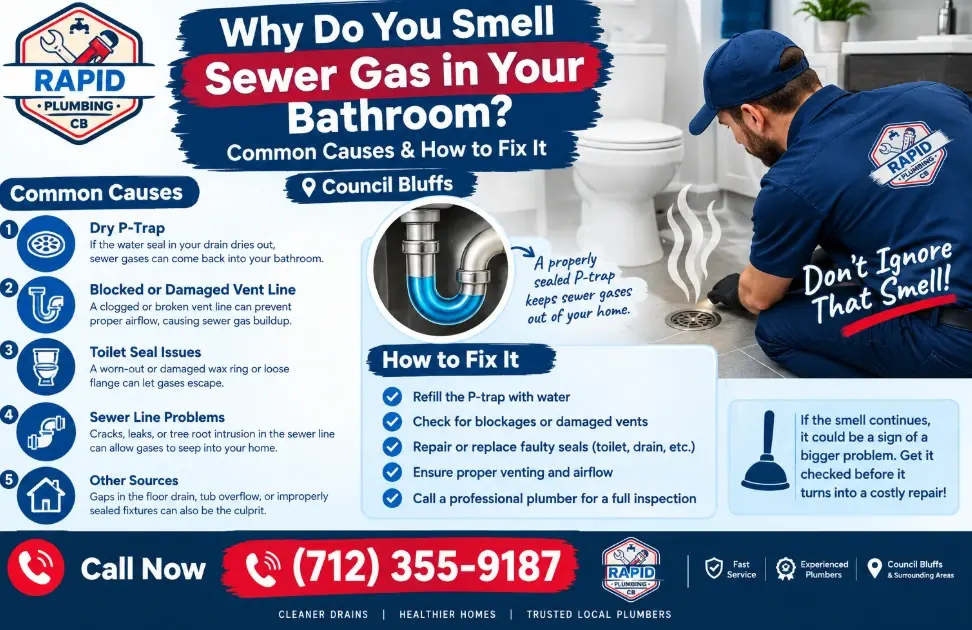
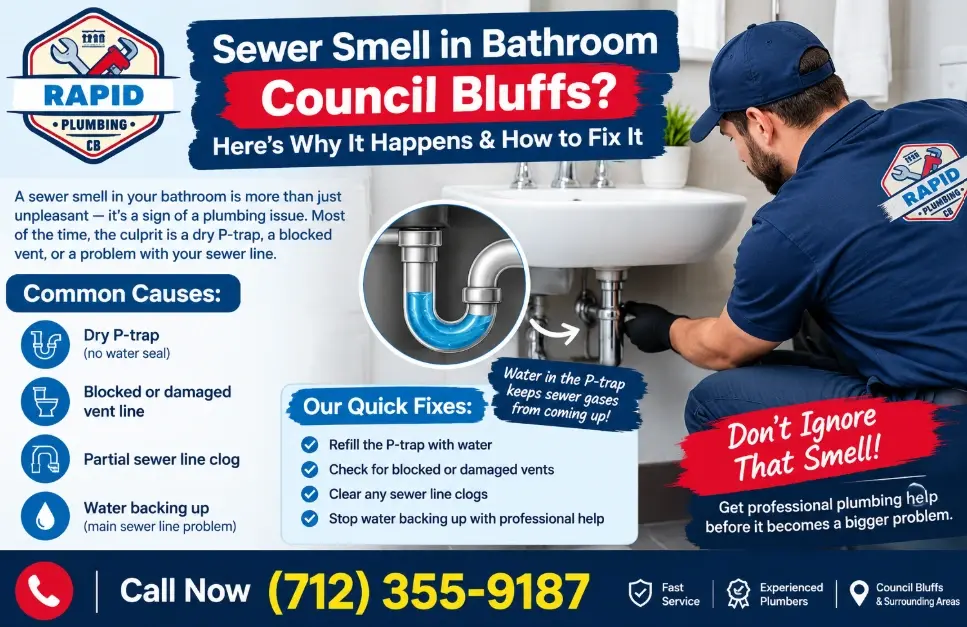
A sewer smell in bathroom Council Bluffs homeowners notice almost always means sewer gas is getting past a barrier that should be blocking it. Most of the time the culprit is simple: a dry P-trap, a toilet that is no longer sealed to the floor, or a blocked plumbing vent. Less often, it points to a damaged or backed-up sewer line. The fix depends entirely on where the smell is strongest, so this guide walks you through a smell-location check you can do in about ten minutes.
- Smell at one sink, tub or floor drain only: dry or damaged P-trap (the easiest fix).
- Smell around the base of the toilet: failed wax ring or loose toilet flange.
- Smell plus gurgling in several fixtures: clogged vent or a partial sewer line blockage.
- Smell plus water backing up, or in the basement floor drain: main sewer line problem. Stop using water and call a plumber.
Is It Sewer Gas or a Natural Gas Leak?
Do this check first. Sewer gas smells like rotten eggs, sulfur or raw sewage, and so does the odorant added to natural gas. If you cannot tell the difference, or the smell is strong everywhere in the house, treat it as a gas leak: do not flip switches or use a lighter, walk outside, and call 911 or your gas utility from there. Our guide on what a gas leak smells like explains the warning signs in detail.
If the odor is only near drains and fixtures, and it is musty or sulfur-like rather than sharp and gassy, you are most likely dealing with sewer gas. Water that smells like sulfur coming out of the tap is a different issue, covered in why your water smells like sulfur.
Find the Source: Sewer Smell Triage by Location
Plumbing odors are easier to solve when you stop guessing and start narrowing. Walk through the bathroom, sniff each spot, and match what you find to the table below.
| Where the smell is strongest | Most likely cause | DIY or pro? |
|---|---|---|
| One sink drain or tub drain | Dry P-trap, or buildup in the drain and overflow | Usually DIY |
| Bathroom floor drain or basement floor drain | Evaporated trap seal, or a backed-up line | DIY first, pro if it returns |
| Base of the toilet | Failed wax ring or loose flange | Pro recommended |
| Whole bathroom, with gurgling | Blocked or damaged plumbing vent | Pro |
| Several fixtures plus slow drains | Partial sewer line clog or roots | Pro |
| Behind a wall or under the floor | Cracked drain pipe or loose fitting | Pro (camera inspection) |
Cause 1: A Dry P-Trap (The Most Common Culprit)
Every sink, shower and tub drain has a curved section of pipe called a P-trap. It holds a small plug of water that blocks sewer gas from rising into the room. When a drain goes unused, that water slowly evaporates and the barrier disappears. Guest bathrooms and basement showers are the usual offenders, and dry winter air from a running furnace speeds the process up here in Iowa.
How to confirm it: run water in the suspect drain for 30 seconds. If the smell fades within the hour, the trap was dry.
How to fix it: refill the trap, then repeat once a month for rarely used drains. If the smell comes back within a day or two even after refilling, the trap may be leaking, cracked or poorly installed. That is a repair, not a maintenance task.
Quick test: is the P-trap really the problem?
- Find the drain where the smell is strongest and sniff it, then sniff the rest of the room.
- Run warm water down that drain for 30 to 60 seconds to refill the trap.
- Wait about an hour with the door closed, then smell again.
- If the odor is gone, schedule a monthly refill. If it returns, move on to the toilet seal and vent checks below.
A slow shower or tub drain can cause its own smell from decomposing hair and soap film, even when the trap is full. Our walkthrough on how to unclog a shower drain covers that case, and our drain cleaning service handles stubborn buildup.
Cause 2: A Failed Toilet Wax Ring or Loose Flange
A wax ring seals the toilet to the drain flange in the floor. When it fails, sewer gas leaks out around the base, often with no visible water. Other clues include a toilet that rocks slightly, a stained or soft patch of floor near the base, or a smell that gets worse after flushing.
Replacing a wax ring means pulling the toilet, so it is worth having it done right the first time. A bad reseal can leave you with both odors and slow floor damage. If your toilet also runs, clogs or leaks, see our overview of common toilet problems in Council Bluffs or book professional toilet repair.
Cause 3: A Clogged or Damaged Plumbing Vent
Your drain lines are vented through the roof so air can enter behind draining water. When a vent is blocked by leaves, nests, snow or ice, the system can pull water out of traps and push gas into the house. The telltale sign is gurgling drains along with a smell. We cover this in depth in our guide to a clogged plumbing vent in Council Bluffs, so we will keep it brief here.
Cause 4: A Main Sewer Line Problem
When the smell appears in multiple fixtures, drains are slow everywhere, or the basement floor drain starts to smell or bubble, the main line is a suspect. Common causes include tree roots, a bellied (sagging) pipe, grease and debris buildup, or a cracked section of pipe. Older neighborhoods with clay or cast iron lines are especially prone, and our post on old house plumbing in Council Bluffs explains what to expect from aging pipes.
The right approach is to see inside the pipe instead of guessing. A sewer camera inspection shows roots, breaks and low spots, and you can read how tree roots get into sewer lines to see why they keep coming back. Once the problem is located, our sewer line repair team can fix it, and trenchless pipe lining can avoid tearing up your yard in the right cases. For budgeting, see sewer line repair cost in Council Bluffs.
Cause 5: Other Sources People Overlook
Not every sewer-like smell comes from the sewer. These are worth ruling out before you call for service:
- Sump pump pit: an open or poorly sealed pit can release a sewage-like odor into a basement bathroom. See sump pump smell causes and fixes and what a sump pump pit is.
- Bacterial film in drains and overflows: sticky buildup inside the overflow opening of a sink or tub can smell exactly like sewage.
- Septic systems: if your property is not on city sewer, a full tank can cause odors. Learn about sewage tank pumping in Council Bluffs.
- Unused fixtures in rentals or vacation spaces: if you are a tenant or landlord, our Council Bluffs rental plumbing guide covers who handles what.
Is Sewer Gas in the Bathroom Dangerous?
Sewer gas is a mix of gases, including hydrogen sulfide and methane. Low-level exposure can cause headaches, nausea and irritated eyes or throat, and high concentrations can be dangerous, especially in enclosed spaces. A faint smell from a dry trap is mostly a nuisance, but a persistent or strong odor should not be left alone, and air fresheners only mask it. Anyone with breathing problems, small children and pets are more sensitive, so ventilate the room and get it diagnosed promptly. If you feel dizzy, sick or short of breath, leave the home and get fresh air.
What to Do Right Now (Before the Plumber Arrives)
- Open windows and run the bathroom exhaust fan to move air out.
- Refill every drain trap in the house, including floor drains and rarely used tubs.
- Check the toilet for rocking and look for stains or moisture around the base.
- Stop using water and call a plumber if you see backups or hear gurgling in multiple fixtures.
- Do not pour bleach or drain cleaner into the drain and do not use open flames or sprays near a suspected gas smell.
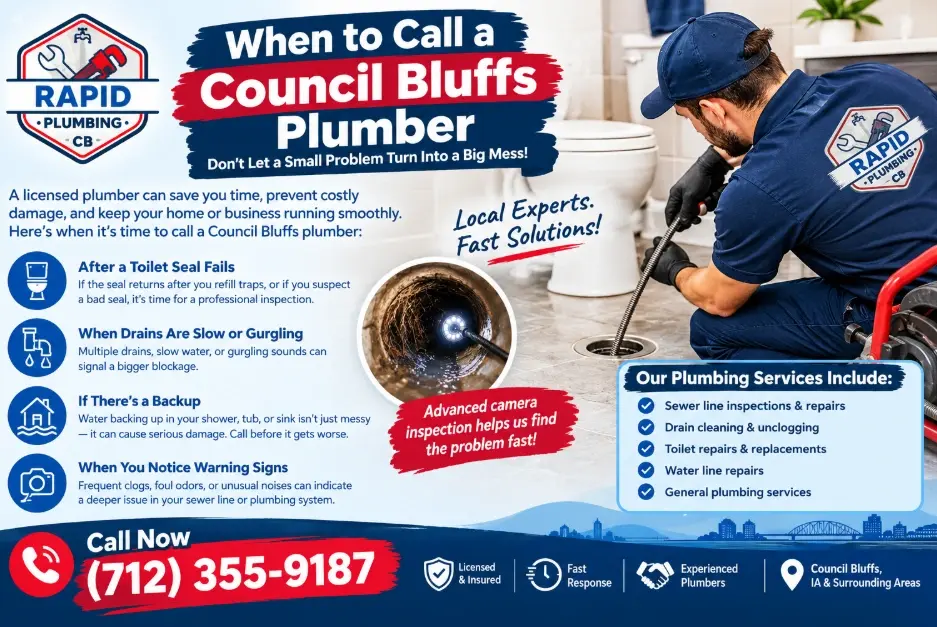
When to Call a Council Bluffs Plumber
Call a licensed plumber if the smell returns after you refill traps, if you suspect a bad toilet seal, if multiple drains are slow or gurgling, or if there is any sign of a backup. Persistent odors usually mean something behind the wall or underground, and a camera inspection can find it faster than trial and error. Local knowledge matters too: Missouri Valley soils, freezing winters and older homes in areas like Old Town and Downtown Council Bluffs all affect how pipes age.
Not sure who is responsible for a sewer problem on your property? The Council Bluffs sewer responsibility guide explains where your pipe ends and the city’s begins. For city-level questions about sewer mains or service in your area, you can also contact the City of Council Bluffs, and for general environmental and wastewater information, visit the Iowa Department of Natural Resources.
How to Prevent Sewer Smells in the Future
- Run water in unused sinks, tubs and floor drains once a month.
- Clean the overflow opening and pop-up stopper regularly to prevent bacterial film.
- Keep roof vents clear of debris and check them after storms and heavy snow.
- Avoid flushing wipes, grease and other items that cause clogs and encourage roots.
- Schedule inspections for older lines. Use our Council Bluffs weather plumbing checklist as a seasonal reminder.
- Know the cost of waiting: see drain cleaning cost in Council Bluffs for typical ranges.
Sewer Smell in the Bathroom: Frequently Asked Questions
Why does my bathroom smell like sewage but the drains work fine?
Drains can flow normally while gas still escapes through a dry trap, a failed wax ring, a blocked vent or a small crack in a pipe. A smell with no clog is a sign that a barrier has failed, not that the line is open and healthy.
Why does my bathroom sink smell like sewer?
The usual causes are a dry or leaking P-trap, bacterial buildup inside the overflow opening, or a vent problem. Refill the trap, clean the overflow and stopper, and call a plumber if the smell returns.
Why does my toilet smell like sewer?
If the odor is at the base, the wax ring or flange is the likely cause. If the smell comes from inside the bowl and you also hear gurgling, check for a venting or drain line issue.
Why does my bathroom smell worse at night or when I shower?
Running water and warm air can push trapped gas out of a weak seal, and a closed, quiet house makes odors easier to notice. It may also point to a shower trap that has dried out or a partial clog.
Can a dry P-trap cause a sewer smell?
Yes. It is the most common cause. Without the water seal, sewer gas can rise freely out of the drain. Running water for 30 to 60 seconds usually restores the seal.
Can I fix a sewer smell in the bathroom myself?
You can refill traps, clean overflows and ventilate the room. Toilet resealing, vent repairs and anything involving the sewer line are best left to a licensed plumber.
Who is responsible for the sewer line at my Council Bluffs home?
Generally, the property owner maintains the private line up to the connection point, while the city handles the main. Read our sewer responsibility guide for details.
Get the Smell Diagnosed, Not Masked
Air fresheners and candles will not solve a sewer smell in the bathroom. Once you know whether it is a trap, a toilet seal, a vent or the sewer line, the repair is usually straightforward. If you have refilled your traps and the odor is still there, our team can track it down.