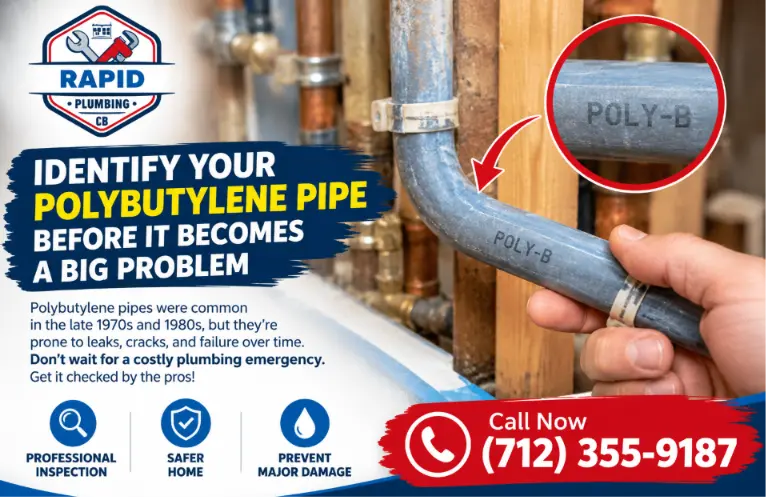
If you own a home built between roughly 1978 and 1995, there is a good chance it has a gray plastic water line you may never have noticed. That pipe is polybutylene, often called poly-B, and polybutylene pipe identification is the first step to understanding whether your plumbing needs attention. In this guide, we explain how to spot it, what failure looks like, and what to do next.
Not sure what kind of pipe is behind your walls? Our plumbers can check it for you.
Call (712) 355-9187What Is Polybutylene Pipe and Why Does It Matter?
Polybutylene pipe was a flexible plastic water supply line used in many homes built from the late 1970s through the mid-1990s. It was used because it cost less than copper and went in faster. Over time, it has become one of the most failure-prone plumbing materials in American homes.
Poly-B is used only for water supply lines. It is not used for drains, waste, or vent pipes. When it fails, the problem usually starts as a small leak at a joint or a pinhole in the pipe, and it tends to get worse over time.
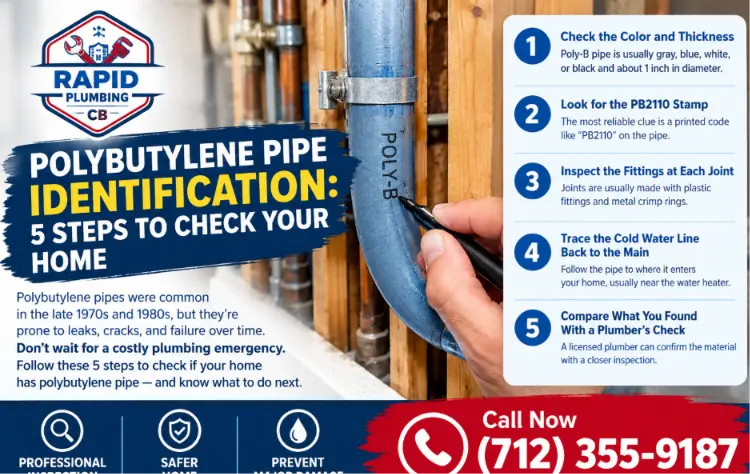
Polybutylene Pipe Identification: 5 Steps to Check Your Home
You do not need special tools to start a polybutylene pipe identification check. A flashlight and a few minutes in the basement or utility room are enough. Work through these five checks in order.
1. Check the Color and Thickness
Most poly-B pipe is gray, but it also appears in silver, blue, white, or black. It is usually about half an inch to one inch across. PEX, a newer plastic pipe that is also common in homes, is typically brighter (white, blue, or red) and easier to coil. A dull gray plastic line is a stronger sign of poly-B.
2. Look for the PB2110 Stamp
The most reliable clue is a printed code. Poly-B pipe is commonly stamped PB2110, often with the names “PB” or “Qest.” Stamps fade, so run your light slowly along the pipe. Check the lines near the water heater, under sinks, and along exposed runs in the basement or crawl space.
3. Inspect the Fittings at Each Joint
Poly-B joints are usually made with plastic fittings held in place by metal crimp rings. Many of the leaks people report happen at these joints, not in the middle of the pipe. If you see crimped rings on gray plastic lines, that combination is a strong sign you are looking at polybutylene.
4. Trace the Cold Water Line Back to the Main
Start at the water heater and follow the cold water line toward where the water enters the house. Poly-B pipe is often found in this part of the system. Know where your main water shut-off valve is before you start, and if it does not turn easily, do not force it.
5. Compare What You Found With a Plumber’s Check
If you find gray plastic pipe but cannot find a stamp, take clear photos of the pipe, the fittings, and any stains. A licensed plumber can confirm the material with a closer inspection, which is faster and safer than guessing from behind a wall.
Quick comparison: poly-B vs. PEX
- Poly-B is usually dull gray (other colors exist) and often stamped PB2110.
- PEX is usually bright white, blue, or red and is more coilable.
- Color alone is not proof. Only a stamp or a plumber’s inspection confirms the material.
Common Polybutylene Pipe Signs to Watch For
Finding poly-B is one thing. Knowing whether it is already failing is more important. Watch for these polybutylene pipe signs:
- Drips or pinhole leaks at fittings, especially near the water main
- Damp spots, bubbling paint, or stains on ceilings, walls, or floors near water lines
- Water pressure that drops without a clear cause
- The same leak coming back after a repair
- Chalky, flaky, or brittle-looking areas on the pipe or around joints
One leak does not always mean the whole system is failing. But repeated leaks in the same area usually mean the pipe is wearing out. If you are also seeing low water pressure in Council Bluffs homes, get the whole system checked, not only the leak you can see.
Why Polybutylene Pipe Fails
The most common cause of poly-B failure is chlorine in the municipal water supply. Over years, chlorine breaks down the inside of the pipe. The inner wall shrinks, the outer wall takes on more stress, and small leaks slowly grow. Age and poor installation, including improperly crimped fittings, also contribute.
Failures are often reported closest to the water main, where the pipe enters the house. A leak near that entry point deserves quick attention. If a leak seems to come from underneath a slab or the service area, our guide to slab leak repair explains what to ask about.
Poly-B also has a legal history. Major class action lawsuits in the 1990s led to settlements with a combined value above $1 billion. Those settlements have since expired, so for most homeowners today, the repair cost falls on the homeowner.
What to Do If You Find Polybutylene Pipe
Finding poly-B does not mean you have an emergency. It does mean you should plan. Here is a practical order of steps:
- Document it. Take photos of the stamp, the fittings, the pipe’s location, and any stains or leaks.
- Get a full inspection. A plumber should check the whole system, not only the spot where you noticed a problem.
- Decide between repair and replacement. A single small leak can often be repaired. If the pipe is aging across the house, whole-home repiping is the long-term fix. Our guide on the signs you need whole-home repiping can help you judge timing.
- Check permit and code requirements. The City of Council Bluffs adopts the 2024 Uniform Plumbing Code as the state plumbing code. Plumbing work typically needs proper permits and inspections. You can read the City of Council Bluffs Building Code Information page or contact the Council Bluffs Building Division at 209 Pearl St. For background on local rules, see our Council Bluffs plumbing permit guide and our overview of plumbing code requirements in Iowa.
If your home is in The Heights or another older part of town, see our plumbing services in The Heights page. For more on older houses in general, see our article on plumbing in older Council Bluffs homes.
Frequently Asked Questions About Polybutylene Pipe
Is all gray plastic pipe polybutylene?
No. Other plastics can be gray too, which is why the stamp matters more than color. A plumber can confirm the material if the stamp is hard to read.
Can I tell polybutylene from PEX without a stamp?
Color helps. PEX is usually brighter and easier to coil. But color alone is not proof, so an inspection is the safest way to be sure.
Does polybutylene pipe need to be replaced right away?
Not always. If there are no leaks, the pipe may last for some time. But once leaks start, or the pipe runs throughout the house, replacement is the lasting fix. Ask a plumber to assess the condition of your system.
Can I fix a poly-B leak myself?
Turning off the water and documenting the leak is a smart first step. Repairs should be done by a licensed plumber, especially because the pipe may be failing in other places you cannot see.
Get a clear answer about your pipes.
Call Rapid Plumbing CB for a plumbing check, repair estimate, or repiping consultation.
Call (712) 355-9187Sources and local resources
- Modern Castle: Polybutylene pipes guide (installation years, markings, failure causes, and settlement history)
- City of Council Bluffs: Building Code Information (state plumbing code adoption)
- City of Council Bluffs: Building Division (permits and inspections)