
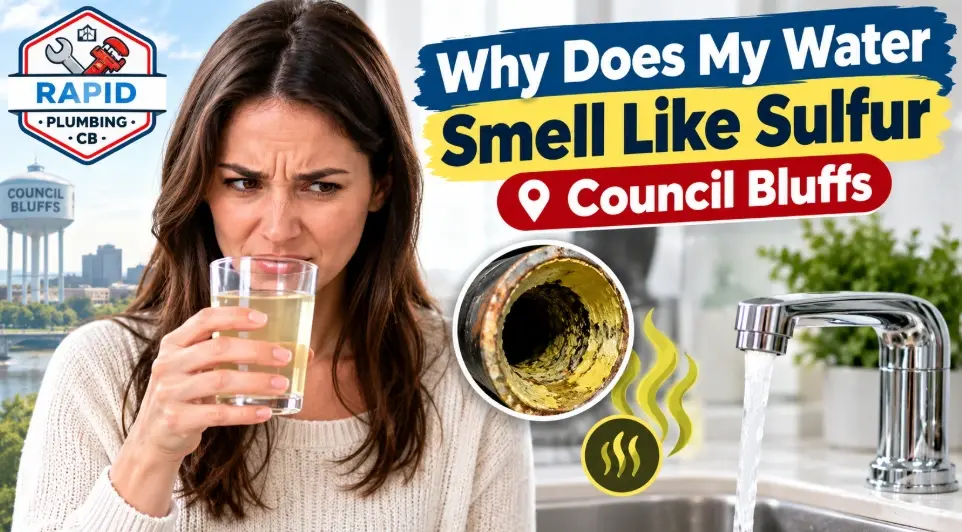
Why Does My Water Smell Like Sulfur Council Bluffs ? The Short Answer for Council Bluffs Homes
If you’ve turned on a faucet in your Council Bluffs home and been hit with a rotten-egg smell, you’re not imagining it — and you’re not alone. That odor almost always comes down to one culprit: hydrogen sulfide gas, produced either by sulfur-reducing bacteria in your water supply or by a chemical reaction happening quietly inside your water heater. The good news is that Why Does My Water Smell Like Sulfur Council Bluffs is one of the most fixable water-quality complaints we run into as Council Bluffs plumbers — once you know where the smell is coming from, the fix is usually straightforward.
This guide walks through what actually causes sulfur-smelling water in this area, how to tell whether the problem is in your well, your city water line, or your water heater, whether it’s safe to keep using, and what a real fix looks like.
What Causes That Rotten-Egg Smell in Council Bluffs Water
Hydrogen sulfide (H₂S) gas is the compound behind almost every “sulfur” or “rotten egg” water complaint. It forms in a handful of specific situations, and Council Bluffs homes can run into any of them depending on whether the house is on city water or a private well.
Hydrogen Sulfide Gas and Sulfur Bacteria
Sulfur-reducing bacteria occur naturally in groundwater, soil, and decaying organic matter. When they’re present in a well or in stagnant sections of plumbing, they produce hydrogen sulfide as a byproduct. It doesn’t take much — concentrations under 1 part per million are enough for the smell to be obvious the moment you turn on the tap.
Well Water Smell in Council Bluffs vs. City Water
Most homes inside Council Bluffs proper are served by treated municipal water, which is chlorinated specifically to control the bacteria that cause this odor. If your home draws from a private well — more common on the outskirts of Pottawattamie County — you don’t have that chlorine barrier, which is why well water smell in Council Bluffs tends to show up more often and more persistently on well systems than on city supply. If city water in your home smells like sulfur, the cause is far more likely to be inside your own plumbing than in the municipal supply itself.
Your Water Heater’s Anode Rod
This is the single most common cause we find on service calls, and it explains why the smell often shows up only in hot water. Most tank water heaters contain a magnesium anode rod designed to corrode instead of your tank. When that rod reacts with naturally occurring sulfates in the water, it can generate hydrogen sulfide gas right inside the tank — even on city water that has no odor at the source. If your water only smells bad when the hot tap is running, this is almost always where to look first. It’s also worth knowing that a tankless water heater doesn’t have a sacrificial anode rod sitting in standing water the same way, so homes that make the switch typically stop having this specific problem.
Hot Water Only vs. Both Hot and Cold: How to Narrow Down the Cause
Before calling anyone, run this quick test — it’s the same first step our technicians use:
- Smell only in hot water? The anode rod reacting inside your water heater tank is the likely cause.
- Smell in both hot and cold, strongest right when you turn on the tap? Points to sulfur bacteria in a well, pressure tank, or a section of plumbing where water sits stagnant.
- Smell only at one fixture? Usually isolated to that drain trap or fixture, not a whole-house water quality issue.
- Smell constant across every fixture, hot and cold, and doesn’t fade after running the water? Worth having the water tested — this pattern is less common and deserves a closer look.
Is Sulfur-Smelling Water Safe to Drink?
In most cases, yes — hydrogen sulfide at the low concentrations that cause the smell is not considered a health hazard, and it’s more of a nuisance than a danger. That said, “usually fine” isn’t the same as “confirmed fine.” If the odor is new, strong, or paired with a taste change, cloudiness, or staining on fixtures, it’s worth having the water tested rather than assuming. On a private well, we’d also recommend testing for coliform bacteria at the same time, since a sudden change in well water can occasionally point to something beyond sulfur bacteria alone.
How to Fix Sulfur Smell in Your Water
Flushing and Testing Your Water Heater
If the anode rod is the suspect, a full tank flush combined with replacing the magnesium rod with an aluminum or zinc-alloy rod usually resolves the smell for good. This is routine water heater service work, and it’s worth checking if other warning signs your water heater is failing are showing up at the same time — sulfur smell paired with rust-colored water or unusual noise can mean the tank itself is due for attention. If yours is getting close to replacement age anyway, our water heater brand comparison is a good next stop.
Whole-Home Filtration and Softening Options
For well water or persistent city-water odor, whole-home treatment is the longer-term fix. Depending on what’s actually in your water, that might mean a chlorination/oxidation system, an aeration setup, or a carbon filtration stage. If hard water is part of the picture too, it’s worth reading through whether your home needs a water softener — sulfur bacteria and hard water minerals often show up together in well systems. If you’re weighing filtration against reverse osmosis for drinking water specifically, our reverse osmosis vs. water filter comparison breaks down which handles which problems.
When to Call a Licensed Plumber
DIY fixes like running the hot water tap longer or pouring in a store-bought treatment can mask the smell temporarily, but they don’t address bacteria living inside a water heater tank or a contaminated well casing. A licensed plumber can isolate exactly where the hydrogen sulfide is being generated, flush or shock-treat the right part of the system, and recommend permanent treatment if the source is your water supply rather than your equipment.
Council Bluffs Water Quality: What Local Homeowners Should Know
Council Bluffs’ municipal water supply is managed by the city’s Board of Water Works Trustees, which oversees treatment and distribution for homes on city service. If you’re on municipal water and still getting a persistent sulfur smell, it’s a strong sign the issue is inside your home’s plumbing or water heater rather than the supply itself, since the treatment process is specifically built to prevent this. Homeowners on private wells fall outside that municipal treatment and are responsible for their own testing and treatment — which is exactly why well water smell shows up more often on the outskirts of the city than inside it.
Get Your Sulfur Smell Fixed by Rapid Plumbing CB
Whether the cause turns out to be your water heater’s anode rod, sulfur bacteria in a well, or something else entirely, Rapid Plumbing CB can pinpoint it and fix it — not just mask it. We serve Council Bluffs and the surrounding area with same-day appointments for exactly this kind of water-quality troubleshooting.
Frequently Asked Questions
Why Does My Water Smell Like Sulfur Council Bluffs only when the hot water is running?
This almost always points to the magnesium anode rod in your water heater reacting with sulfates in the water. Flushing the tank and swapping to an aluminum or zinc rod typically resolves it.
Is it dangerous to shower in sulfur-smelling water?
At the low concentrations that cause the odor, hydrogen sulfide is not considered a health hazard for bathing or showering. It’s unpleasant, not dangerous — though persistent or worsening odor is still worth having checked.
Does Council Bluffs city water naturally smell like sulfur?
No. Municipal water in Council Bluffs is treated to prevent this. If your home is on city water and the smell persists, the cause is almost always inside your own plumbing or water heater rather than the supply itself.
How do I know if the smell is coming from my well or my water heater?
Run the hot and cold taps separately. If only hot water smells, suspect the water heater. If both hot and cold smell, especially right when the tap turns on, the well or plumbing system is the more likely source.
Can I fix sulfur-smelling water myself?
Flushing a water heater or replacing an anode rod is sometimes DIY-manageable, but pinpointing whether the cause is your equipment, your plumbing, or your water supply — and treating it permanently — is best handled by a licensed plumber, especially on well systems.
Council Bluffs Resources on Water Quality & Treatment
- Board of Water Works Trustees — oversees municipal water treatment and distribution for the city
- City of Council Bluffs Utilities — utility services and water account information
- Water Pollution Control Plant — how the city manages water quality and treatment infrastructure
- City Water Treatment Process — details on how Council Bluffs treats its municipal water supply
- Public Works Department — oversight of city water infrastructure
- Storm Water Management — how the city manages water systems beyond the tap
Related Reading from Rapid Plumbing CB
- Do You Need a Water Softener in Council Bluffs? Hard Water Signs & Solutions
- Reverse Osmosis vs. Water Filter: Which One Do You Need?
- Best Water Heater Brands for Council Bluffs Homes
- Water Heater Repair & Installation Cost in Council Bluffs, IA
- Signs Your Water Heater Is About to Fail
- Tankless vs. Traditional Water Heaters
- Low Water Pressure in Council Bluffs Homes
- Our Transparent Pricing Promise: No Hidden Fees, No Surprises
- Bathroom & Kitchen Remodel Plumbing in Council Bluffs
- What Makes a Plumbing Job “Up to Code” in Iowa?
- Why Your Basement Floor Drain Backs Up
- Signs You Need Whole-Home Repiping in Council Bluffs
- Gas Line Installation in Council Bluffs
- Garbage Disposal Repair vs. Replacement
- Common Toilet Problems in Council Bluffs Homes
- Sump Pump Installation Cost in Council Bluffs
- Why We Use Camera Inspections Before Every Sewer Repair
- Slab Leak Repair in Council Bluffs: Warning Signs, Cost & What to Expect
- Sewer Line Repair Cost in Council Bluffs, IA
- What Happens When You Call an Emergency Plumber in Council Bluffs
- Why Choose a Family-Owned Local Plumber
- Case Study: How a Homeowner Saved on a Drain Clog
- Plumbing Inspections for Rental Properties
- Plumbing Maintenance Checklist for Landlords
- Benefits of Hiring a Local Plumber in Council Bluffs
- Signs of a Hidden Water Leak in Your Home
- Drain Cleaning Cost in Council Bluffs
- Residential vs. Commercial Plumber: What’s the Difference?
- When to Call a Plumber Instead of Fixing It Yourself
- How to Prepare Your Plumbing for Iowa/Nebraska Winters
- What to Ask Before Hiring a Plumber in Council Bluffs
- Common Plumbing Problems Homeowners Face
- Why Chemical Drain Cleaners Damage Pipes
- Licensed vs. Unlicensed Plumber Risks
- Tree Roots in Sewer Lines
- What Causes Noisy Pipes?
- Why Is My Sump Pump Running Constantly?

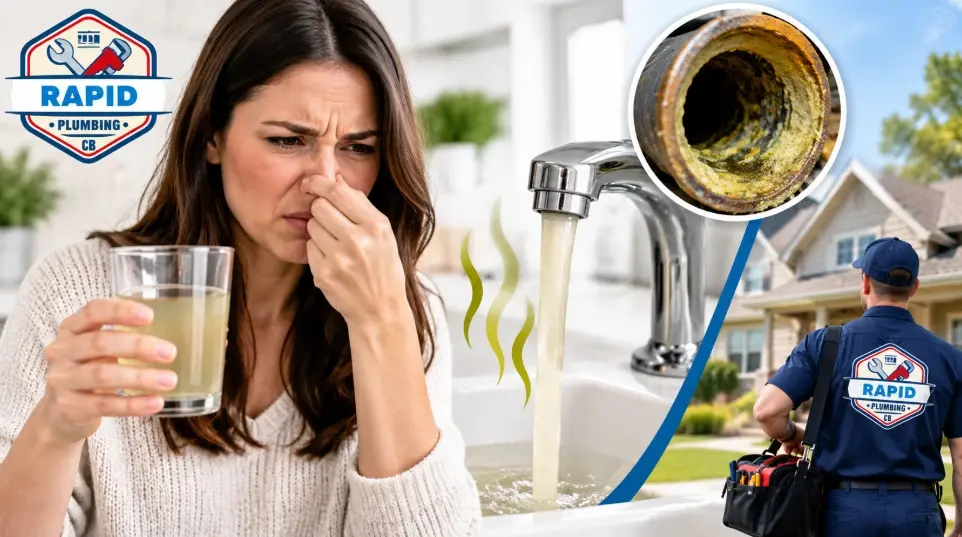
Hard water too? Scale and sulfur smell are different problems that can happen together. See our water softener installation in Council Bluffs service.