Sewage Tank Pumping Council Bluffs: When (and Why) It’s Necessary
If you’re on a septic system rather than city sewer — common in the more rural pockets of Pottawattamie County surrounding Council Bluffs — sewage tank pumping is one piece of home maintenance that’s easy to forget until something goes wrong. A septic tank quietly separates solids from wastewater year after year, and most homeowners never think about it until slow drains, odors, or a backup force the issue. Regular sewage tank pumping is what keeps that system working the way it’s supposed to, and catching it before a problem shows up is far cheaper than dealing with one after the fact.
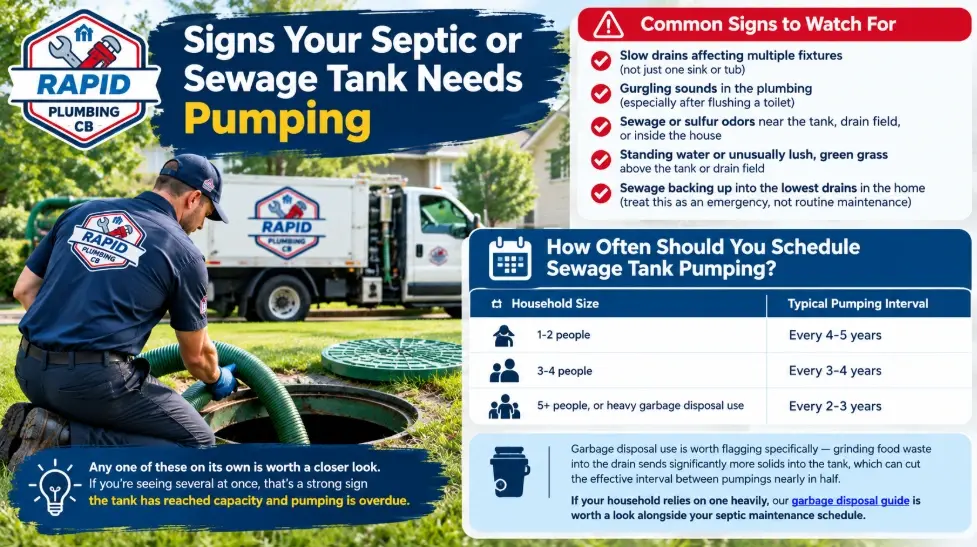
Signs Your Septic or Sewage Tank Needs Pumping
- Slow drains affecting multiple fixtures at the same time — not just one sink or tub
- Gurgling sounds in the plumbing, especially after flushing a toilet
- Sewage or sulfur odors near the tank, drain field, or inside the house
- Standing water or unusually lush, green grass above the tank or drain field
- Sewage backing up into the lowest drains in the home — treat this as an emergency, not routine maintenance
Any one of these on its own is worth a closer look. If you’re seeing several at once, that’s a strong sign the tank has reached capacity and pumping is overdue.
How Often Should You Schedule Sewage Tank Pumping?
Most residential septic tanks need pumping every 3 to 5 years, though the right interval depends on tank size, household size, and how much wastewater your home generates day to day. A larger household or a smaller tank pushes that timeline closer to every 2-3 years; a smaller household with a larger tank can sometimes stretch closer to 5.
| Household Size | Typical Pumping Interval |
|---|---|
| 1-2 people | Every 4-5 years |
| 3-4 people | Every 3-4 years |
| 5+ people, or heavy garbage disposal use | Every 2-3 years |
Garbage disposal use is worth flagging specifically — grinding food waste into the drain sends significantly more solids into the tank, which can cut the effective interval between pumpings nearly in half. If your household relies on one heavily, our garbage disposal guide is worth a look alongside your septic maintenance schedule.
What Happens During a Sewage Tank Pumping Service
- Locating and exposing the access lid. If your tank doesn’t have risers installed, this step takes longer and may involve some digging.
- Measuring sludge and scum levels with a sludge gauge to confirm pumping is actually needed and to document tank condition.
- Pumping out the tank using a vacuum truck, removing sludge, scum, and liquid waste.
- A visual inspection of the tank walls, baffles, and outlet for cracks, damage, or signs of a failing drain field.
- Proper disposal of the waste at a licensed treatment facility, as required under Iowa regulations.
If prep work like exposing the access lid or installing risers hasn’t been done ahead of time, expect the visit to take longer — installing risers during your next pumping is a small upgrade that makes every future visit faster and cheaper.
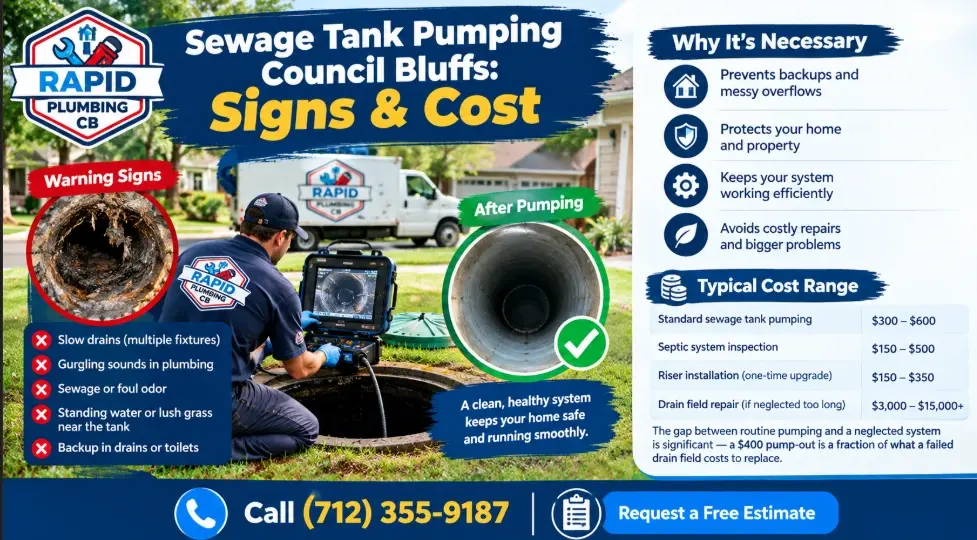
What Does Sewage Tank Pumping Cost?
| Service | Typical Cost Range |
|---|---|
| Standard sewage tank pumping | $300 – $600 |
| Septic system inspection | $150 – $500 |
| Riser installation (one-time upgrade) | $150 – $350 |
| Drain field repair (if neglected too long) | $3,000 – $15,000+ |
The gap between routine pumping and a neglected system is significant — a $400 pump-out is a fraction of what a failed drain field costs to replace. If your system backs up before you can schedule a pump-out, that crosses into basement backup emergency territory, and our camera inspection service can confirm exactly what’s happening before any digging starts.
What Happens If You Skip Sewage Tank Pumping
Sludge and scum that aren’t removed eventually overflow into the drain field, clogging the soil that’s supposed to filter wastewater naturally. Once that happens, the fix is no longer a simple pump-out — it’s a drain field repair or replacement, which runs into the thousands of dollars and can take days rather than hours. Skipping pumping doesn’t just risk the tank itself; it risks the far more expensive part of the system downstream of it.
Septic vs. City Sewer: Do You Even Have a Septic System?
Most homes inside Council Bluffs city limits connect to the municipal sewer system managed by the city’s Sewer Division — if that’s you, sewage tank pumping isn’t something you need to think about at all. Septic systems are more common in unincorporated Pottawattamie County and newer developments on the city’s edges that haven’t tied into municipal sewer. If you’re not sure which one applies to your property, checking your last closing paperwork or calling the county is the fastest way to confirm — and if you’re on septic, our team handles both scheduled sewage tank pumping and diagnosing backups or slow drainage tied to the system.
Pottawattamie County Septic & Wastewater Resources
- Pottawattamie County Public Health – Septic Systems
- Pottawattamie County – Environmental Health Division
- Iowa DNR – Private Sewage Disposal & Septage
- Pottawattamie County Planning & Development – Onsite Wastewater Treatment
- City of Council Bluffs – Sewer Division (city sewer comparison)
- City of Council Bluffs – Report a Nuisance
Frequently Asked Questions
How often does sewage tank pumping need to happen?
Most residential tanks need pumping every 3 to 5 years, though household size, tank size, and garbage disposal use can shorten that interval to every 2-3 years for larger households.
What are the signs my sewage tank needs pumping?
Slow drains across multiple fixtures, gurgling pipes, sewage odors near the tank or in the house, standing water or unusually lush grass above the drain field, and sewage backing up into indoor drains.
How much does sewage tank pumping cost in Council Bluffs?
Typically $300-$600 for a standard pump-out, depending on tank size and accessibility. Installing risers ahead of time can make future visits faster and slightly cheaper.
What happens if I skip sewage tank pumping?
Sludge and scum overflow into the drain field over time, clogging the soil that filters wastewater. What would have been a routine pump-out becomes a drain field repair costing thousands of dollars.
Do I need a permit for septic work in Pottawattamie County?
Permits are required for new septic installations and repairs, and a Time of Transfer inspection is required before a property with a septic system can be sold. Routine pumping itself typically doesn’t require a separate permit, but system repairs do.