Sump Pump Troubleshooting Guide: Clogs, Check Valves & Drainage Problems
Your pump is running — you can hear it — but something’s still not right. This is where most sump pump problems actually live: not total failure, but a specific mechanical issue quietly getting worse.
A sump pump that won’t turn on at all is easy to notice. It’s the pump that’s technically working — humming, cycling, doing something — but not doing its job properly that trips people up. This sump pump troubleshooting guide walks through the specific mechanical issues that cause the most service calls we get in Council Bluffs: clogs, failed check valves, and a pump that just won’t shut off. Each one has a distinct cause and, in a lot of cases, a fix you can at least attempt yourself before calling anyone.
Looking for a specific symptom? If your pump is completely dead, won’t activate at all, or hums without moving water, our sump pump not working guide covers the full electrical and float-switch diagnosis for those. This guide focuses on the mechanical issues that show up once the pump is confirmed to be receiving power and technically running: clogs, check valve problems, short-cycling, and drainage failures.
Sump Pump Troubleshooting: Start Here
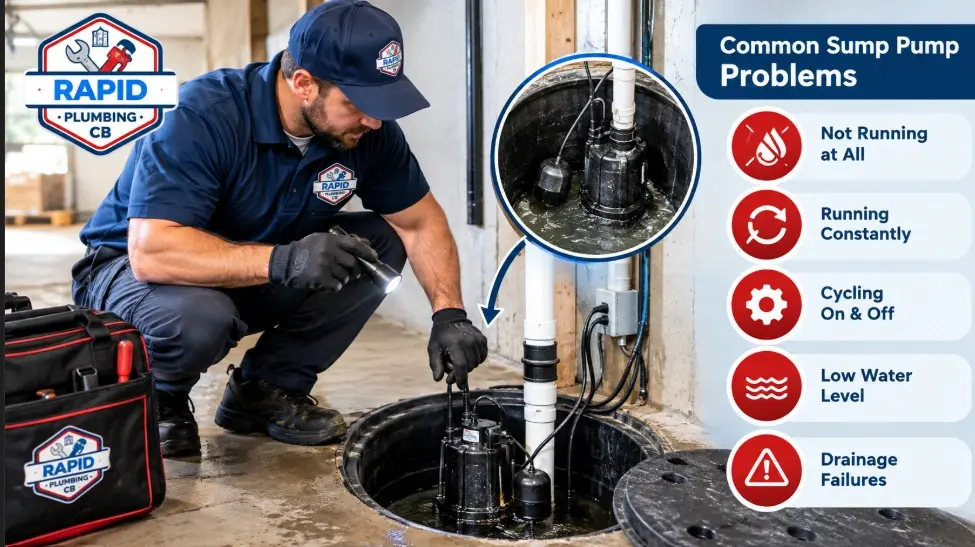
Before diagnosing a specific symptom, it helps to know which of these problems you’re actually dealing with. Skim the list below, then jump to the matching section for the full breakdown.
- Sump pump clogged — runs but moves little or no water
- Check valve leaking or failed — pump runs far more often than it should
- Sump pump won’t turn off — cycles continuously even with an empty pit
- Sump pump not draining — water level in the pit isn’t going down
- Sump pump smoking — stop immediately; this is a safety issue
- Stuck float switch or humming but not pumping — see our sump pump not working guide for the full diagnosis on these two
Sump Pump Clogged: Signs & Fixes
What it looks like: The pump runs, but water in the pit drains slowly or not at all. This is one of the most common reasons a sump pump is technically “on” but not actually protecting your basement.
Likely cause: Debris — dirt, gravel, drywall dust, or small stones — has built up in the pit and blocked the intake screen or clogged the impeller itself.
What to try: Unplug the pump, remove it from the pit, and clear the intake screen and impeller of any visible debris. Rinse the pump with clean water before reinstalling. If the pit itself has a layer of sediment at the bottom, scoop it out — it will just re-clog the pump again otherwise.
Sump Pump Check Valve Leaking: Signs & Fixes
What it looks like: Your pump seems to run far more often than it should, sometimes cycling on again just seconds after finishing.
Likely cause: The check valve, which is supposed to stop pumped water from flowing back down into the pit through the discharge line, has failed or was installed backward. Water is essentially draining right back to where it started, forcing the pump to redo the same work repeatedly.
What to try: Locate the check valve on the discharge pipe and confirm the directional arrow points away from the pit. A valve installed backward is a quick fix; a valve that’s cracked or worn out from age needs replacing. This is one of the more common causes behind a pump that seems to be constantly working overtime — closely related to what we cover in our guide on why a sump pump runs constantly.
Sump Pump Won’t Turn Off: Signs & Fixes
What it looks like: The pump keeps running continuously, even well after the pit appears empty, rather than shutting off cleanly.
Likely cause: Usually a float switch that isn’t dropping back down properly, a switch that’s miscalibrated, or — less commonly — a short-cycling pattern caused by a pit that’s too small for the pump’s output.
What to try: Confirm the float can drop all the way down without obstruction. If it can and the pump still won’t shut off, the switch itself likely needs replacing. A pump that won’t stop running is also one of the fastest ways to burn out a motor prematurely, so this isn’t one to leave alone for long.
Sump Pump Not Draining: Signs & Fixes
What it looks like: The pump activates and appears to be working, but the water level in the pit barely changes.
Likely cause: Almost always a blockage somewhere between the pump and the outside of your home — a clogged discharge line, a frozen section of pipe in winter, or a failed check valve stuck in the closed position.
What to try: Walk outside and check the discharge pipe’s exit point for visible blockages, ice, or debris. If the line is clear outside but water still isn’t moving, the clog is likely further up the line or at the check valve itself.
Cleared the Clog But It’s Still Humming? Here’s What That Means
If you’ve already checked: our sump pump not working guide covers the initial diagnosis for a pump that hums without moving water — usually a jammed impeller or clogged intake screen. This section picks up from there: what it means if clearing the debris doesn’t fix it.
Likely cause: If the hum continues after the impeller is fully clear of debris, the problem is usually mechanical wear rather than a blockage — worn or chipped impeller blades, a failing motor bearing, or a shaft that’s no longer spinning freely. None of these are DIY-repairable in the way a simple clog is.
What to try: At this point, replacing the impeller assembly or the pump itself is typically more practical than continued repair attempts, especially on a pump that’s already several years old. Continuing to run a pump with worn internal components risks a full motor burnout, which turns a manageable repair into a full replacement anyway.
Sump pump smoking: If you ever see smoke, smell burning, or notice the pump housing is unusually hot to the touch, unplug it immediately and do not attempt to restart it. This typically means the motor has already failed or is actively overheating, which is both a fire risk and a sign the pump needs professional attention or replacement — not more troubleshooting.
When to Stop Troubleshooting and Call a Plumber
Most of what’s above is genuinely safe for a homeowner to check and often fix without help. That said, a few situations are worth calling in a professional for right away: any sign of electrical damage, a pump that’s smoking or unusually hot, a check valve that needs replacing on a pump that’s already several years old, or a problem that keeps recurring after you’ve already tried the fix once. Any repair involving the pump’s wiring or its connection to a GFCI circuit falls under Iowa’s licensing requirements — plumbers performing this kind of work are licensed through the Iowa Plumbing and Mechanical Systems Board, which is worth confirming before anyone touches wiring near a wet sump pit. If your pump is old enough that repeated small failures are starting to add up, our sump pump replacement cost guide is worth a look before sinking more time into repairs on a unit near the end of its life.
Prevention beats troubleshooting. Most of the issues above start small — a little debris, a slightly misaligned float — and get worse gradually. Testing your pump seasonally, ideally before storm season, catches these problems while they’re still a five-minute fix rather than a flooded basement. Signing up for Alert Iowa, Pottawattamie County’s emergency notification system, gives you advance warning before the storms that put the most strain on a sump pump roll in. Our guide on how to test your sump pump covers the full seasonal check.
Why Choose Rapid Plumbing CB
We diagnose the actual mechanical cause before recommending a fix — not a blanket “you need a new pump” if a $15 check valve would solve it. If your pump has completely stopped responding rather than showing one of the specific symptoms above, our sump pump not working guide covers that starting point. For everything else, our sump pump repair and installation team handles diagnosis and repair across Council Bluffs, including Lake Manawa, North Broadway, and Downtown.
Frequently Asked Questions
Why is my sump pump clogged so often?
A pit with loose sediment, gravel, or construction debris at the bottom will keep re-clogging the pump even after you clean it. Scooping out the pit floor, not just cleaning the pump itself, usually solves recurring clogs.
How do I know if my check valve is bad?
The clearest sign is a pump that cycles on again almost immediately after finishing — that’s water flowing back down through a failed valve rather than staying outside where it belongs.
How long does a sump pump check valve typically last?
Most check valves last 5-10 years, though cheaper plastic models can fail sooner. If you’re already replacing a pump, replacing the check valve at the same time is inexpensive and avoids a second service call down the road.
Is it safe to keep running a sump pump that’s humming but not pumping?
No — unplug it as soon as you notice this. A humming motor with a jammed impeller is working against resistance, which can overheat and burn out the motor in a short amount of time.
What should I do if my sump pump is smoking?
Unplug it immediately and don’t attempt to restart it. This indicates motor failure or overheating and needs professional evaluation rather than DIY troubleshooting.
Tried Everything and Still Stuck?
Fast diagnosis and honest repair recommendations — licensed local plumbers, available 24/7 across Council Bluffs, IA.
Call (712) 355-9187