How to Thaw Frozen Pipes Council Bluffs Safely: The Short Answer
When a faucet drips or stops completely during a Council Bluffs cold snap, you need to know how to thaw frozen pipes without making things worse. The safe method is simple: open the faucet, shut off the main, find the frozen section and warm it slowly with a hair dryer, heating pad or hot towels. Never use an open flame. If you cannot find the freeze, cannot reach it or see any sign of a crack, call an emergency plumber in Council Bluffs right away.
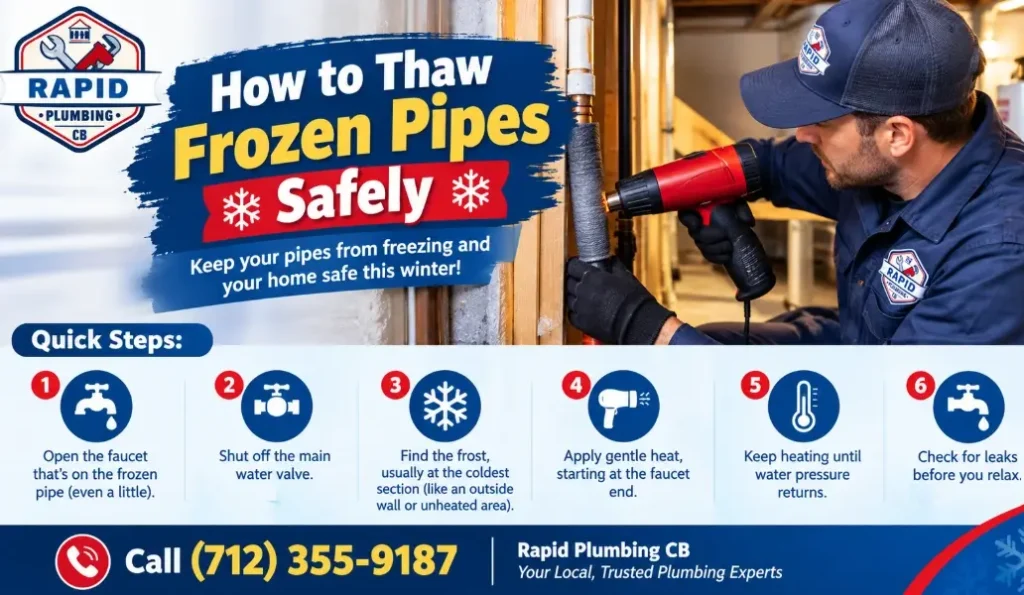
Quick answer: thaw a frozen pipe in 6 moves
- Open the faucet the pipe feeds.
- Shut off the main water valve.
- Find the frost, the bulge or the coldest section.
- Apply gentle heat, starting at the faucet end.
- Keep heating until full water pressure returns.
- Check every faucet and every joint for leaks before you relax.
In this guide
- Is your pipe really frozen?
- Where pipes freeze in Council Bluffs homes
- Safety checks before you thaw
- Step-by-step thawing guide
- Thawing methods compared
- What not to do
- Pipes in walls, under floors or underground
- After the thaw checklist
- Other things that freeze
- When to call a plumber
- Frequently asked questions
- Related reading
Water expands when it freezes, and that pressure can split copper, galvanized steel and plastic pipe alike. The tricky part is that a frozen pipe usually does not leak. Water is ice, so the damage often shows up only after the thaw. That is why the order of your steps matters as much as the heat source you choose. If you want to stop this from happening again, read our guide on how to prepare your plumbing for Iowa and Nebraska winters once the water is flowing.
Pipe frozen right now? Do not wait for the thaw.
Our Council Bluffs team is open 24 hours. Call now and we will talk you through the next step or send a plumber.
Is Your Pipe Really Frozen? Signs to Check First
Before you start warming pipes, make sure a freeze is actually the problem. A trickle from one tap points to a different cause than a house with no water at all.
| What you notice | What it usually means | What to do first |
|---|---|---|
| Only a trickle or no water at one faucet | A frozen section on that fixture’s supply line | Open the faucet and follow the pipe toward the nearest cold area. |
| No water anywhere in the house | A frozen main line near the meter or entry point, or an outage on the city side | Check whether neighbors have water, then call the water utility or a plumber. |
| Frost, ice or a bulge on a visible pipe | The pipe is frozen at that spot | Shut off the main and thaw gently. A bulge means a crack is possible, so call a plumber. |
| Banging, gurgling or odd sounds when you open a tap | Ice or trapped air restricting flow | Stop and inspect. Read about the common causes of noisy pipes. |
| Slow drains or a sewer smell during a deep freeze | A frozen or capped drain vent on the roof | See our guide to a clogged plumbing vent before you try anything else. |
| Weak flow everywhere after a cold night | A partial freeze or a restriction in the main line | Compare with our notes on low water pressure in Council Bluffs. |
| Damp spot or drip as temperatures climb | A pipe that cracked while frozen and is now leaking | Keep the main off and follow our hidden water leak checklist. |
If the whole house is dry, take a minute to check whether the problem is city-side. The City of Council Bluffs Utilities page and the Council Bluffs Board of Water Works are the right places to start for outages on the public side of the meter. Anything between your meter and your fixtures is your plumbing, and that is where we can help.
Water stopped flowing at home?
Tell us what you are seeing and a Council Bluffs plumber will help you confirm whether it is a freeze.
Where Pipes Freeze First in Council Bluffs Homes
Cold does not hit every pipe equally. These are the spots we see freeze first in homes across the metro, and they are also where you should look first.
Exterior walls
Kitchen and bathroom sinks on outside walls, with little insulation between the pipe and the cold.
Basement rim joists
Where the house meets the foundation, small gaps let cold air blow directly across pipes.
Crawl spaces
Unheated crawl spaces with missing vent covers or skirting expose supply lines to the full cold.
Garages and porches
Utility sinks, laundry lines and pipes in attached garages or enclosed porches are easy to overlook.
Where the water line enters
The point where the service line comes through the foundation is a classic weak spot.
Outdoor spigots
A hose left attached traps water in the faucet and the line behind it.
Older houses are more exposed because their plumbing often runs through exterior walls and unheated spaces. If your home is one of them, our article on plumbing problems in older Council Bluffs houses explains what else to watch for, and the Council Bluffs weather and plumbing checklist shows what to do before the next cold snap. Repeated freezing in the same spot can also be a sign that the pipe needs to be rerouted or replaced, which is where whole-home repiping and our guide to the signs you need whole-home repiping come in.
Safety Checks Before You Thaw Anything
Take two minutes for these checks. They protect you, your pipes and your home.
- Know your main shutoff. If you cannot find it or it will not turn, read what to do when a water shut-off valve is not working.
- Open the affected faucet first. Steam and pressure need an escape route, otherwise heating a sealed pipe can make it burst.
- Look for cracks and wet spots. If you see a split, spray or a soaked wall, stop thawing and call for help.
- Keep electricity away from water. Do not use a hair dryer or heater while standing in water or near a flooded outlet. Switch off power to the wet area if water is near outlets.
- Check for gas lines. Do not apply direct heat to a frozen pipe that runs beside a gas line.
- Keep heat sources away from flammables. Insulation, boxes, curtains and wood framing can ignite.
Fire safety
Heaters and heat tape are a leading cause of winter house fires when used carelessly. The Council Bluffs Fire Department and the Fire Prevention Division publish local fire safety information. Never leave a heat source running in an empty room, and never use a flame.
If this is more than you want to handle, our guide on when to call a plumber instead of fixing it yourself helps you decide quickly.
Step-by-Step: How to Thaw Frozen Pipes Yourself
Follow these steps in order. Most accessible pipes in basements, under sinks and in garages can be thawed this way.
Open the faucet and shut off the main water valve
Open the faucet that the frozen pipe feeds so melting ice and pressure have somewhere to go. Then shut off your main water valve. A frozen pipe often hides a crack that only leaks once the ice melts, and a closed main limits the flood if that happens.
Find the frozen section
Look for frost, a bulge or the coldest stretch of pipe. Check pipes on exterior walls, in the basement rim joist, crawl space, garage and where the water line enters the foundation. If only one fixture is affected, follow its pipe back toward the source.
Warm the pipe gently, starting near the faucet
Use a hair dryer, an electric heating pad or towels soaked in hot water. Work from the faucet end back toward the frozen section so melting ice always has an open path. Move the heat slowly and never leave a heat source unattended.
Keep the faucet open and be patient
An accessible pipe often thaws in 30 to 60 minutes. Water will start as a trickle and build to full flow. Keep heating until the pressure is completely back to normal.
Check every other faucet
If one pipe froze, others in the same cold area may be frozen too. Test every sink, tub, shower and toilet, and check the water heater supply and washing machine lines.
Watch for leaks while the ice melts
Inspect the pipe, nearby walls, the ceiling below and the floor. Listen for hissing or dripping. If you see a crack, spray or a fast drip, keep the main off and call a licensed plumber right away.
Turn the water back on slowly and test
Open the main valve slowly, then check the thawed pipe and its joints for seepage. Let the water run for a few minutes, then confirm there is no leak at the meter before you consider the job done.
Thawed it but not sure it is safe?
We can inspect the pipe, test for hidden leaks and repair any damage the same day in most cases.
Thawing Methods Compared: Speed and Safety
Different spots call for different tools. Use this table to pick the safest option for where your pipe is.
| Method | Best for | Speed | Safety notes |
|---|---|---|---|
| Hair dryer | Exposed pipes you can reach | Medium | Use low to medium heat, keep the cord dry and keep moving the airflow. Never leave it unattended. |
| Electric heating pad | Straight, accessible pipe runs | Medium | Wrap it around the pipe and follow the product directions. Check the pad for damage first. |
| Towels soaked in hot water | Tight spaces under sinks | Slow | Re-soak often and keep water away from outlets and cords. Hot water can scald, so wear gloves. |
| Heat lamp | Pipes behind an open access panel or at a wall surface | Medium | Keep it at a safe distance from drywall, wood and insulation. Never leave it unattended. |
| Portable space heater | Crawl spaces, closets and cabinets where you cannot touch the pipe | Slow | Keep it clear of flammables, plug it straight into the wall and watch it the whole time. |
| Heat tape or heating cable | Trouble spots that freeze again and again | Slow to medium | Use only products rated for pipes, install them exactly as directed and never overlap the cable. |
| Raising the thermostat and opening cabinet doors | Pipes inside walls that you cannot reach | Slowest | The safest option. Combine it with another method when time matters. |
Whatever you choose, warm the pipe gradually. Fast heating can boil trapped water, build steam pressure and crack the pipe, or melt plastic fittings and damage solder joints.
What Not to Do When a Pipe Is Frozen
Do
- Open the faucet before you apply heat
- Heat slowly and from the faucet end
- Shut off the main water valve
- Check every faucet and joint afterward
- Call a plumber if you see a crack
Do not
- Use a blowtorch, propane heater or any open flame
- Pour boiling water directly on a cold pipe
- Use a welder or other electrical device to heat pipes
- Leave a heater running unattended
- Turn the water back on at full blast before inspecting
Open flames can ignite framing and insulation, destroy plastic pipe and overheat the water inside until a pipe bursts. If you are not sure a method is safe, stop and call a licensed professional. Our guide to the risks of hiring an unlicensed plumber explains why that call is worth making to a licensed pro.
Pipes Frozen in a Wall, Under a Floor or Underground
Frozen pipe inside a wall
You cannot touch it, but you can warm it. Open the cabinet doors on that wall, raise the thermostat, point a safely placed space heater or heat lamp at the wall surface and keep the faucet open. This is slow, so expect hours instead of minutes. Cutting into drywall is a last resort. If you do not see water returning or the wall feels damp, stop and call a plumber who can find the pipe without wrecking the room.
Frozen pipe in a crawl space or under a floor
Warm the space instead of the pipe. A space heater placed safely and watched the entire time can raise the temperature enough, and opening the access door lets heated air flow in. Crawl spaces are also where the most pipes freeze, so check every faucet afterward for additional frozen lines.
Frozen service line outside the house
If the whole house has no water and your neighbors do, the water line coming from the street may be frozen. Do not try to thaw the underground portion yourself. Ownership and responsibility for the service line depend on where the line sits relative to your meter and the curb stop, so confirm the rules with the Council Bluffs Water Works before anyone digs or heats the line. For anything on your side of the meter, call a plumber. Our emergency plumbing team handles these calls around the clock.
After the Thaw: A Complete Checklist
Flowing water does not mean you are finished. Frozen pipes can be cracked, loosened at joints or weakened. Work through this checklist before you call the job done.
- Look at the pipe and every fitting. Check for drips, white mineral crust, a bulge or a hairline split.
- Check the walls, ceiling and floor nearby. Discolored drywall, bubbling paint or a musty smell can point to a hidden leak.
- Test for hidden leaks. With every fixture off, watch the water meter for a few minutes. If it moves, follow our checklist on finding a hidden water leak.
- Check pressure and noise. Weak flow may need a closer look. See why you could have low water pressure, and what a hammering sound could mean in our noisy pipes guide.
- Check hot water. If the hot side is weak or missing, our page on no hot water emergencies explains what to look at next.
- Take photos. If there is any damage, document it before you clean up and contact your insurance agent.
- Fix the cause. Seal the draft, add insulation or heat tape, and follow the steps in our winter plumbing preparation guide so it does not freeze again.
- Keep the heat on. Hold the thermostat steady, even when you are away, and let faucets drip on the coldest nights.
Want a pro to check for hidden freeze damage?
We test for cracks, leaks and weak joints so a small crack does not become a flooded basement.
Other Plumbing Parts That Freeze in Winter
The supply lines are not the only parts of your plumbing that suffer in a hard freeze. Check these too.
Sump pump discharge
An iced-over outlet can back water into the pit. See our guide to a frozen or clogged sump pump discharge line or call for sump pump repair in Council Bluffs.
Water heater
Cold incoming water and exposed lines strain tanks and tankless units. Read our water heater winter tips, or book water heater services.
Drain vents and drains
Frost can cap a roof vent and slow every drain. Start with the clogged plumbing vent guide, or call a team for drain cleaning.
Hidden water damage
A frozen pipe that cracked can behave like a slab or wall leak. See the signs of a slab leak when floors feel warm or the meter keeps running.
When to Call a Plumber for a Frozen Pipe
Thawing a simple, reachable pipe is a reasonable DIY job. These are the situations where you should skip the hair dryer and call a licensed professional.
| Situation | Why call |
|---|---|
| You cannot find the frozen section | A plumber can trace the line and find the freeze without opening unnecessary walls. |
| The pipe is in a wall, ceiling, slab or underground | You cannot safely heat it directly, and cutting blindly can cause more damage. |
| You see a crack, bulge or leak | The pipe needs repair, not just thawing. |
| Water has not returned a few hours after you started | The freeze may be deeper or longer than it looks. |
| The same pipe keeps freezing | A permanent fix such as rerouting, insulation or repiping is cheaper than repeated emergencies. |
| You smell gas or see signs of electrical danger | Leave the area and contact emergency services. |
Not sure what a call involves? Here is exactly what happens when you call an emergency plumber in Council Bluffs, and our transparent pricing promise explains how we quote work before we start. When you compare companies, use our list of questions to ask before hiring a plumber, and verify that a contractor is licensed through the City of Council Bluffs Contractor Licensing page.
If the repair means replacing pipe, the work may require a permit. Check current requirements with the Council Bluffs Building Division or read our Council Bluffs plumbing permit guide.
Frozen pipe in Council Bluffs? We are open 24/7.
Rapid Plumbing CB thaws frozen pipes, finds hidden cracks and repairs damage across Council Bluffs.
How Rapid Plumbing CB Handles a Frozen Pipe Call
When you call Rapid Plumbing CB, we start by helping you stop damage: shutting off the water and keeping the faucet open. A plumber then locates the freeze, thaws it safely, inspects for cracks and tests the system before the water is turned back on. If something has split, we repair or replace the pipe so you are not left with a second emergency when the weather warms up. Browse our full list of plumbing services in Council Bluffs, learn more about our local team or contact us for a free estimate.
We serve every Council Bluffs neighborhood
Frequently Asked Questions About Thawing Frozen Pipes
How long does it take to thaw a frozen pipe?
An accessible pipe often thaws in 30 to 60 minutes with a hair dryer, heating pad or hot towels. Pipes inside walls, under floors or in a crawl space can take several hours because you are warming the air around them instead of the pipe itself. If water has not returned a few hours after you started, call a plumber.
Is it safe to thaw a frozen pipe with a hair dryer?
Yes, if you keep the faucet open, use low to medium heat, move the dryer slowly along the pipe and keep the cord and dryer away from standing water. Never leave it running unattended, and stop if you see a crack or hear hissing. Do not use a blowtorch, propane heater or any open flame.
Will a frozen pipe thaw on its own?
It may when temperatures rise, but waiting is risky. Ice keeps pressure on the pipe walls while it is frozen, and a crack can stay hidden until the ice melts and water starts flowing. Open the faucet, warm the pipe gently and check for leaks instead of waiting for the weather.
Should I turn the water off if a pipe is frozen?
Yes. Shut off the main water valve before you start thawing and keep the affected faucet open. If the pipe has a hidden crack, the water will not flood your home when the ice melts. Open the main slowly afterward and check for leaks.
How can I tell if a frozen pipe has burst?
A frozen pipe usually does not leak until the ice melts, so watch for dripping, hissing, wet drywall, stains on the ceiling below or a faucet that sprays instead of running. If you see any of these, keep the main water valve closed and call a licensed plumber.
Can I thaw a pipe that is frozen inside a wall?
Sometimes. Open cabinet doors, raise the room temperature and use a space heater placed safely away from flammable items. You can also direct gentle heat at the wall surface where the pipe runs. Do not cut into drywall unless you have to, and call a plumber if you cannot locate the freeze or the wall feels damp.
Which pipes are most likely to burst when frozen?
Rigid pipes such as copper and galvanized steel are the most likely to split. Flexible PEX handles expansion better but fittings and rigid sections can still fail. PVC and other plastic pipes can crack and are easily damaged by too much heat, so never use a torch.
Does homeowners insurance cover a frozen or burst pipe?
Many policies cover sudden water damage from a burst pipe, but coverage and conditions vary. Take photos before you clean up, stop the water, make temporary protection repairs and ask your insurance agent what your specific policy requires.
Related Reading From Rapid Plumbing CB
Explore more plumbing guides written for Council Bluffs homeowners.
Winter, Freeze and Emergency Plumbing
- how to prepare your plumbing for Iowa and Nebraska winters
- Council Bluffs weather and plumbing checklist
- water heater winter tips for Council Bluffs homes
- frozen or clogged sump pump discharge line
- what to do when a water shut-off valve is not working
- what happens when you call an emergency plumber
- signs of a hidden water leak in your home
- common causes of noisy pipes
- causes of low water pressure in Council Bluffs
- slab leak signs and repair cost
- clogged plumbing vent signs and fixes
- when to call a plumber instead of fixing it yourself
- common plumbing problems homeowners face
- plumbing problems in older Council Bluffs houses
- signs you need whole-home repiping
Water Heaters
- signs your water heater is about to fail
- water heater repair cost
- water heater replacement in Council Bluffs
- same-day water heater service
- no hot water emergency help
- water heater no hot water troubleshooting
- how to drain a water heater
- how often to flush a water heater
- gas vs electric water heaters
- tankless vs traditional water heaters
- tankless water heater cost
- hybrid heat pump water heaters
- best water heater brands
- water heater brand comparison for Iowa
- commercial water heater service
- water heater financing options
- water heater permit requirements
Sump Pumps and Drainage
- sump pump not working
- sump pump troubleshooting guide
- why a sump pump runs constantly
- sump pump smell causes and fixes
- sump pump alarm going off
- how to test a sump pump
- what a sump pump pit is
- sump pumps near the Missouri River
- crawl space sump pumps
- sump pump battery backup systems
- sump pump impeller replacement
- how long a sump pump lasts
- sump pump installation cost
- sump pump replacement cost
- submersible vs pedestal sump pumps
- ejector pump vs sump pump
- sump pump vs French drain
- drainage contractor services
- basement floor drain backing up
Drains, Sewer and Septic
- drain cleaning cost
- kitchen sink that keeps clogging
- how to unclog a shower drain
- clogged dishwasher fixes
- why chemical drain cleaners damage pipes
- tree roots in sewer lines
- sewer camera inspection and repair
- sewer line repair cost
- who is responsible for the sewer line
- trenchless pipe lining contractors
- sewage tank pumping
- a drain clog case study and the savings
Fixtures, Gas and Water Quality
- sink and faucet installation
- leaky faucet repair vs replacement
- garbage disposal repair vs replacement
- common toilet problems
- gas line installation
- what a gas leak smells like
- backflow preventers in Council Bluffs
- Council Bluffs water quality guide
- water softeners in Council Bluffs
- reverse osmosis vs water filters
- why water smells like sulfur
- RV plumbing vs home plumbing
Remodels, Rentals and Commercial
- kitchen and bathroom remodel plumbing
- plumbing maintenance checklist for landlords
- plumbing inspections for rental properties
- rental property plumbing in Council Bluffs
- residential vs commercial plumber differences
- commercial plumbing for 100 Block restaurants
Hiring, Pricing and Local Guides
- what to ask before hiring a plumber
- licensed vs unlicensed plumber risks
- benefits of hiring a local plumber
- why choose a family-owned local plumber
- why Google reviews matter when choosing a plumber
- our transparent pricing promise
- top plumbers in Council Bluffs compared
- finding a plumber near you in Council Bluffs
- Council Bluffs plumbing permit guide
- what up to code plumbing means in Iowa
- Council Bluffs neighborhood plumbing case studies
Keep your pipes flowing all winter.
From emergency thawing to full pipe repair, Rapid Plumbing CB is a call away at any hour.