Ejector Pump vs Sump Pump: What’s the Difference?
They look almost identical, sit in the same part of the basement, and get confused constantly — but an ejector pump and a sump pump are built to move completely different things.
If you’re planning a basement bathroom, laundry hookup, or wet bar below your home’s main sewer line, someone has probably told you that you’ll need an ejector pump — and if you already have a sump pump down there, it’s natural to wonder why you’d need a second one. The short version: they solve two different problems, and in a lot of Council Bluffs basements, homeowners end up needing both.
Ejector Pump vs Sump Pump: The Quick Answer
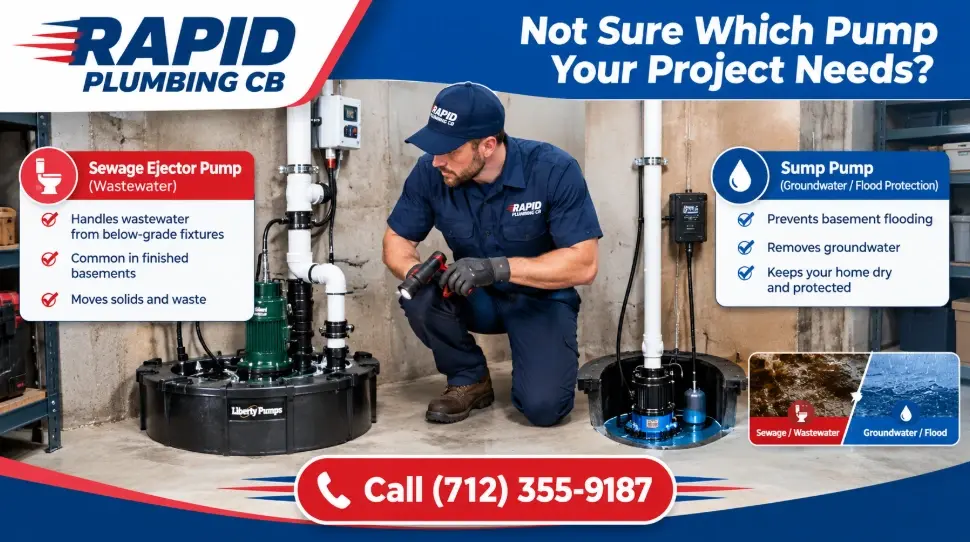
A sump pump moves clean or lightly dirty groundwater out of a basement or crawl space to prevent flooding. An ejector pump moves sewage and wastewater — toilet waste, laundry discharge, sink water — from fixtures installed below your home’s main sewer line up to where it can flow into that line by gravity. One keeps your basement dry. The other makes it possible to have a working toilet down there in the first place.
Rule of thumb: if the water is coming from outside your house (rain, snowmelt, a high water table), you need a sump pump. If the water is coming from a fixture inside your house — a basement toilet, sink, or washing machine — you need an ejector pump.
What a Sump Pump Does
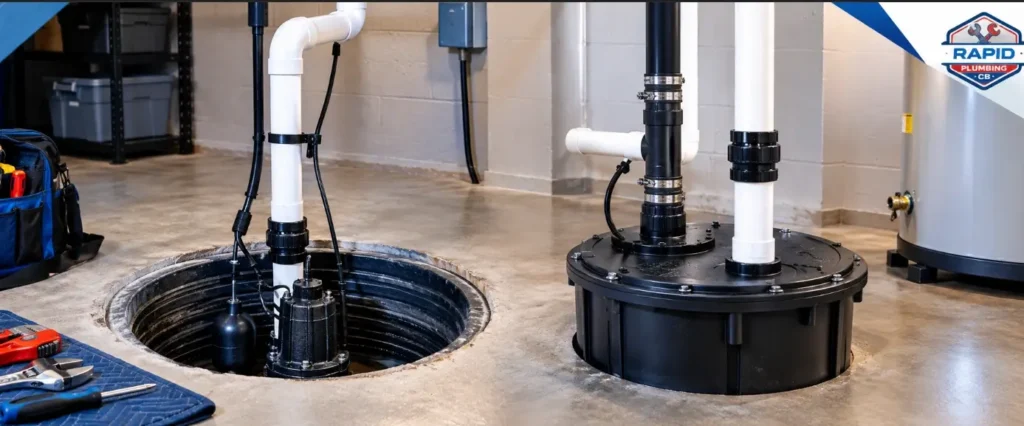
A sump pump sits in an open pit, usually the lowest point of a basement or crawl space, and collects groundwater that seeps in through the foundation. Once the water reaches a certain level, a float switch triggers the pump, which pushes the water out through a discharge line and away from your home’s foundation. It never touches your home’s plumbing or sewer system — it’s purely a water-management device. We cover this in more detail in our sump pump installation cost guide, and if your home has a crawl space rather than a basement, our crawl space sump pump guide covers the differences there.
What an Ejector Pump Does
An ejector pump handles an entirely different job. It sits in a sealed, airtight basin rather than an open pit — sealed specifically to contain sewer gas and odor. Wastewater from a basement bathroom, laundry room, or utility sink drains into that sealed basin, and once it fills to a set level, the pump grinds and pushes the waste up and out to your home’s main sewer line, which usually sits above the level of a basement floor. Because it’s handling solids and sewage rather than clean water, an ejector pump needs a vent pipe routed to the outside of your home to release sewer gas safely, along with a more robust motor and impeller built to handle waste without clogging.
Key Differences at a Glance
| Feature | Sump Pump | Ejector Pump |
|---|---|---|
| What it moves | Clean or lightly dirty groundwater | Sewage, wastewater, and solids |
| Basin type | Open pit | Sealed, airtight basin |
| Connects to | Nothing — discharges outside | Your home’s main sewer line |
| Requires a vent pipe | No | Yes |
| Typical use | Basement or crawl space flooding prevention | Below-grade bathroom, laundry, or wet bar |
| Motor / construction | Standard submersible or pedestal motor | Heavier-duty motor, often with a grinder |
Do You Need One, the Other, or Both?
You probably need a sump pump if…
- Your basement or crawl space has flooded before
- You’ve noticed dampness or standing water after heavy rain
- Your home sits in a lower-lying area or near the river bottomland
You probably need an ejector pump if…
- You’re finishing a basement with a bathroom or laundry hookup
- Any plumbing fixture sits below your main sewer line
- You’re adding a wet bar or utility sink in the basement
A lot of Council Bluffs homeowners finishing an older basement end up needing both systems side by side — the sump pump keeps groundwater from flooding the new space, while the ejector pump makes the new bathroom or laundry hookup actually functional. They run independently of each other and serve their own basins, so having both isn’t redundant; it’s simply two different problems being solved in the same room.
Installation & Code Requirements in Council Bluffs
Because an ejector pump ties directly into your home’s sanitary sewer system, this isn’t a DIY-friendly installation the way a basic sump pump swap can sometimes be. Iowa requires anyone performing this kind of work to hold a license through the Iowa Plumbing and Mechanical Systems Board, and a permit through the city’s Building Division is standard for any new below-grade fixture connecting to your sewer line. Improper venting is one of the most common issues we find with older or DIY ejector pump installations — done wrong, it can let sewer gas back into the basement instead of venting it outside. For more on why this distinction matters, our post on licensed vs. unlicensed plumber risks covers what can go wrong when sewer-connected work isn’t done to code.
How Much Do They Cost?
| System | Typical Cost |
|---|---|
| Sump pump installation (existing basin) | $400 – $900 |
| Sump pump + new basin, full install | $1,000 – $2,500 |
| Ejector pump installation (basement bath/laundry addition) | $2,000 – $4,500+ |
| Ejector pump replacement (existing system) | $1,200 – $2,800 |
Ejector pump systems generally cost more than sump pumps because of the heavier-duty construction, sealed basin, and required venting work. If you’re weighing whether to repair or replace an aging sump pump specifically, our sump pump replacement cost guide breaks that down separately.
Why Choose Rapid Plumbing CB
We install and service both systems, and we’ll tell you honestly which one — or both — your project actually needs rather than upselling equipment you don’t. If you’re finishing a basement and adding plumbing below your sewer line, our basement remodel plumbing team can plan the ejector pump as part of the larger project. For groundwater and flooding concerns, our sump pump repair and installation team handles that separately — and if backups or drainage issues elsewhere in the home are part of the picture, our basement floor drain backup guide is worth a look too.
Frequently Asked Questions
Can I use a sump pump instead of an ejector pump for a basement bathroom?
No. Sump pumps aren’t built to handle solids or sewage and aren’t connected to your sewer line — using one for a bathroom would clog it quickly and isn’t code-compliant. A basement bathroom below your main sewer line needs a dedicated ejector pump.
Do I need a permit to install an ejector pump in Council Bluffs?
Yes. Because it connects to your sanitary sewer, a permit through the city’s Building Division and a licensed installer are both required.
Can I have both a sump pump and an ejector pump in the same basement?
Yes, and it’s common — especially in finished basements. They handle completely separate jobs and run independently, so there’s no conflict between having both.
How long does an ejector pump last?
Typically 7-10 years, similar to a sump pump, though usage-heavy households (a full basement bathroom used daily) may see a shorter lifespan than a lightly used laundry hookup.
Why does my ejector pump smell like sewage?
Usually a venting issue — either the vent pipe is blocked, improperly routed, or the basin’s seal has failed. This isn’t something to ignore, since it typically means sewer gas is escaping into your basement instead of venting outside.
Not Sure Which Pump Your Project Needs?
Free consultation, honest recommendation, licensed local plumbers — available 24/7 across Council Bluffs, IA.
Call (712) 355-9187