When Your Shower Drain Won’t Drain: A Council Bluffs Homeowner’s Guide
You step out of a hot shower and notice the water is still swirling around your ankles instead of disappearing down the drain. It’s one of the most common calls we get at Rapid Plumbing CB, and the good news is that most shower drain clogs can be traced back to just a handful of causes — and several of them you can safely tackle yourself before picking up the phone. In this guide, we’ll walk through how to unclog shower drain clogs the right way, why chemical cleaners aren’t always the safe shortcut they look like, and what to do about the shower valve, showerhead, or built-in seat issues that often show up alongside a slow drain.
Signs Your Shower Drain Is Clogged — Not Just “Slow”
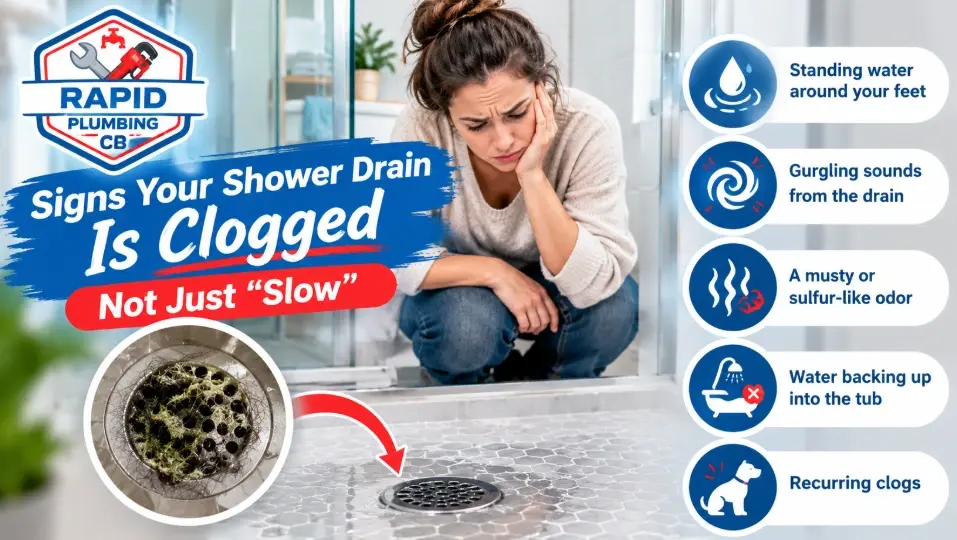
A shower drain rarely goes from working fine to completely blocked overnight. Watch for these early warning signs so you can act before it turns into a bigger repair:
- Standing water around your feet that takes longer than a few seconds to clear
- Gurgling sounds coming from the drain or a nearby toilet when the shower runs
- A musty or sulfur-like odor rising from the drain between uses
- Water backing up into the tub from a different fixture, which can signal a blockage further down the line rather than just at the drain opening
- Recurring clogs that come back within weeks of clearing them yourself
If you’re also seeing slow drains at other fixtures in the house at the same time, the problem may not be isolated to your shower — our basement floor drain backup guide covers what a house-wide backup usually means.
What’s Really Clogging Your Shower Drain
Three culprits account for the vast majority of shower drain clogs we see across Council Bluffs homes:
- Hair. It wraps around the drain crossbar and stopper mechanism, then catches everything else that follows it — soap film, skin cells, product residue.
- Soap scum. Bar soap and heavier body washes leave behind a waxy residue that hardens on the inside of the pipe wall, narrowing the space water has to pass through.
- Hard water minerals. Council Bluffs’ water carries calcium and magnesium that combine with soap scum to form a much harder, crustier buildup than soap alone would create. If you’re dealing with frequent shower and fixture clogs on top of spotty glass or dry skin, a whole-home water softener often solves more than one problem at once.
How to Unclog Shower Drain Clogs Safely (5 DIY Steps)
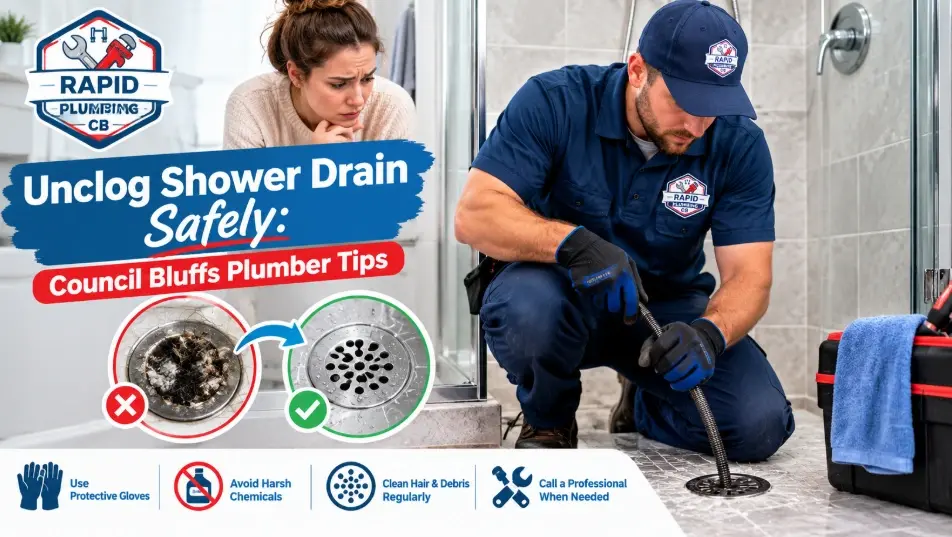
Before reaching for a bottle of drain cleaner, try these steps in order. Most hair-and-soap-scum clogs clear at step 2 or 3.
- Remove and clean the drain cover or stopper. Most shower drain covers lift out with a flathead screwdriver or a simple twist. Hair tangled around the underside of the cover is often the entire clog — pull it clear and you may be done.
- Reach in and clear the first few inches by hand or with a bent wire. Wearing a glove, use a straightened wire hanger with a small hook bent into the end to fish out hair and debris from just inside the drain opening.
- Flush with boiling water. Boil about a gallon of water and pour it down slowly in two or three stages, giving it a minute to work between pours. This softens soap scum without the corrosive risk of a chemical cleaner.
- Follow with baking soda and vinegar. Pour roughly half a cup of baking soda down the drain, follow with half a cup of white vinegar, and let the fizzing reaction sit for 10–15 minutes before flushing with hot water. This helps break down mineral and soap buildup along the pipe walls.
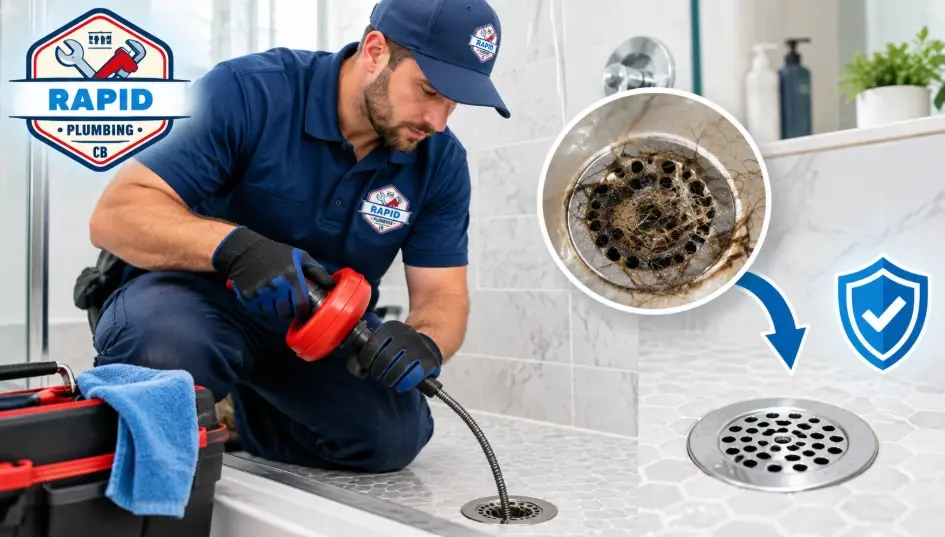
- Use a drain snake for anything deeper. If water is still slow after the steps above, a manual drain auger (not a toilet plunger) can reach clogs sitting further down the trap.
If you’ve worked through all five steps and the shower drain is still slow, that’s usually a sign the blockage sits beyond what a home auger can reach — which is where our team’s professional-grade equipment and camera inspection tools take over.
Is It Safe to Use Chemical Drain Cleaner on a Shower Drain?
It’s tempting to skip straight to a bottle of liquid drain cleaner, but we’d steer you away from it for a shower drain specifically. Most store-bought formulas rely on strong caustic or acidic chemicals that generate heat as they react — heat that can soften and warp PVC fittings, and in older homes, corrode metal pipe over time. They’re also genuinely risky to use in an enclosed shower stall, where fumes have nowhere to go. We cover the full breakdown of what these products actually do to your pipes over time in our chemical drain cleaner damage guide — the short version is that the boiling-water-and-baking-soda approach above clears the same everyday clogs without the downside.
When a Clogged Shower Drain Means It’s Time to Call a Plumber
Call a professional if:
- The clog returns within a few weeks of clearing it yourself
- Multiple drains are slow or gurgling at the same time
- You smell sewer gas rather than just mildew
- Water is backing up into the shower from the toilet or another fixture
Any of those point to a blockage beyond the reach of a home drain snake — the kind of clog our professional drain cleaning service is built to handle without guesswork. Not sure whether it’s worth the DIY effort at all? Our guide on when to call a plumber vs. fixing it yourself walks through that decision in more detail.
Beyond the Clog: Shower Valve, Showerhead & Seat Fixes
A slow drain is the most common shower call we get, but it’s often not the only thing on a homeowner’s list. Here’s what else tends to come up.
Replacing a Pull-Out or Cartridge Shower Valve
If your shower handle is hard to turn, drips after you shut it off, or the temperature swings unpredictably, the cartridge or valve stem inside the wall has likely worn out. Pulling out and replacing a shower valve means shutting off the home’s water supply, removing the trim, and swapping the internal cartridge — straightforward for a plumber, but a common spot for DIY leaks if the wrong replacement part is used. This is the same repair-vs-replace decision we walk through for fixtures in our leaky faucet repair vs. replace guide.
How to Change a Showerhead the Right Way
Swapping a showerhead is one of the few truly simple DIY plumbing jobs: unscrew the old head counterclockwise, clean off old plumber’s tape and mineral residue from the threads, wrap fresh tape clockwise around the pipe threads, and hand-tighten the new head before a final quarter-turn with a wrench. The most common mistake is over-tightening, which can crack the arm fitting or strip the threads — worth a call to us if the arm itself is original to an older home and feels fragile.
Installing a Built-In Shower Seat
Built-in shower seats are a popular remodel add-on for both comfort and accessibility, but they involve cutting into the shower wall and tying into the waterproofing membrane correctly — get that wrong and you’re looking at a hidden leak inside the wall months later. If a shower seat is part of a bigger remodel, our bathroom remodel plumbing guide covers what to plan for before work starts.
Council Bluffs Water, Sewer & Drainage Resources
Frequently Asked Questions
How do I unclog a shower drain without chemicals?
Remove and clean the drain cover, clear the first few inches by hand or with a bent wire, flush with boiling water, follow with a baking soda and vinegar rinse, and use a manual drain snake if water is still slow. This clears the vast majority of hair and soap scum clogs.
Is it safe to use chemical drain cleaner on a shower drain?
We don’t recommend it. The heat these products generate can soften PVC and corrode older metal piping, and fumes build up quickly in an enclosed shower stall. Boiling water with baking soda and vinegar clears the same everyday clogs safely.
Why does my shower drain keep clogging even after I clean it?
A clog that returns within weeks usually means the blockage sits deeper in the trap or branch line than a surface cleaning reaches, or that hard water minerals are building up alongside soap scum. A professional drain cleaning with camera inspection can confirm exactly where and why.
How much does it cost to replace a shower valve?
Cost depends on the valve type and whether wall access is easy or requires opening tile or drywall. Our team gives an upfront, written quote before any work begins — see our pricing promise for how we handle estimates.
Can I install a built-in shower seat myself?
It’s possible, but the waterproofing membrane has to be tied in correctly where the seat meets the wall, or you risk a slow leak hidden behind the tile. For anything beyond a freestanding seat, we’d recommend having a plumber involved.