What Counts as Low Water Pressure in a Council Bluffs Home?
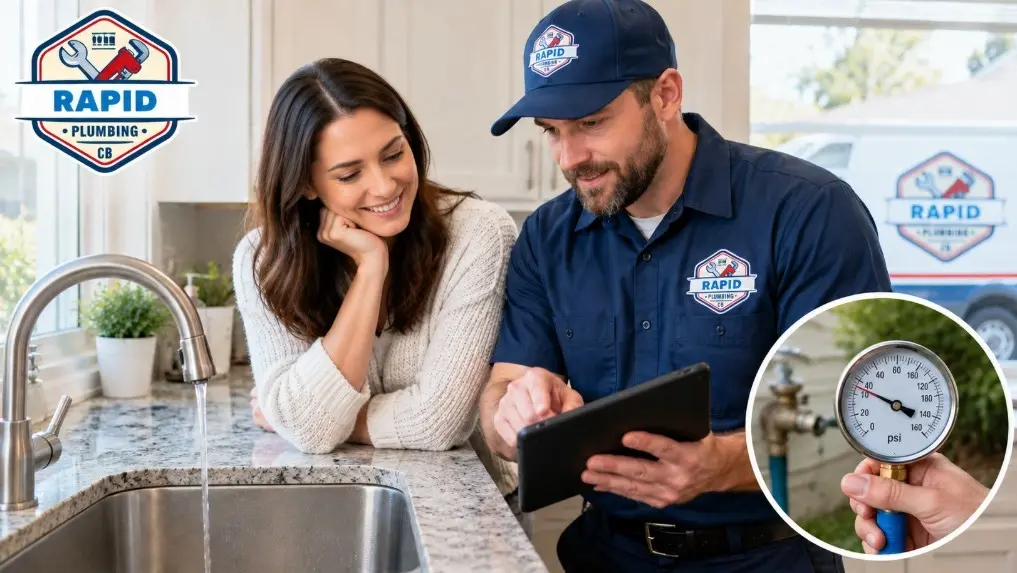
Most homes run comfortably between 40 and 80 PSI (pounds per square inch). If your shower has turned into a trickle, your washing machine takes twice as long to fill, or two fixtures can’t run at once without one going weak, you’re probably below 40 PSI. You can confirm it in under five minutes with a $10-$15 pressure gauge from any hardware store: thread it onto an outdoor hose bib, make sure nothing else in the house is running, and open the valve fully. The number on the dial tells you exactly where you stand before you spend a dime on repairs.
Council Bluffs adds a few local wrinkles to this. Homes on higher ground in The Heights or parts of North Broadway sit further from the water treatment plant and can see naturally lower static pressure than homes closer to downtown. And because a large share of the city’s housing stock predates 1970, galvanized steel supply lines are still common – pipes that narrow with mineral scale year after year until pressure quietly disappears.
Common Causes of Low Water Pressure Council Bluffs Homes
Before you assume the worst, it helps to know what’s actually driving the problem. In our service calls across Council Bluffs, these are the causes we see most often, roughly in order of frequency:
- Mineral buildup and pipe corrosion – Council Bluffs’ moderately hard water leaves scale inside galvanized and older copper pipes, narrowing the interior diameter over years until flow drops noticeably.
- A failing pressure-reducing valve (PRV) – Most homes on municipal supply have a PRV near the main shutoff. When the diaphragm inside wears out, pressure can drop (or spike) throughout the entire house at once.
- A partially closed main or meter valve – After any plumbing work, a valve that wasn’t fully reopened is one of the simplest, cheapest fixes there is.
- Hidden leaks – A slow leak inside a wall, under a slab, or underground between the meter and the house steals pressure from every fixture. If you notice unexplained damp spots along with weak flow, read our guide on signs of a hidden water leak.
- Clogged aerators and showerheads – If only one or two fixtures are affected rather than the whole house, mineral deposits clogging the aerator screen are the most likely culprit and the easiest fix.
- Municipal main work or demand spikes – A water main break, hydrant flushing, or heavy irrigation demand nearby can cause temporary, city-side pressure drops that have nothing to do with your home’s plumbing.
- Undersized or corroded service line – Especially in older Council Bluffs neighborhoods, a narrow or corroded line running from the street to the house can bottleneck pressure no matter how good the interior plumbing is.
DIY Checks Before You Call a Plumber
A few minutes of troubleshooting can save you an unnecessary service call – or tell you exactly what to describe when you do call one:
- Check if it’s whole-house or isolated. Test a kitchen faucet, a bathroom faucet, and an outdoor spigot. If only one is weak, it’s a fixture problem. If all of them are weak, it’s a supply-side problem.
- Find your main shutoff and PRV, usually near where the line enters the basement or crawl space, and confirm the main valve is turned fully open.
- Unscrew and inspect an aerator from your worst-performing faucet. White or greenish crust is a strong sign of mineral buildup.
- Ask a neighbor if they’re experiencing the same issue – if so, it likely points to a municipal main problem rather than anything inside your home.
- Log the PSI reading from a hose-bib gauge over a couple of days at different times to see whether the drop is constant or comes and goes.
When Low Water Pressure Signals a Bigger Problem
Low water pressure is rarely just an annoyance – it’s often the plumbing system telling you something else is wrong before it becomes an expensive emergency. Call a licensed plumber promptly if you notice any of these alongside the pressure drop:
- A spike in your water bill with no change in usage (often a hidden leak)
- Discolored or rusty water accompanying the low flow (often corroding pipe)
- Pressure that dropped suddenly rather than gradually (often a PRV failure or a break)
- Damp spots, warped flooring, or a musty smell near walls or the foundation
- Pressure that’s low throughout an older home with known galvanized piping
Ignoring these signs rarely saves money. A slow leak that goes undiagnosed for months, for example, can turn a $200-$300 repair into thousands of dollars in water damage and mold remediation – the same pattern we broke down in our drain clog case study on catching plumbing problems early.
How Rapid Plumbing CB Diagnoses and Fixes Low Pressure
When you call Rapid Plumbing CB about low water pressure, we don’t guess – we test. Our licensed plumbers use gauge readings at multiple points in the home, inspect the PRV and main valve, and, when a hidden leak is suspected, use listening equipment before any wall or slab is opened. That’s the same diagnose-first approach we use for tree root intrusion and noisy pipe complaints – find the actual cause, then fix that, not just the symptom.
Depending on what we find, the fix might be as simple as replacing a $40 PRV, or as involved as re-piping a section of corroded galvanized line. Either way, you get a clear written explanation and a quote before any work starts – not after.
Weak water pressure in your Council Bluffs home? Get it diagnosed properly.
Preventing Low Water Pressure Before It Starts
A little maintenance goes a long way toward protecting pressure over the life of your plumbing:
- Have your PRV tested every few years – they typically last 10-15 years before the diaphragm wears out
- Clean aerators and showerheads with a vinegar soak every few months if you’re on hard water
- Ask about a whole-home water softener if scale buildup is a recurring issue – see our water softener guide for Council Bluffs homes
- Schedule a plumbing inspection when you buy an older home, especially if it still has galvanized supply lines
- Fix small leaks immediately rather than waiting – see the warning signs in our hidden leak guide
Not sure if it’s your plumbing or the city main? We’ll find out for you.
Older Council Bluffs home with galvanized pipes? Ask us about a re-pipe evaluation.
Frequently Asked Questions
Why is my water pressure low all of a sudden?
A sudden drop usually points to a partially closed valve, a burst or fast-developing leak, a failing pressure-reducing valve, or a water main issue on the city’s side. A drop that happens gradually over months is more often mineral buildup or pipe corrosion narrowing your lines.
What is considered low water pressure?
Most homes run comfortably between 40 and 80 PSI. Anything consistently under 40 PSI is considered low, and a simple hose-bib pressure gauge confirms your exact number in minutes.
Can low water pressure fix itself?
Sometimes – if it’s tied to temporary municipal main work, pressure returns once the utility finishes. But pressure loss from corroded pipes, a failing PRV, or a hidden leak won’t resolve on its own and usually gets worse over time.
Is low water pressure covered by homeowners insurance?
Low pressure on its own usually isn’t a covered event, but sudden damage it leads to – like a burst pipe – often is. Diagnosing the root cause quickly with a licensed plumber is the best way to avoid the kind of damage that turns into a claim.
Helpful Council Bluffs Resources
- Council Bluffs Board of Water Works Trustees – oversees the municipal water supply system
- City of Council Bluffs Utilities – service area and utility information
- Council Bluffs Public Works – water infrastructure and main maintenance
- Council Bluffs Building Division – permits and inspections for plumbing work
- Council Bluffs Permit Applications – required permits for re-piping or line replacement
- Council Bluffs Contractor Licensing – verify a plumber is licensed to work in the city
Get your water pressure tested and fixed by a licensed local plumber.
Related Reading
- 7 Signs of a Hidden Water Leak in Your Home
- Water Softener Guide for Council Bluffs Homes
- When to Call a Plumber Instead of Fixing It Yourself
- Common Plumbing Problems Homeowners Face in Council Bluffs
- Noisy Pipes: Causes & How to Fix Them
- Sump Pump Running Constantly? Here’s What It Means
- Tree Roots in Sewer Lines: What Homeowners Need to Know
- Slab Leak Signs & Cost in Council Bluffs
- Sewer Line Repair Cost in Council Bluffs
- Water Heater Repair Cost in Council Bluffs
- 5 Signs Your Water Heater Is About to Fail
- Tankless vs. Traditional Water Heaters
- How Much Does Drain Cleaning Cost in Council Bluffs?
- Why Chemical Drain Cleaners Damage Your Pipes
- What Happens When You Call an Emergency Plumber
- What to Ask Before Hiring a Plumber in Council Bluffs
- Licensed vs. Unlicensed Plumbers: What to Watch For
- The Benefits of Hiring a Local Plumber in Council Bluffs
- Residential vs. Commercial Plumbers: What’s the Difference?
- Reverse Osmosis vs. Water Filter: Which Is Right for Your Home?
- Annual Plumbing Checklist for Council Bluffs Landlords
- Plumbing Inspections for Rental Properties: What to Expect
- How to Prepare Your Plumbing for Iowa & Nebraska Winters
- Drain Clog Case Study: How a Small Fix Saved Big Money
- Why Homeowners Trust Family-Owned Plumbers Over the Big Guys
Serving Council Bluffs and nearby neighborhoods including The Heights, North Broadway, Lake Manawa, and Downtown Council Bluffs. Explore our full plumbing services, or learn more about our team.
Don’t live with weak water pressure. Get it fixed right the first time.
Call (712) 355-9187 Contact Us OnlinePressure still weak? Corroded supply pipes are a common cause in older homes. Learn about repiping in Council Bluffs.