Water Shut Off Valve Not Working Council Bluffs? Common Home Leak Fixes for Council Bluffs Homeowners
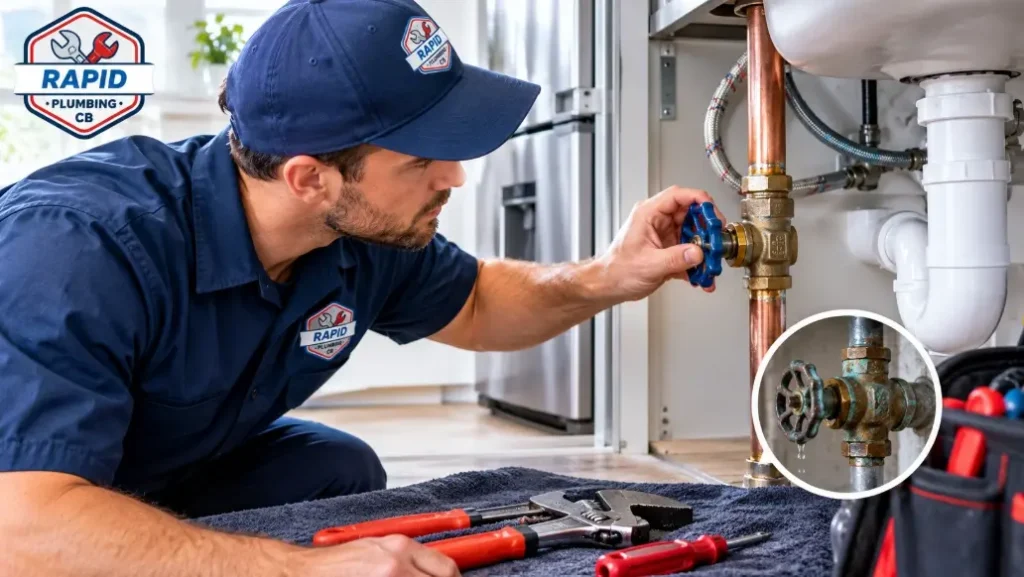
If your Water Shut Off Valve Not Working Council Bluffs — it won’t turn, it’s stuck halfway, or water keeps trickling through even after you’ve closed it — you’re dealing with one of the most common (and most stressful) small-plumbing problems a homeowner can run into. A shut-off valve is your emergency brake for water damage. When it fails right when you need it most, a slow drip can turn into a flooded cabinet or a soaked kitchen floor in a matter of minutes.
Below, the team at Rapid Plumbing CB walks through why shut-off valves fail, what to try before calling a plumber, and a closely related issue we get asked about constantly: why is there water under my fridge. Both problems usually trace back to the same handful of causes — aging valves, mineral buildup, and worn supply lines — so we’re covering them together.
Why Won’t the Shut-Off Valve Close All the Way?
Most homes in Council Bluffs have shut-off valves at the toilet, under the sink, behind the washing machine, at the water heater, and one main valve where the supply line enters the house. Any of them can fail, and it’s almost always one of these reasons:
1. Mineral buildup and corrosion
Iowa’s hard water leaves mineral deposits inside older gate valves over time. The deposits build up around the gate or stem, so the valve looks closed but water still seeps past it.
2. A worn packing nut or washer
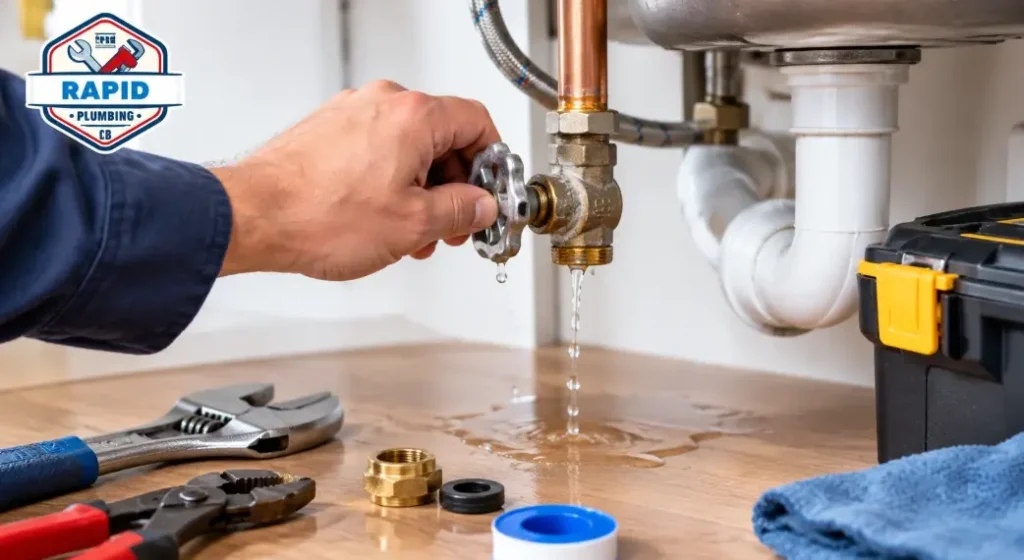
The packing nut is what keeps water from leaking around the handle stem. Once the packing wears out, you’ll usually see a slow drip at the handle even when the valve is fully shut.
3. A valve that’s simply never been used
Shut-off valves that sit untouched for 10–20 years often seize up. When you finally need to turn one in an emergency, it either won’t move, or it snaps and keeps the line open.
4. Saddle valves on older refrigerator or ice-maker lines
Homes with an older-style saddle valve (a valve that pierces directly into a copper line, often installed for a fridge or ice maker) are especially prone to slow leaks and partial shut-offs — this is one of the most common causes we find behind appliance leaks.
| Valve Type | Common Failure | Repairable? |
|---|---|---|
| Gate valve | Mineral buildup around the gate; stem corrosion | Often replace rather than repair |
| Globe / stop valve | Worn stem washer, handle leak | Usually repairable (washer swap) |
| Ball (quarter-turn) valve | Rare — occasional handle/seal wear | Most reliable long-term option |
| Saddle valve | Piercing point leaks, incomplete seal | Replace with proper shut-off, not repairable |
How to Troubleshoot a Stuck or Leaking Shut-Off Valve
- Don’t force the handle. A stuck valve that’s cranked too hard can snap, leaving the line stuck fully open.
- Try penetrating oil first. Apply it to the stem, wait 10–15 minutes, then try turning again with steady, even pressure.
- Check the packing nut. If it’s dripping at the handle, tightening the packing nut a quarter turn sometimes stops the leak.
- Test with a fixture. After closing the valve, run the nearest faucet or check the appliance line — if water still flows, the valve isn’t sealing internally and needs replacement.
- Shut off the main if needed. If a fixture valve won’t cooperate and water is actively leaking, close the home’s main shut-off valve while you wait for a plumber.
Why Is There Water Under My Fridge?
This is the question that usually follows a bad shut-off valve, and it’s one of the most common calls we get. If you’ve found a puddle under or behind your refrigerator, the cause is almost always one of these:
- A leaking or partially closed supply line valve. The saddle valve or shut-off feeding the ice maker/water dispenser line is loose, corroded, or was never fully seated.
- A kinked or cracked supply line. Moving the fridge to clean behind it can crimp or crack the thin plastic tubing that runs to the water line.
- A clogged internal defrost drain (an appliance-side issue, not plumbing — worth ruling out before you call a plumber).
- An unlevel refrigerator, which can cause condensation to pool at the front rather than drain properly.
If you push the fridge out and see the water is coming from the wall connection or the shut-off valve itself rather than from inside the appliance, that’s a plumbing issue — and it’s exactly the kind of quick fix our technicians handle every week in Council Bluffs.
If the water shut-off valve behind your refrigerator is not working, don’t wait for it to fail completely. Schedule a quick valve inspection and we’ll confirm the source before it causes real damage.
Quick Fixes You Can Try Before Calling a Plumber
- Shut off the main water valve if a fixture valve won’t fully close.
- Place towels or a bucket under a leaking valve to protect flooring while you wait for service.
- Avoid using pliers or a pipe wrench on a plastic valve handle — it’s easy to crack.
- Label your main shut-off and every fixture valve now, before an emergency, so anyone in the household can act fast.
- If you’re heading into winter, review our guide on preparing plumbing for Iowa and Nebraska winters — frozen valves are a leading cause of sudden failures here.
When a Stuck or Leaking Valve Becomes an Emergency
A valve that drips slowly is a maintenance item. A valve that won’t shut off at all while water is actively running is an emergency. If you’re seeing steady flow, water pooling near electrical outlets or the water heater, or a valve that’s stripped and won’t turn in either direction, stop troubleshooting and call for help.
Not sure which situation you’re in? Our guide on when to call a plumber instead of fixing it yourself breaks down exactly where that line is. And if you’re worried the leak has already been running for a while unnoticed — behind a wall or under a floor — that’s a different, larger issue; see our post on signs of a hidden water leak in your home for detection tips.
Other plumbing symptoms often show up alongside valve trouble — if you’ve also noticed low water pressure or noisy or banging pipes, mention that when you call, since it can point to the same aging supply lines.
Council Bluffs Homeowners: Know Your Water Provider and Main Shut-Off
Every Council Bluffs home ties into the municipal water system operated by Council Bluffs Water Works, which also publishes real-time updates on scheduled maintenance and main breaks that can affect water pressure to your home. If you ever need to shut off water at the street-side curb valve rather than inside your house, Council Bluffs Water Works is who to call.
If a valve replacement involves any modification beyond a straightforward swap, the City of Council Bluffs Building Department is the local authority on permitting for plumbing work. Our licensed technicians handle any required permitting on larger repiping or valve relocation jobs.
How Rapid Plumbing CB Fixes Stuck and Leaking Shut-Off Valves
When a technician from Rapid Plumbing CB comes out for a shut-off valve that isn’t working, we don’t just replace the one valve and leave. We check the type of valve installed, the condition of the supply line feeding it, and whether the same aging plumbing is likely to cause the next leak — whether that’s behind your fridge, under a sink, or at the main line. Most valve replacements are quick, same-visit jobs.
If you’re dealing with a water shut-off valve that’s not working anywhere in your Council Bluffs home, or you’ve found water pooling under your refrigerator and can’t tell if it’s the appliance or the line feeding it, reach out to our team and we’ll get it diagnosed and fixed before it turns into a bigger repair.
Frequently Asked Questions
Can a water shut-off valve be repaired, or does it need to be replaced?
A leak at the handle from a worn packing nut can often be repaired by replacing the packing washer. But if the valve won’t stop water flow internally — meaning water still runs downstream after it’s closed — the valve itself needs to be replaced.
Why does my main water shut-off valve leak even when it’s closed?
This is almost always mineral buildup or a worn seal inside the valve body preventing a full seal. Older gate valves are especially prone to this after 15–20 years of service.
Is it safe to use pliers or a wrench on a stuck shut-off valve?
Only on a metal valve, and only with steady pressure — never sharp force. On plastic valve handles, avoid pliers or a wrench entirely, since they crack easily and are not worth the risk of turning a stuck valve into a broken one.
Why is there water under my fridge if the floor around it is dry otherwise?
That pattern usually points to the refrigerator’s water supply line or valve rather than a household plumbing leak — check the connection point behind the fridge first, since a loose or corroded saddle valve is the most common cause.
How do I find my home’s main water shut-off valve in Council Bluffs?
It’s typically located where the water line enters the house — commonly in the basement, a crawl space, or near the water heater — close to the water meter. If you can’t locate it, our technicians can point it out during any service visit.