Water Softener Installation in Council Bluffs, IA
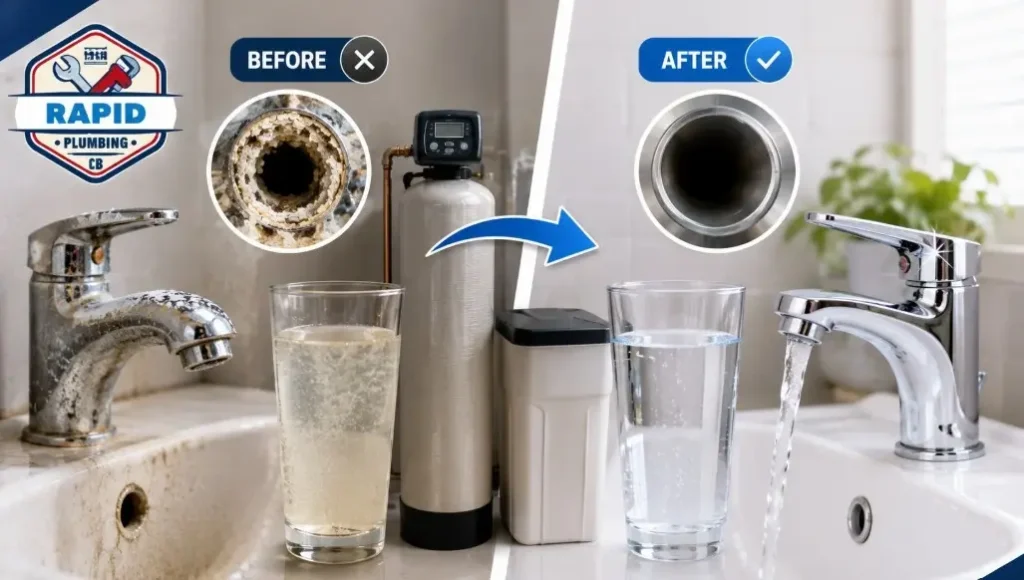
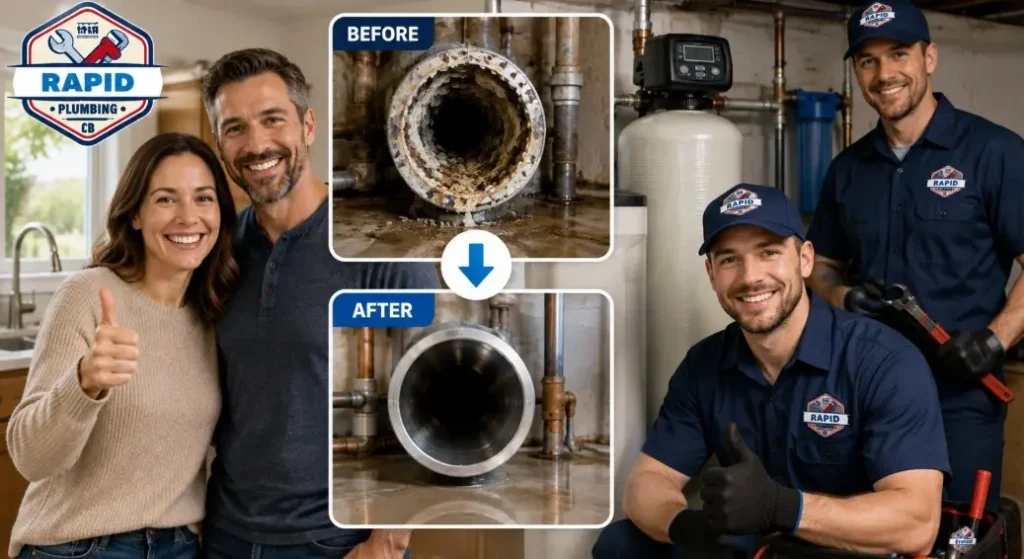
White scale on faucets, spotty dishes, soap that will not lather? Hard water slowly damages fixtures and appliances. Rapid Plumbing CB installs and replaces whole-house water softeners, sized to your home and plumbed correctly, with clear upfront pricing and no call out fees.
Call (712) 355-9187 Request a Softener QuoteSigns You Have a Hard Water Problem
White, chalky scale
Crusty buildup on faucets, showerheads and kettles is dissolved minerals left behind.
Spots on dishes and glass
Cloudy glasses and water spots, even after running the dishwasher, are a classic sign.
Weak shower pressure
Scale can clog aerators and narrow pipes. See low water pressure in Council Bluffs.
Soap scum and stiff laundry
Hard water reduces lather and leaves residue on skin, tubs and fabric.
Water heater problems
Scale builds up inside tanks and heat exchangers. See how often to flush a water heater and signs your water heater is about to fail.
Repeated appliance repairs
Dishwashers, washers and fixtures wear out sooner in hard water.
How a Water Softener Works
A salt-based softener passes water through resin beads that trap the calcium and magnesium that cause hardness. The beads are refreshed with a salt brine in a regeneration cycle, and the softened water flows to your whole house. The result is less scale in pipes and appliances, and better soap performance. Iowa homes often have hard water, but hardness varies, so we recommend testing your water before choosing a system. Read our Council Bluffs water quality guide for more.
Water Softener or Something Else?
Not every water issue is hardness. The right choice depends on what you want to fix.
| Problem | Typical solution |
|---|---|
| Hard water scale and spots | Whole-house water softener |
| Chlorine taste or odor | Carbon filtration |
| Rotten egg (sulfur) smell | Needs diagnosis. A softener alone may not fix it. Read why your water smells like sulfur. |
| Drinking water purity | Point-of-use filter or RO. Compare reverse osmosis vs a water filter. |
Honest advice matters here. If a softener will not solve your problem, we will say so.
Our Water Softener Services
- Water softener installation with proper bypass valves, drain and overflow connections.
- Softener replacement when an older unit stops working or no longer fits your needs.
- Correct sizing based on household size and water hardness.
- Plumbing modifications needed for a clean, code-compliant setup. See our guide to plumbing up to code in Iowa.
How Our Installation Works
- Consultation and water check. We talk about your symptoms, household size and goals.
- Clear quote. You approve the equipment and price before work begins, under our transparent pricing promise.
- Install. We set the unit, connect the water lines and drain, and add bypass valves for easy service.
- Test and walk-through. We check for leaks, set the regeneration schedule and show you how to add salt and maintain the system.
Protect Your Water Heater and Plumbing
Scale shortens the life of water heaters and reduces efficiency. A softener helps protect a new water heater installation or a tankless water heater, which is especially sensitive to scale. If your plumbing is already corroded, you may also want to read about repiping in Council Bluffs.
Licensed and insured: The City of Council Bluffs states that plumbing contractors must hold a state license, as explained on its contractor licensing page. For current permit rules, see our Council Bluffs plumbing permit guide and the City of Council Bluffs website.
Areas We Serve
We install water softeners across Downtown, The Heights, North Broadway, Lake Manawa, 51501 and 51503. See all service areas.
Related Plumbing Services
Water heater services · Water heater repair · Sink and faucet repair · Emergency plumber · All plumbing services
Water Softener FAQs
How much does water softener installation cost in Council Bluffs?
Cost depends on the unit size and type, and the plumbing work needed. We provide a clear quote before starting and charge no call out fee.
Is my water hard in Council Bluffs?
Water hardness varies by location, and many Iowa homes have it. Scale on fixtures and spots on dishes are common signs. We can test your water and recommend a solution.
Will a softener remove the sulfur smell?
Not always. Sulfur smell often comes from the water heater or the source water and needs its own diagnosis. We will help find the cause.
Is a water softener the same as a water filter?
No. A softener removes hardness minerals. A filter removes particles, chlorine and other contaminants. Some homes need both.
How long does installation take?
A standard installation often takes a few hours, depending on the layout and any plumbing changes needed.
Does a softener help my water heater?
Yes. Reducing scale helps protect the tank or heat exchanger and supports efficient operation.
Ready to Fix Hard Water in Council Bluffs?
Call Rapid Plumbing CB for honest advice and professional water softener installation. No call out fees, senior discounts available.
Call (712) 355-9187 Book OnlineRapid Plumbing CB · 112 S 18th St, Council Bluffs, IA 51501