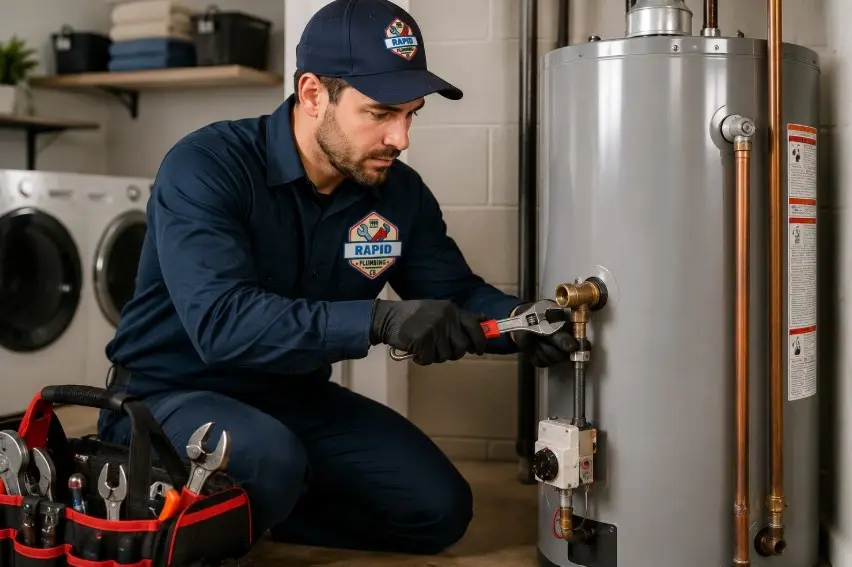
A water heater rarely fails without warning — it just doesn’t always warn you loudly. Most units give off small, easy-to-miss clues weeks or even months before they actually stop working. Learning the signs your water heater is about to fail means you can plan a replacement on your own schedule, instead of discovering the problem the hard way during a cold morning shower or, worse, a flooded utility closet. You can also reach us directly at (712) 355-9187 if you want a professional opinion right away.
How Long Should a Water Heater Actually Last?
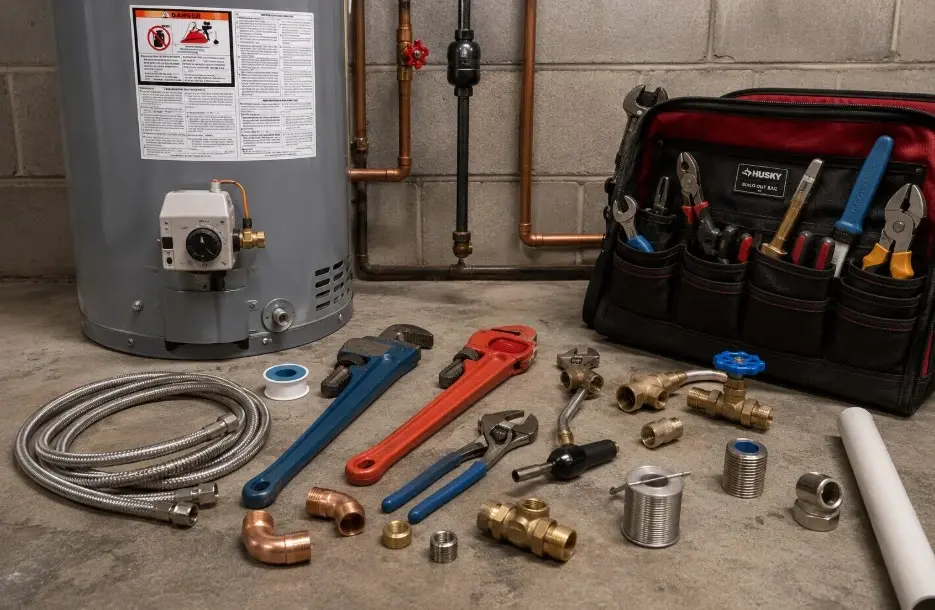
Most standard tank water heaters last somewhere between 8 and 12 years, while tankless units can last considerably longer with proper maintenance. Once a tank unit passes the decade mark, the internal lining and components have typically absorbed years of mineral exposure and thermal cycling, which makes failure far more likely even if the unit still seems to be working normally today.
Source: U.S. Department of Energy — Water Heating
5 Signs Your Water Heater Is About to Fail
1Your Water Heater Is Approaching or Past Its Expected Lifespan
Age alone is one of the most reliable predictors of failure. If your unit is 8 years or older and you’re starting to notice any other symptom on this list, it’s worth having it evaluated before it fails outright — often on its own timeline, not yours. You can typically find the manufacture date on a sticker on the side of the tank.
2Rumbling, Popping, or Banging Noises
As sediment and mineral deposits settle at the bottom of a tank over time, they harden into a layer that traps water underneath. When the burner or heating element fires, that trapped water boils and pops through the sediment layer, creating the rumbling or popping sounds many homeowners describe. This buildup also forces the unit to work harder to heat water, straining components that weren’t designed for the extra load.
3Rusty, Discolored, or Foul-Smelling Water
Brownish or reddish hot water often points to internal corrosion or a deteriorating anode rod — the sacrificial metal rod designed to attract corrosive minerals so the tank itself doesn’t rust. Once the anode rod is depleted, the tank interior becomes the next target for corrosion. A sulfur or “rotten egg” smell, meanwhile, often points to bacterial growth inside the tank rather than corrosion, but either symptom is worth having evaluated.
4Leaking or Pooling Water Around the Base
Any moisture around the base of your water heater deserves immediate attention. A small drip can be a loose fitting, but pooling water at the base of the tank itself often means the tank has developed a crack from internal corrosion — and once a tank cracks, it cannot be repaired, only replaced.
5Inconsistent or Lukewarm Water Temperatures
If your showers fluctuate between hot and cold, or your hot water simply doesn’t last as long as it used to, a failing heating element or thermostat is often the cause. This is frequently one of the earliest noticeable signs, since it directly affects your daily routine before other symptoms appear.
Noticing one or more of these signs? Don’t wait for a complete breakdown.
Call (712) 355-9187 NowIs a Failing Gas Water Heater Ever a Safety Issue?
Gas-powered water heaters that are malfunctioning or improperly vented can be a source of carbon monoxide — a colorless, odorless gas that can be fatal at high concentrations. The CDC recommends having your water heater and other fuel-burning appliances serviced annually by a qualified technician, and installing a carbon monoxide detector near every sleeping area in your home as an added layer of protection.
Source: CDC — Carbon Monoxide Poisoning Basics
Concerned about a gas water heater safety issue? Get a professional inspection before it becomes a hazard.
Schedule a Safety InspectionRepair or Replace? A Quick Comparison
| Situation | Repair Usually Makes Sense | Replacement Usually Makes Sense |
|---|---|---|
| Unit age | Under 6-8 years old | 8+ years old, especially with other symptoms |
| Corrosion / rust | Isolated to fittings or anode rod | Visible on the tank itself |
| Leaking | From a fitting or valve, not the tank | From the tank body itself |
| Frequency of repairs | First repair in years | Repeated repairs within the past year |
Not sure if it’s a repair or a replacement? We’ll give you a straight answer.
Request Your Free EstimateWater Heater Installation and Permit Requirements in Council Bluffs
Replacing a water heater in Council Bluffs typically requires a permit and inspection through the city, especially for gas units where venting and gas line connections need to meet current code. You can review current requirements through the City of Council Bluffs Building Division, and confirm any contractor’s license status through the Iowa Plumbing and Mechanical Systems Board before hiring.
Need a permitted, code-compliant water heater installation?
Get a Same-Day QuoteWhat to Do If You Notice These Signs
- Note the age of your unit and check for a manufacture date sticker
- Take a photo of any staining, corrosion, or leaking you notice
- Turn off the water supply to the unit if you see active leaking
- Call a licensed local plumber for an inspection rather than waiting for a full failure
Ready to have a licensed plumber take a look?
Talk to a Plumber NowWhy Homeowners Choose Rapid Plumbing CB for Water Heater Service
At Rapid Plumbing CB, we inspect, repair, and replace both traditional tank and tankless water heaters for homeowners throughout Council Bluffs — with permitted, code-compliant installations every time. Learn more about our team on our About page.
Frequently Asked Questions
What are the main signs your water heater is about to fail?
The main signs are the unit approaching 8-12 years of age, rumbling or popping noises from sediment buildup, rusty or foul-smelling water, leaking or pooling around the base, and inconsistent or lukewarm water temperatures.
How long do water heaters usually last?
Standard tank water heaters typically last 8 to 12 years, while tankless water heaters can last significantly longer with regular maintenance.
Is a leaking water heater always an emergency?
Leaking from the tank body itself usually means the tank has cracked and needs replacement soon, since a cracked tank cannot be repaired. Leaking from a fitting or valve may be a smaller repair, but either way it’s worth having inspected promptly to avoid water damage.
Can a failing gas water heater be dangerous?
Yes. A malfunctioning or improperly vented gas water heater can be a source of carbon monoxide, which is why the CDC recommends annual servicing of fuel-burning appliances and carbon monoxide detectors near sleeping areas.
Related Reading
- The Benefits of Hiring a Local Plumber in Council Bluffs, IA — why local expertise matters for water heater installs, too.
- 7 Signs of a Hidden Water Leak in Your Home — a failing water heater can also be a source of hidden leaks.
- How Much Does Drain Cleaning Cost in Council Bluffs? — see how pricing compares across common plumbing services.
- Residential vs. Commercial Plumbers: What’s the Difference? — water heater sizing and requirements differ significantly between homes and businesses.
- When to Call a Plumber Instead of Fixing It Yourself — most water heater issues fall outside safe DIY territory; here’s why.
Don’t wait for a cold shower to find out your water heater is failing.
Contact Rapid Plumbing CB Today