Old House Plumbing Council Bluffs: What Homeowners Need to Know
Old house plumbing Council Bluffs is a different job from plumbing in a newer subdivision. Many homes in the neighborhoods around Downtown, North Broadway and the bluff were built long before PVC and PEX existed, and the pipes behind their plaster walls and under their basement floors were never meant to last forever. The good news: most problems announce themselves early. This guide shows which materials to look for, which symptoms matter, and when a licensed local plumber should take a look.
Why Older Council Bluffs Homes Have Unique Plumbing Risks
Council Bluffs is one of Iowa’s older cities, and the proof is in its housing stock. The city itself maintains a list of National Register of Historic Places properties, including the Willow/Bluff/Third Street, Lincoln/Fairview and Park/Glen Avenues historic districts. Most homes in those areas are not historic landmarks, but many were built in the same era and share the same hidden plumbing.
Three local factors make aging pipes work harder here:
- Freeze-thaw cycles. Iowa winters stress exposed and poorly insulated lines. See our guide on preparing your plumbing for Iowa and Nebraska winters.
- Hilly lots and shifting soil. Slope and settling can pull sewer lines out of alignment over decades.
- Mature trees. Large street and yard trees put roots right where old joints leak.
Galvanized Pipes in Council Bluffs Homes
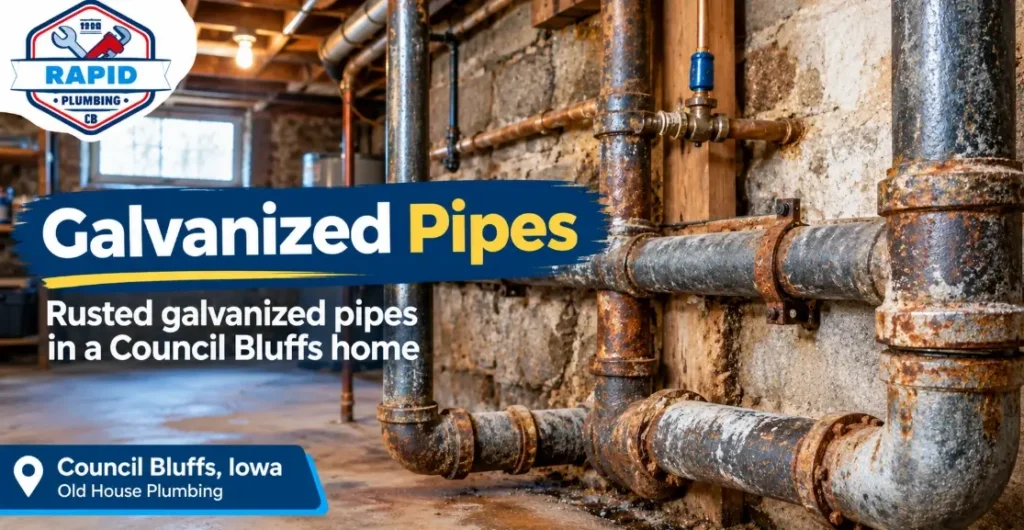
Galvanized steel was a standard supply material until roughly the 1960s. It is steel coated in zinc, and once that coating wears away the pipe rusts from the inside out. Mineral scale then narrows the opening, so a pipe that started at three-quarters of an inch may flow like half that.
Signs your galvanized pipes are failing
- Weak water pressure, especially at upstairs fixtures or when two taps run together
- Brown or orange water after the line has been idle
- Pinhole leaks, or stains and bubbling paint on walls and ceilings
- Visible rust-colored scale at threaded joints in the basement
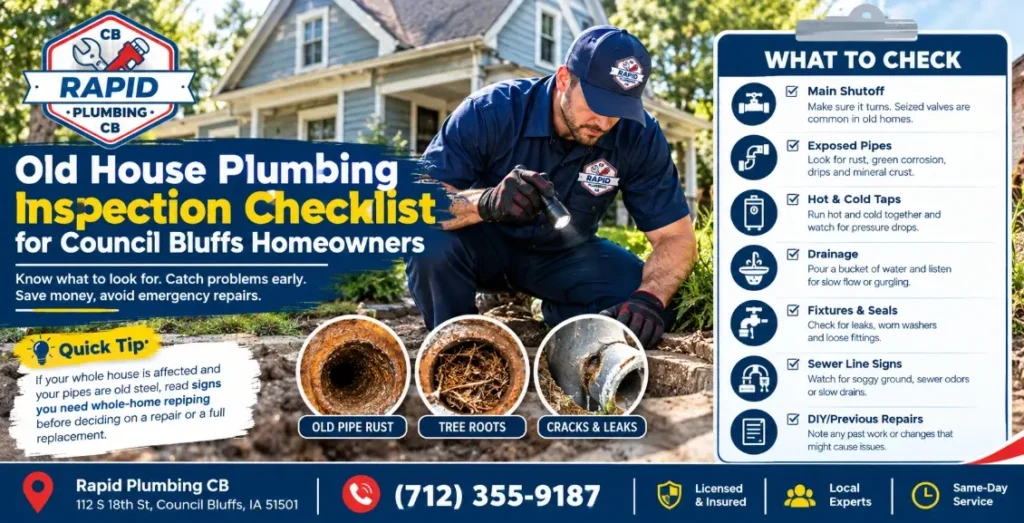
Pressure problems have several causes, so compare your symptoms with our low water pressure guide for Council Bluffs. If the whole house is affected and your pipes are old steel, read signs you need whole-home repiping before deciding on a repair or a full replacement.
Cast Iron Drain and Sewer Lines
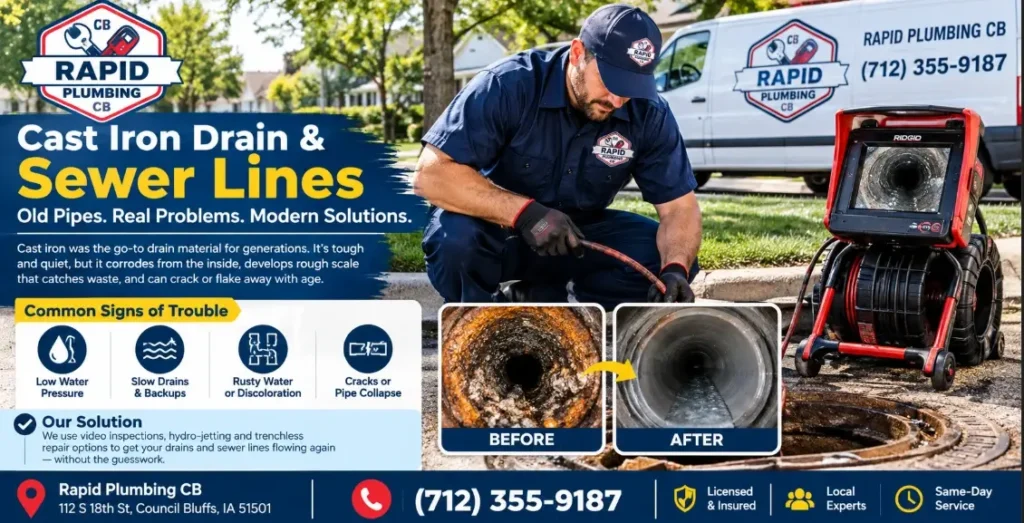
Cast iron was the go-to drain material for generations. It is tough and quiet, but it corrodes from the inside, develops rough scale that catches waste, and can crack or flake away with age. Clay tile, common on very old building sewers, has the opposite weakness: it holds up chemically but its joints invite roots.
What a failing drain line looks like
- Gurgling fixtures and slow drains in more than one room
- Sewer smell in the basement or near a floor drain
- Repeated clogs that return days after clearing
- Wet spots, sinking soil or unusually green grass over the sewer path
A single clog is usually a drain cleaning job. A clog that keeps coming back in an old line is different, and it is worth looking inside the pipe. Avoid chemical cleaners, which can make weakened metal worse: here is why chemical drain cleaners damage pipes. If water is coming up through the floor, our guide to basement floor drain backups explains what to do first.
Tree Roots and Old Sewer Lines
Roots do not break healthy pipe. They follow moisture and slip into hairline cracks and loose joints, then grow into a thick mat that traps paper and waste. Old clay and cast iron lines have more of those entry points than modern PVC. Read the full breakdown in tree roots in sewer lines.
The only reliable way to know what is happening underground is a camera. A sewer camera inspection shows the pipe material, cracks, bellies and root intrusion, so any repair is based on what is actually there. If the line needs work, see what drives the price in our sewer line repair cost guide, and ask about trenchless pipe lining where it fits. Our sewer line repair page covers the full process.
Not sure who maintains which part of the line? Check who is responsible for the sewer line in Council Bluffs, and for water service questions contact Council Bluffs Water Works.
Lead, Polybutylene and Mixed Materials
Pipe material is only part of the picture. Homes built before the federal lead ban in 1986 may contain lead solder on copper joints, and some older properties may have lead service lines. The U.S. EPA explains the health risks and testing options on its basic information about lead in drinking water page, and its service line inventory resource explains how water systems classify lead and galvanized lines.
Homes updated in the 1970s to 1990s may also have polybutylene, a gray plastic supply pipe known for failing at fittings. And almost every old house has a mix: original steel, a copper repair from the 1980s, a PEX section from a recent remodel. Joining dissimilar metals without the right fittings speeds up corrosion. Our Council Bluffs water quality guide and sulfur smell article cover related water issues.
Old Plumbing Materials by Age: A Quick Reference
| Material | Typical era | Common problems | Usual next step |
|---|---|---|---|
| Galvanized steel (supply) | Up to about the 1960s | Rust, low pressure, brown water, pinhole leaks | Inspection, then repair or repipe |
| Cast iron (drain) | Early 1900s to 1970s | Scale, cracks, slow drains, odors | Camera inspection |
| Clay tile (sewer) | Early 1900s to mid-century | Root intrusion, offset joints, collapse | Camera inspection, lining or repair |
| Lead solder / lead lines | Before 1986 | Water quality risk | Water testing and professional advice |
| Polybutylene (supply) | Roughly 1970s to 1990s | Brittle fittings, sudden leaks | Inspection and replacement planning |
Old House Plumbing Inspection Checklist for Council Bluffs Homeowners
- Find your main shutoff and make sure it turns. Seized valves are common in old homes: see what to do when a shutoff valve will not work.
- Look at exposed pipes in the basement or crawl space for rust, green corrosion, drips and mineral crust.
- Run hot and cold taps together and watch for a pressure drop.
- Fill a glass of water after the tap has been idle overnight and check the color.
- Pour a bucket of water down the floor drain and listen for gurgling or slow flow.
- Check cleanouts and the yard for soggy ground or sewer odor.
- Review past work. Unpermitted or DIY changes cause hidden trouble. Our plumbing up to code in Iowa article explains what to look for.
Do not forget the basement sump pump
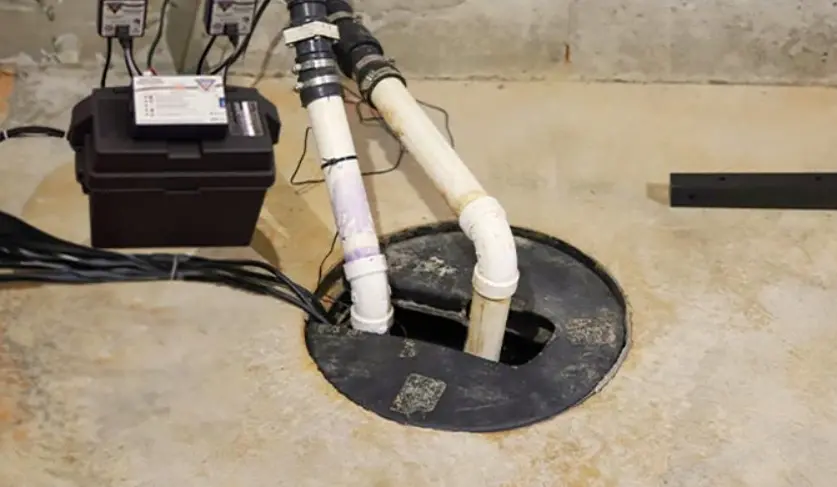
Older Council Bluffs homes often have damp basements, and the sump pump is the first line of defense against groundwater. Test it before the wet season. If it fails the test, read what to do when your sump pump is not working, or book sump pump repair or a new sump pump installation.
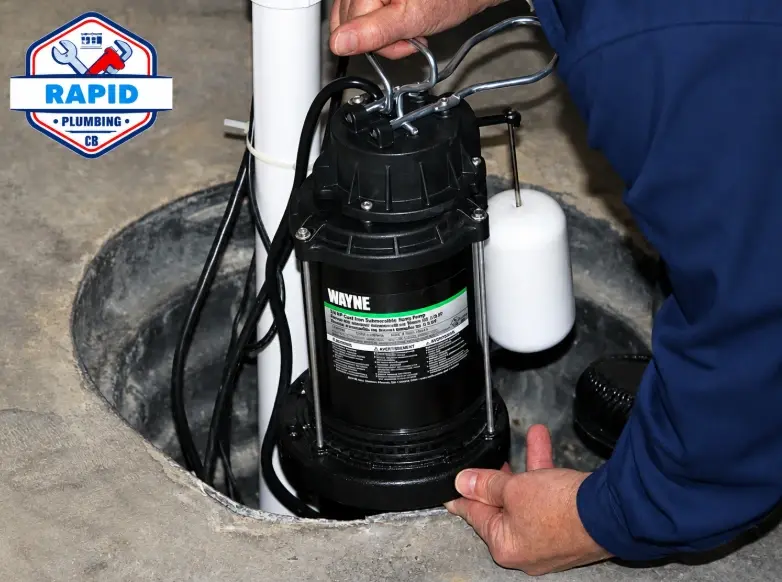
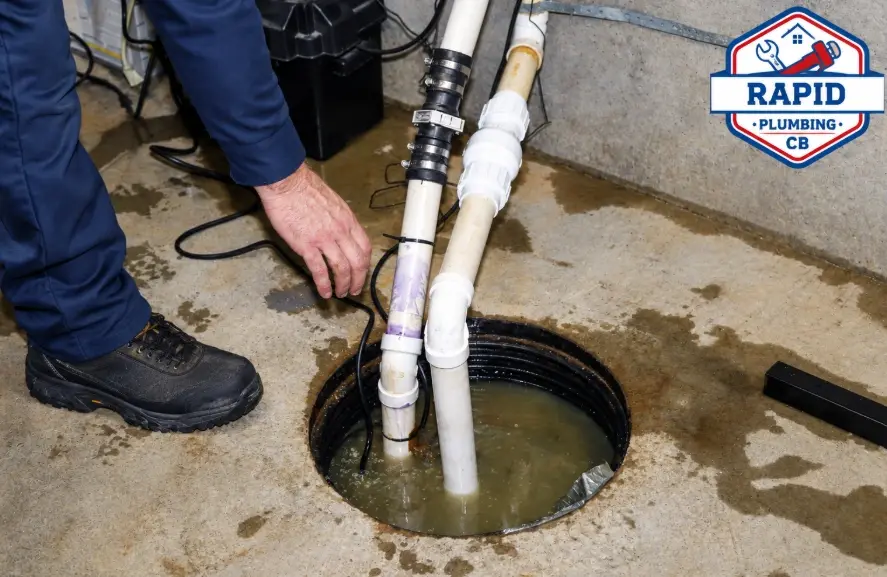
Planning a kitchen or bathroom remodel? Opening walls is the cheapest time to replace old lines, so read remodel plumbing in Council Bluffs first, and check the Council Bluffs plumbing permit guide before work begins.
Repair, Reline or Replace: How to Decide
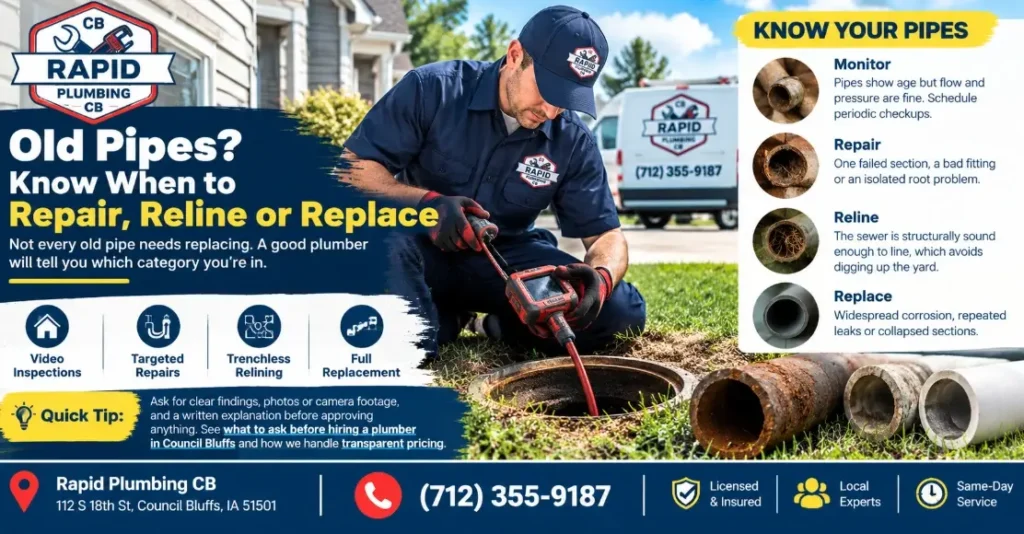
Not every old pipe needs replacing. A good plumber will tell you which category you are in:
- Monitor: pipes show age but flow and pressure are fine. Schedule periodic checkups.
- Repair: one failed section, a bad fitting or an isolated root problem.
- Reline: the sewer is structurally sound enough to line, which avoids digging up the yard.
- Replace: widespread corrosion, repeated leaks or collapsed sections.
Ask for clear findings, photos or camera footage, and a written explanation before approving anything. See what to ask before hiring a plumber in Council Bluffs and how we handle transparent pricing. For a look at real local jobs, browse our Council Bluffs neighborhood case studies.
Serving Older Neighborhoods Across Council Bluffs
Older housing is concentrated near the city’s historic core, but aging pipes turn up in every part of town. We serve homeowners in Downtown Council Bluffs, North Broadway, The Heights and Lake Manawa, plus ZIP codes 51501 and 51503. See the full service area list.
Worried About Your Old Pipes?
Call for an honest look at your plumbing. If something is leaking or backing up right now, our emergency plumber team can help.
Call (712) 355-9187Old House Plumbing in Council Bluffs: FAQs
How do I know if my Council Bluffs house has galvanized pipes?
Look at exposed supply lines in the basement. Galvanized pipe is dull gray, threaded at the joints and magnetic. If your home was built before about 1960 and has never been repiped, there is a good chance some remains.
Do cast iron drain pipes need to be replaced?
Not always. Cast iron can serve for decades, but heavy scale, cracks or repeated backups mean it is time for a camera inspection to see whether repair, lining or replacement makes sense.
Is it safe to drink water from old pipes?
Usually yes, but older homes can have lead solder or lead service lines. If you are concerned, test your water and follow the EPA guidance linked above.
Can I keep my home’s historic character and update the plumbing?
Yes. Most upgrades happen inside walls, floors and underground, so original trim, plaster and fixtures can often stay. Ask your plumber to plan access points that limit damage.
How often should an old house have a plumbing inspection?
Having the plumbing and sewer line checked when you buy and then every few years is a sensible rule for a pre-1970s home, or sooner if you notice any warning signs.
Galvanized, polybutylene or old copper pipes? See how repiping in Council Bluffs can fix rust, low pressure and repeated leaks.