Hydro Jetting vs Snaking Council Bluffs: Which Does Your Drain Actually Need?
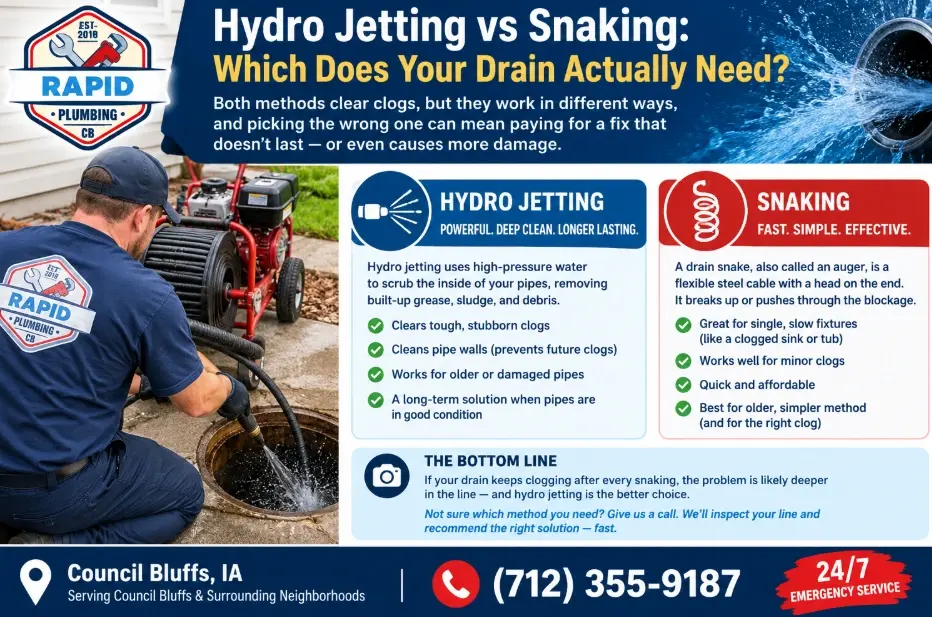
Hydro jetting vs snaking is the first question most Council Bluffs homeowners ask once a drain stops responding to a plunger. Both methods clear clogs, but they work in different ways, and picking the wrong one means paying for a fix that does not last or, in a damaged pipe, making a problem worse.
This guide gives you a plain decision rule: which method fits which clog, when the pipe should be inspected first, and what to expect when you call a local plumber for drain cleaning in Council Bluffs.
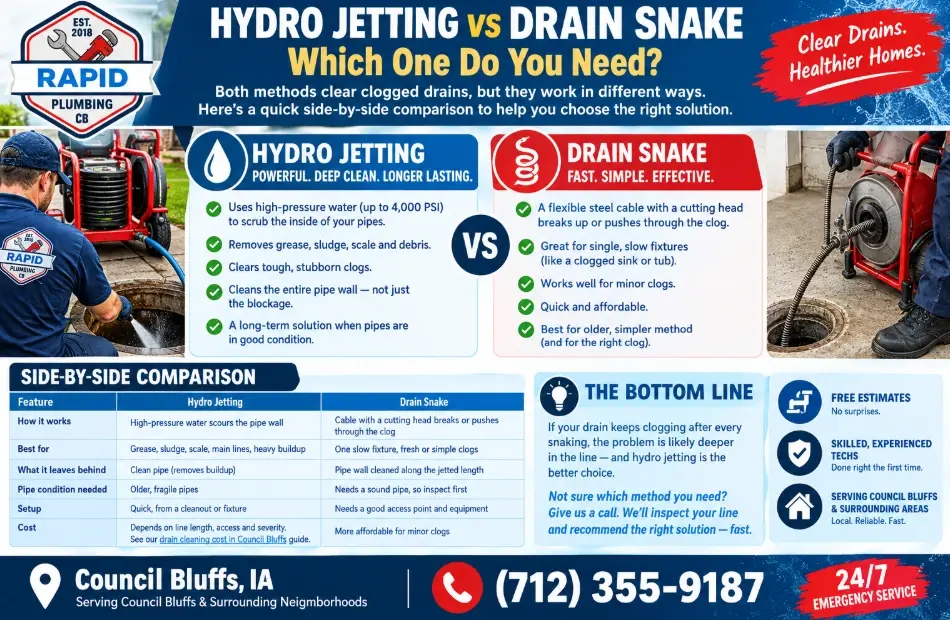
Short answer: snaking opens a path through a blockage. Hydro jetting scrubs the whole inside of the pipe with high-pressure water.
Use a snake for a single slow fixture or a fresh clog. Use hydro jetting when clogs keep coming back, when grease or roots are coating the line, or when a main line needs a full clean. On older or damaged pipes, a camera look comes before either one.
How Drain Snaking Works (and Where It Stops)
A drain snake, also called an auger, is a flexible steel cable with a head on the end. A plumber feeds it into the pipe and turns it until the head hooks, breaks up or pushes through the blockage. It is the older, simpler method, and for the right clog it is the better choice.
Where snaking works well
- A single sink, tub or shower that drains slowly
- A fresh clog from hair, soap or a small object
- Pipes that are old or fragile, because the cable is gentle on pipe walls
- Tight spots where a jetting hose cannot be set up safely
Where snaking falls short
- It often bores a hole through the clog and leaves the buildup on the pipe walls
- Grease and scale stay behind, so the clog can return within weeks or months
- It cannot clean a long main line from end to end
If your kitchen sink keeps clogging after every snaking, that pattern is the signal that something is coating the pipe, and a deeper clean is worth discussing. For a stubborn tub, our guide on how to unclog a shower drain covers what you can try before calling.
What Is Hydro Jetting?
If you are wondering what hydro jetting is, it is a professional cleaning method that sends a high-pressure stream of water through a hose with a special nozzle. The jets scour grease, scale, sludge and soft roots off the inside wall of the pipe and flush the debris out through the line.
The difference from snaking is the result. A snake clears a path. A jet restores the pipe’s working diameter, which is why jetting is the usual answer for repeat clogs, grease-heavy kitchen lines and main sewer lines that have slowly narrowed.
Where hydro jetting works well
- Clogs that keep coming back after snaking
- Grease buildup in kitchen and restaurant lines
- Main sewer lines that are slow in more than one drain
- Light to moderate root growth inside a sound pipe
Where hydro jetting is the wrong tool
- Cracked, collapsed or separated pipe, which needs repair, not cleaning
- Lines no one has inspected yet, when the pipe’s condition is unknown
- Setups where indoor access could send water back into your home
Hydro jetting is not a DIY job. The equipment is specialized, and the pressure is set by a technician who has seen the inside of the line first.
Hydro Jetting vs Drain Snake: Side-by-Side Comparison
Here is how a hydro jetting vs drain snake comparison looks across the points that actually decide the choice.
| Drain snaking | Hydro jetting | |
|---|---|---|
| How it works | Cable with a cutting head breaks or pushes through the clog | High-pressure water scours the full pipe wall |
| Best for | One slow fixture, fresh or simple clogs | Repeat clogs, grease, main lines, light roots |
| What it leaves behind | Buildup on the pipe walls can remain | Pipe wall cleaned along the jetted length |
| Pipe condition needed | Tolerates older, fragile pipe | Needs a sound pipe, so inspect first |
| Setup | Quick, from a cleanout or fixture | Needs a good access point and equipment |
| Cost | Depends on line length, access and severity. See our drain cleaning cost in Council Bluffs guide for the breakdown. | |
Which One Does Your Drain Need? A Simple Decision Rule
Match what you are seeing to the method below. If more than one line fits, start with the camera step in the next section.
- One sink or tub is slow, everything else drains fineSnaking is usually enough.
- The same drain clogs again within weeks or monthsBuildup is likely on the walls. Ask about camera inspection, then jetting.
- Kitchen line clogs repeatedly or smells of greaseJetting clears grease better than a cable. See restaurant plumbing in Council Bluffs for commercial kitchens.
- Several drains slow at once, or gurgling in the lowest drainMain line issue. Camera first, then the method it points to.
- Water or sewage backing up at the basement floor drainTreat as urgent. Stop using water and call a plumber.
- Roots are the suspected causeCut or jet the roots, but inspect the pipe, because roots enter through a defect. See tree roots in sewer lines.
- Drains are slow but the line itself is clearCheck for a clogged plumbing vent before paying for any cleaning.
Drain keeps clogging? Get the line checked before you pick a method.
Is Hydro Jetting Safe for Old Pipes? Camera First
This is the question that matters most in older Council Bluffs homes. The honest answer is that pipe age alone does not decide it. The condition of the pipe does. A sound older line can often be jetted, while a cracked or offset line can be damaged further by high-pressure water.
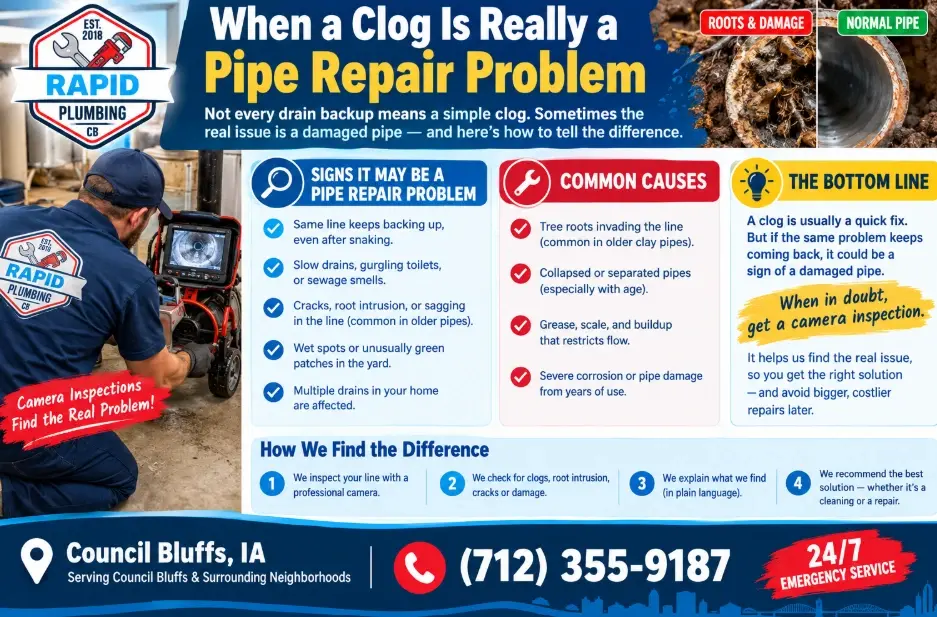
That is why a good plumber runs a sewer camera inspection before jetting an older line. The camera shows what the pipe is made of, whether there are cracks, belly sections or root entry points, and whether snaking, jetting or repair is the right next step. If you live in an older house, our guide to old house plumbing in Council Bluffs explains what to expect from aging pipes.
One rule worth remembering: neither snaking nor hydro jetting can fix a structural defect. If the camera finds a broken or collapsed section, the clog will keep returning until the pipe is repaired.
When a Clog Is Really a Pipe Repair Problem
Repeat backups that cleaning does not cure often mean the pipe itself has failed. Watch for these signs: the same line backing up after a recent cleaning, a camera showing cracks or a sagging section, roots returning quickly, or sewage smells and wet spots in the yard.
When that is the case, the fix is sewer line repair, and in many cases trenchless pipe lining can restore the line without digging up the whole yard. It also helps to know who is responsible for your sewer line in Council Bluffs, since the property owner usually handles the section on private property.
What to Do Before You Call a Plumber
- Skip the chemical drain cleaners. They rarely clear a deep clog and can harm pipes. Read why chemical drain cleaners damage pipes before you pour anything.
- Stop running water in the house if multiple drains are slow or backing up.
- Flush only toilet paper. The City of Council Bluffs reminds residents through its Public Works sewer maintenance program that wipes labeled flushable can still clog sewer lines.
- Note the pattern. Which drains are slow, how long it has been happening and whether it keeps returning helps the plumber choose the right method fast.
What to Expect When You Call for Drain Cleaning
- You describe the symptoms. Tell the plumber which drains are affected and whether this has happened before.
- The line is checked. For repeat clogs or older homes, a camera shows the pipe’s real condition.
- The method is chosen from what is found. Simple clog, snake. Coated or heavily built-up line in sound pipe, hydro jetting. Damaged pipe, a repair quote.
- The result is confirmed. On a main line, ask to see the camera view after cleaning so you know the pipe is actually clear.
If water is backing up into your home right now, skip the research and call our emergency plumber in Council Bluffs. Whether you are in Old Town Council Bluffs, downtown or anywhere else we serve, see all the areas we cover.
Not Sure Which Method Your Drain Needs?
Tell us what the drain is doing. We will inspect the line, explain the options in plain language and recommend only what the pipe actually needs.
Hydro Jetting vs Snaking: Frequently Asked Questions
Is hydro jetting better than snaking?
Not always. Hydro jetting cleans more thoroughly, so it is better for repeat clogs, grease and main lines. Snaking is often enough for a simple, fresh clog in one fixture. The right choice depends on the clog and the condition of the pipe.
Is hydro jetting safe for old pipes?
It can be, if the pipe is in sound condition. Age alone is not the deciding factor. A camera inspection first shows whether the line can handle jetting. Cracked, collapsed or separated pipe should be repaired instead of jetted.
What is hydro jetting?
Hydro jetting is a drain cleaning method that uses a high-pressure water stream through a specialized hose and nozzle to scour grease, scale, sludge and soft roots from the inside of a pipe.
Can hydro jetting remove tree roots?
It can clear roots from inside a sound pipe, but roots usually enter through a crack or joint. If that opening is not repaired, they tend to grow back. See our guide to tree roots in sewer lines.
How often should a drain be hydro jetted?
Most homes do not need scheduled jetting. It is mainly a maintenance option for grease-heavy kitchen lines and commercial properties, or for a main line with a history of buildup.
How much does hydro jetting cost compared to snaking?
Snaking generally costs less upfront. Jetting costs more because of the equipment and the inspection that usually comes with it. The final price depends on line length, access and how severe the buildup is. See our drain cleaning cost in Council Bluffs guide.