Water Heater Relief Valve Leaking: Normal Drip or Danger Sign?
A water heater relief valve leaking problem is one of the few plumbing issues where the part that is leaking is also doing its job. The relief valve (often called the T&P valve) exists to open when pressure or temperature inside the tank climbs too high. So water at the valve means something is pushing it open, or the valve itself has worn out. This guide shows you how to tell which, what is safe to check yourself, and when to call a licensed Council Bluffs plumber.
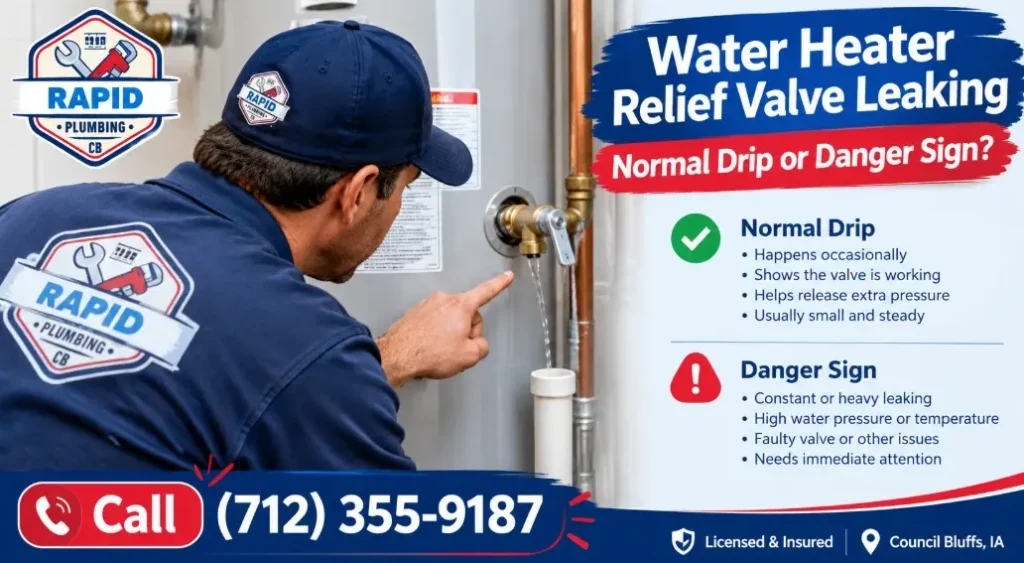
The short answer: a drip is a warning, not an automatic emergency. Plumbing code guidance treats any ongoing discharge from a relief valve as a symptom of a pressure problem, a heater problem, or a failing valve. Steam, hissing, or a steady stream is urgent. A slow drip that only shows up while the heater is heating is common, but it still needs a fix.
What a Water Heater Relief Valve Actually Does
The temperature and pressure relief valve sits near the top of the tank, usually on the side or the top. A metal or plastic discharge pipe runs down from it. Most residential valves are set to open at about 150 psi of pressure or 210°F, whichever comes first. When it opens, hot water flows down that pipe so the tank is never allowed to build dangerous pressure.
That is why this part is never a “nuisance” part. If you are curious how to exercise the valve during normal upkeep, our guide on how to drain a water heater in Council Bluffs covers the annual check. The rest of this page is about what to do when the valve is already dripping. Tankless units carry a relief valve too, so the same logic applies if you own a tankless water heater.
Is It Normal? A Quick Triage Table
Match what you see at the discharge pipe with the closest row below. Watch the pipe for a full heating cycle before you decide.
| What you see | What it usually means | What to do |
|---|---|---|
| A few drops, only while the heater is heating | Thermal expansion in a closed system | Schedule an expansion tank check; not an emergency |
| Constant dripping, even when the heater is idle | Worn or debris-fouled valve, or high house pressure | Check pressure, then replace the valve; call this week |
| Dripping plus water that is too hot at the tap | Thermostat or heating element fault pushing temperature up | Turn the heater off and call a plumber |
| Steady stream, hissing, or steam | Valve is actively relieving dangerous pressure or heat | Shut off power or gas and the cold supply; call now |
| Rust, crust, or mineral buildup around the valve | Aging valve, hard-water scale, or a corroding tank | Replace the valve and inspect the tank |
| No discharge pipe attached to the valve | Installation problem and scald risk | Do not use as-is; have a plumber correct it |
Never cap, plug, or tape over the valve or its discharge pipe. It can look like the easy fix for a drip, but a blocked relief valve can no longer protect the tank. Also keep your face and hands away from the discharge pipe. The water that comes out can be hot enough to scald.
What to Do Right Now If Your Relief Valve Is Leaking
- Look before you touch. Check how much water is coming out and whether you see steam. If it is a heavy stream, skip ahead to the shutoff steps.
- Turn off the heat source. Switch off the breaker for an electric heater. For a gas heater, turn the gas control to the off or pilot setting printed on the label.
- Close the cold water supply valve on the pipe feeding the top of the tank. Turn it clockwise until it stops. This stops new water from refilling the tank.
- Do not lift the lever on a valve that is already leaking. Debris can keep it from seating again, and the water is hot.
- Dry the area and put a pan or towels under the pipe. Note the time and whether the dripping slows as the tank cools. That detail helps a plumber diagnose the cause quickly.
- Call for service. If you want the leak looked at today, our 24-hour emergency plumber team can help.
Relief Valve Dripping? Get It Checked the Same Day
Licensed Council Bluffs plumbers. Honest diagnosis first, so you only pay for the fix you need.
📞 Call (712) 355-9187The 5 Most Common Reasons a Relief Valve Leaks
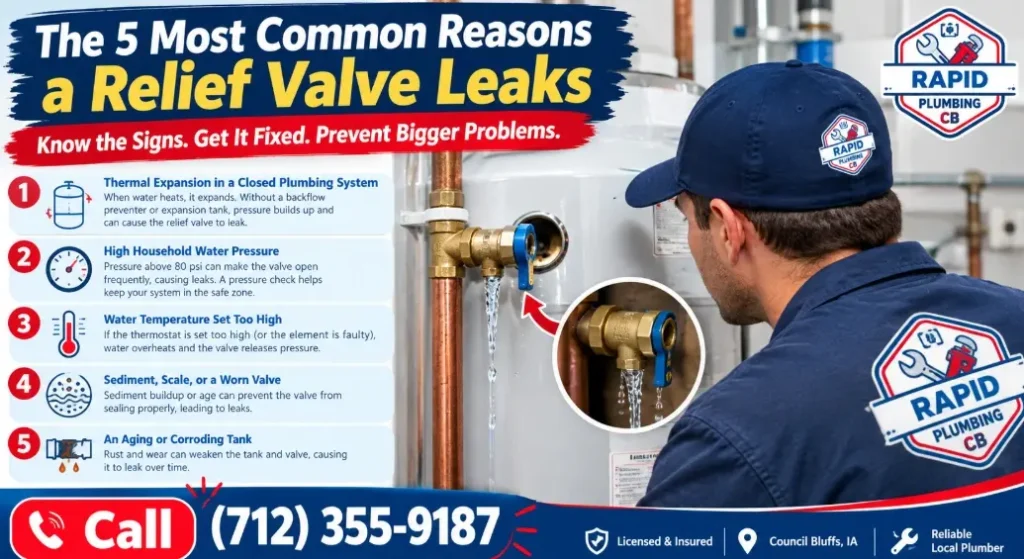
1. Thermal Expansion in a Closed Plumbing System
Water expands when it heats, and the extra volume has to go somewhere. In older homes the expanded water simply pushed back into the city main. Today, many homes have a pressure-reducing valve, a check valve, or a backflow preventer that stops water from flowing backward. That turns the plumbing into a closed system, and the only escape left is the relief valve. The classic sign is a drip that appears only after the heater runs and stops once the tank cools. The usual fix is a small expansion tank on the cold supply line near the heater, set to match your house pressure.
2. High Household Water Pressure
Plumbing codes generally call for a pressure-reducing valve when incoming pressure is above 80 psi, and most homes run happiest well below that. You can check static pressure with a cheap gauge on an outdoor hose bib. If your pressure is high, every fixture and appliance is under strain, not just the heater. The reverse problem is also common, so if your pressure seems off in the other direction, see our guide to low water pressure in Council Bluffs homes. For questions about supply pressure on the city side, the Board of Water Works Trustees is the right starting point.
3. Water Temperature Set Too High or a Failing Thermostat
Hotter water means more pressure. A common recommended setting is 120°F. If the thermostat is set higher, or if a stuck thermostat or electric element is letting the water keep heating, the valve will open on temperature instead of pressure. Water that feels scalding at the tap, or a heater that cycles constantly, points this direction. If hot water has gone missing entirely instead, start with our no-hot-water troubleshooting guide.
4. Sediment, Scale, or a Worn Valve
Mineral debris can stop the valve seat from sealing, and the spring and seat wear out with age. Council Bluffs water is hard enough that sediment is a real factor here, which is why regular flushing matters. See how often to flush a water heater and consider a water softener to slow the buildup. A valve that is leaking only because it is old is the best-case scenario, because replacing it is usually quick.
5. An Aging or Corroding Tank
Sometimes the valve is the messenger. A tank near the end of its life, with rust streaks, popping sounds, or leaks elsewhere, may be failing, and a new valve will not change that. Read our list of signs your water heater is about to fail, and if the water is pooling at the base rather than the valve pipe, compare it with our guide to a water heater leaking from the bottom.
Safe Checks You Can Do Before the Plumber Arrives
- Watch the timing. Does it drip only during heating, all day, or only after heavy hot water use? Timing separates expansion, pressure, and a worn valve.
- Read your house pressure with a gauge on an outdoor hose bib while no water is running.
- Check the thermostat setting and compare with the temperature at a nearby tap, using caution.
- Look at the discharge pipe. It should be present, pointed downward, and open at the end.
- Note the heater’s age on the rating plate. Age changes the repair-or-replace answer.
Discharge Pipe Red Flags That Make a Leak More Dangerous
The pipe below the valve matters as much as the valve itself. Model plumbing code guidance asks that the discharge pipe run downhill without dips, stay open at the end with no threads, caps, or shutoff valves, end a short distance above the floor or drain, and be visible so occupants notice a discharge. Warning signs include a pipe that is capped, threaded at the end, routed into a sink or tub, trapped with sags, or missing altogether. If you see any of these, have a plumber correct them. If the pipe runs outdoors or into an unheated space, winter ice can also block it, which is another reason to review our guide to preparing your plumbing for Iowa and Nebraska winters and our water heater winter tips. For how local requirements fit in, see what makes a plumbing job up to code in Iowa.
Repair or Replace: What a Fix Usually Looks Like
| Situation | Typical fix | Does the heater stay? |
|---|---|---|
| Old or debris-fouled valve, tank dry and clean | Replace the T&P valve | Yes |
| Drips only while heating; closed system | Install or recharge an expansion tank | Yes |
| House pressure above code limits | Install or adjust a pressure-reducing valve | Yes |
| Thermostat or element fault | Replace the failed control or element | Usually |
| Old tank with rust, other leaks, or repeat valve failures | Replace the water heater | No |
This page focuses on the safety question, so we are not listing prices here. For typical ranges, read our water heater repair cost guide for Council Bluffs. When the heater is the problem, our water heater replacement service and water heater installation team can size and set up a new unit. Our full water heater services page lists everything we handle.
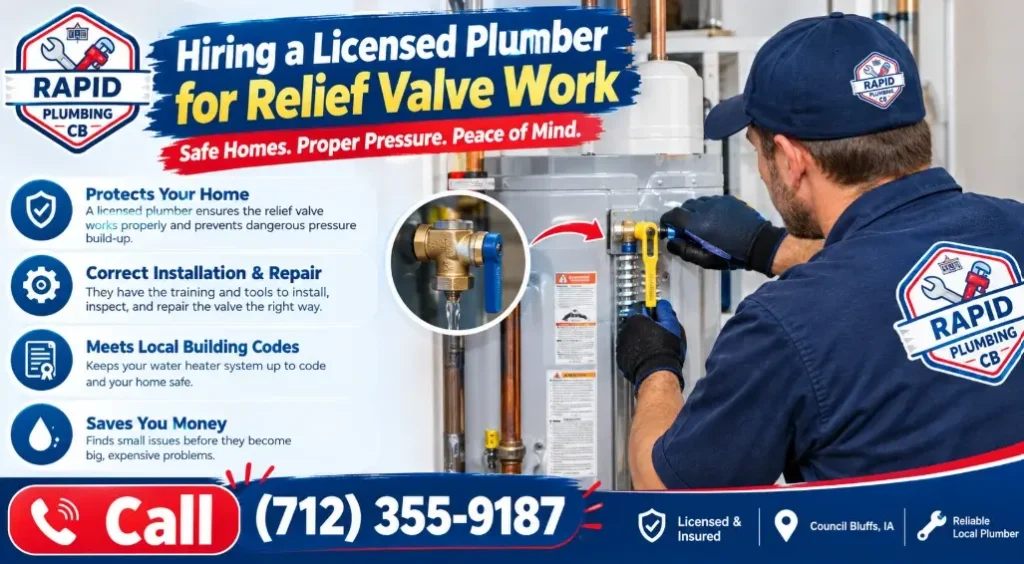
Hiring a Licensed Plumber for Relief Valve Work
Because the relief valve is a safety device, it is not a part we recommend guessing on. Water heater work can also involve gas, electrical, and permit requirements. The City of Council Bluffs publishes information on its Building Division, its permit applications, and its contractor licensing requirements. Our overview of water heater permits in Council Bluffs explains when a permit comes into play, and our article on licensed vs. unlicensed plumber risks explains why it matters who does the work.
Water Heater Relief Valve Leaking: When to Call a Plumber
If you have a water heater relief valve leaking situation and any item below applies, call a plumber instead of waiting:
- You see steam, hear hissing, or the discharge is a steady stream.
- The valve drips constantly, including when the heater is idle.
- The water at your taps is much hotter than normal.
- The discharge pipe is capped, threaded, missing, or routed somewhere unsafe.
- You smell gas (leave the home and call your gas utility or 911 from outside).
- You also have a hot water outage. See our no hot water emergency guide or ask about same-day water heater service.
For diagnosis and repair, see our water heater repair in Council Bluffs service. We find the real cause first, then fix the valve, the pressure, the expansion, or the heater.
Why a leaking valve rarely fixes itself: the conditions that open the valve (pressure, heat, or expansion) usually return every heating cycle. Mineral debris can also keep a valve cracked open once it has opened. The longer it drips, the more water damage, wasted energy, and corrosion around the tank you may be paying for.
Council Bluffs Resources
- City of Council Bluffs – Building Division
- City of Council Bluffs – Permit Applications
- City of Council Bluffs – Contractor Licensing
- City of Council Bluffs – Board of Water Works Trustees
- City of Council Bluffs – Utilities
Frequently Asked Questions About a Water Heater Relief Valve Leaking
Is a water heater relief valve leaking dangerous?
The drip itself is a warning, not usually an emergency. The danger is in what causes it (excess pressure or overheating) and in what people do about it. A steady stream, steam, or a hissing sound means shut off the power or gas and call a plumber right away. Never cap or plug the discharge pipe.
Is it normal for a T&P valve to drip a little?
A brief drip while the heater is heating up often points to thermal expansion in a closed plumbing system. It is common, but it is still worth fixing, because the valve is releasing water it should not need to release. Constant dripping, or dripping when the heater is idle, is not normal.
Can I just replace the relief valve myself?
Replacing the valve is a routine plumber job, but if the new valve starts leaking too, the valve was never the real problem. The cause is usually pressure, temperature, or expansion. Because the valve is a safety device, we recommend a licensed plumber handle it.
Why is my relief valve leaking after a new water heater was installed?
A new heater in a home with a pressure-reducing valve, a backflow preventer, or a check valve on the supply can create a closed system. Without an expansion tank, the extra volume from heating has nowhere to go and escapes through the relief valve.
What water pressure is too high for a water heater?
Plumbing codes generally call for a pressure-reducing valve when incoming pressure is above 80 psi. A simple gauge on an outdoor hose bib shows your static pressure. If it reads high, the water heater is not the only fixture at risk.
Should I turn off my water heater if the relief valve is leaking?
If the discharge is heavy, steaming, or continuous, yes. Turn off the electric breaker or set the gas control to off or pilot, then close the cold water supply valve to the heater and call a plumber. For a slow drip, you can keep the heater running briefly while you arrange a visit, but do not ignore it.
Does a leaking relief valve mean I need a new water heater?
Not always. If the heater is young and the tank is dry and rust-free, a new valve or an expansion tank often solves it. If the tank is old, corroded, or has other leaks, replacement may make more sense. Our plumber can tell you which applies.
Don’t Wait on a Safety Valve
Talk to a licensed Council Bluffs plumber about your leaking relief valve today.
📞 Call (712) 355-9187Related Reading From Rapid Plumbing CB