Snaked It Once, Twice, Three Times — And It’s Still Clogging?
If your kitchen sink keeps clogging after snaking, you’re not imagining it and you’re not doing anything wrong. A snake is a great tool for punching a hole through whatever’s blocking the pipe, but that’s often all it does — poke a channel through the clog rather than actually removing it. The buildup coating the walls of the pipe stays right where it was, and within a few weeks (sometimes days), it narrows back down and traps debris all over again. If you’re tired of the same drain problem showing up every month, call (712) 355-9187 and let’s find out what’s actually going on inside your line.
Why a Snake Fixes the Symptom, Not the Problem
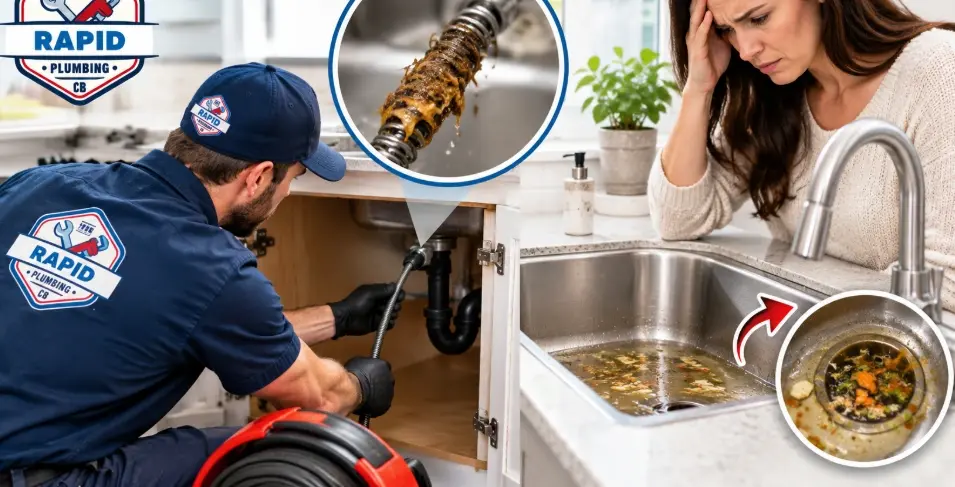
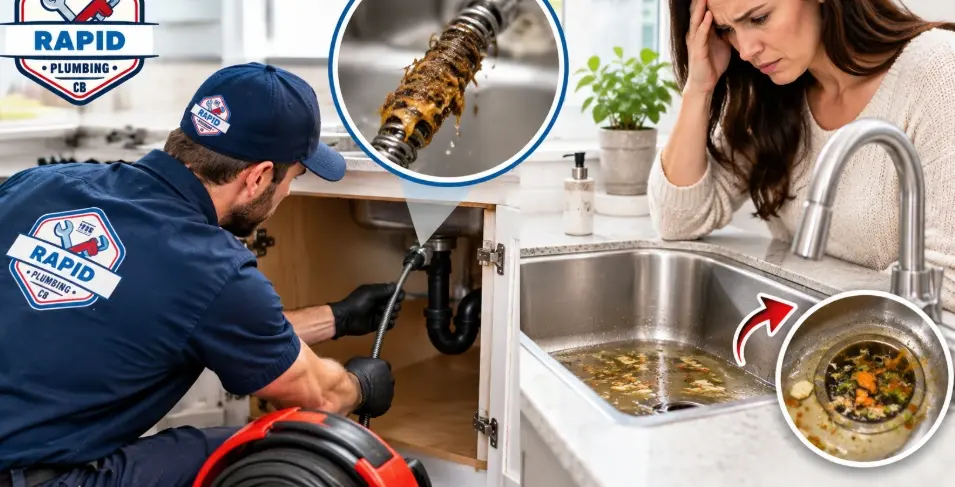
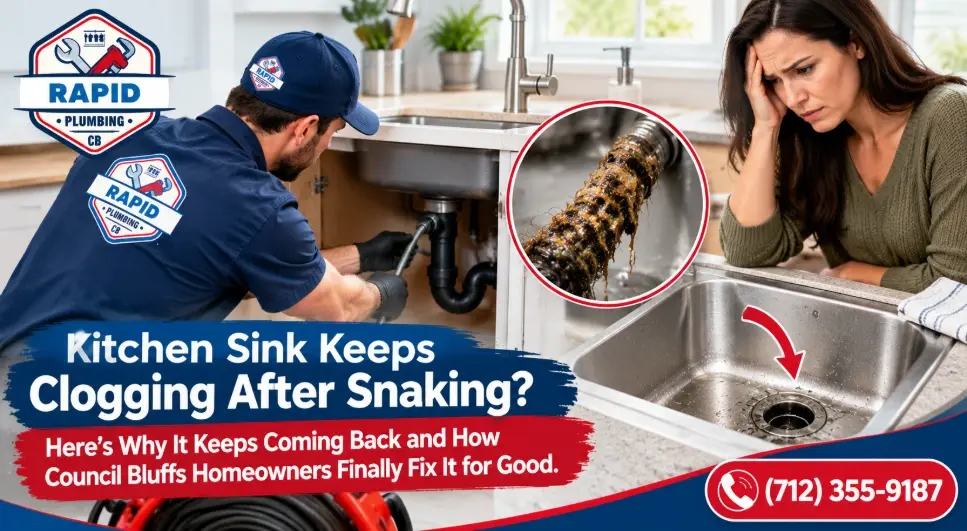
A drain snake (or auger) works by pushing a flexible cable through the pipe until it either breaks up the clog or drags a chunk of it back out. That’s genuinely useful for a sudden, isolated blockage. The problem is what a snake doesn’t do: it typically bores a path through the center of the clog rather than scraping the full diameter of the pipe clean. Grease, soap film, and food residue left clinging to the pipe walls become the foundation for the next clog — often forming faster than the first one did, because that surface is now rougher and more prone to trapping debris.
The Most Common Causes of a Recurring Drain Kitchen Sink Keeps Clogging Council Bluffs After Snaking?
1. Grease and Fat Coating the Pipe Walls
Cooking grease goes down the drain as a liquid and solidifies once it cools inside the pipe — a process that speeds up during Iowa’s colder months, when pipe temperatures drop. A snake can punch through a hardened grease plug, but the greasy film left behind on the pipe walls sets the stage for the next one almost immediately.
2. Food Particles and Disposal Habits
Even with a garbage disposal running, starchy foods like rice, pasta, and potato peels swell and stick to pipe walls rather than breaking down cleanly. Coffee grounds and eggshells behave the same way. Over time these particles combine with grease into a dense sludge that a snake glides right past.
3. Improper Slope or Undersized Piping in Older Homes
Many older homes in the Council Bluffs area were plumbed before modern slope and diameter standards existed. If a drain line doesn’t have enough fall toward the main line, wastewater moves too slowly to carry debris all the way out, and buildup accumulates well beyond where a snake typically reaches.
4. Venting Problems
Every drain relies on a vent stack to let air in behind the water so it can flow freely. A blocked, undersized, or poorly designed vent creates a partial vacuum that slows drainage and encourages debris to settle rather than flush through — a cause that’s easy to miss because it has nothing to do with what’s actually inside the trap.
5. A Clog Further Down the Line Than the Snake Reached
Standard hand-snaking tools typically clear the first several feet of pipe. If the real blockage — or a partial blockage that’s slowly building — sits further down near the branch line or main stack, a short snake run will temporarily restore flow without ever touching the actual problem.
Signs the Real Fix Is Bigger Than a Snake
- Slow draining returns within days or a few weeks of snaking
- Gurgling or bubbling sounds from the sink, dishwasher, or nearby drains
- Persistent grease or food odor even right after cleaning
- Backups that happen even when you’re careful about what goes down the drain
- Multiple fixtures draining slowly at the same time, suggesting the issue is further down the line
Stop the Cycle of Repeat Clogs »
What Actually Clears a Recurring Drain Clog for Good
When a recurring drain clog keeps coming back no matter how many times it’s snaked, the fix usually involves going beyond a hand auger:
- Hydro jetting — a high-pressure water jet that scours the full interior diameter of the pipe, removing grease, scale, and residue rather than just punching a hole through it.
- Camera inspection — a small camera run through the line to pinpoint exactly where the buildup, slope issue, or blockage sits, so the fix targets the actual cause instead of guessing.
- Vent stack evaluation — checking whether poor drainage is actually a venting issue rather than a clog issue.
- Pipe repair or replacement — in older homes with undersized or poorly sloped lines, sometimes the long-term fix is correcting the pipe itself rather than repeatedly clearing it.
We use the same camera inspection process we rely on for sewer line diagnostics to get eyes on exactly what’s happening inside a stubborn kitchen line before recommending a fix.
Preventing the Next Clog
- Wipe grease and fat into the trash instead of rinsing it down the drain, even in small amounts
- Run cold water (not hot) while using the garbage disposal, and run it for a few extra seconds after grinding stops
- Avoid putting starchy, fibrous, or expanding foods down the disposal — rice, pasta, celery, and potato peels are common repeat offenders
- Schedule periodic professional drain cleaning rather than waiting for a full backup, especially in older homes
- Skip chemical drain cleaners for recurring clogs — they rarely reach buildup coating the full pipe wall, and repeated use can damage older pipe materials over time (see our full breakdown of why chemical drain cleaners damage pipes)
Garbage Disposal or Drain Line? How to Tell the Difference
Sometimes what looks like a recurring kitchen sink clog is actually a struggling garbage disposal rather than a blocked pipe. If the disposal hums without grinding, jams frequently, or the clog seems to sit right at the disposal itself, it may be time to have it evaluated rather than repeatedly snaking the line behind it. Our guide on garbage disposal repair vs. replacement walks through how to tell which one you’re dealing with.
Why Council Bluffs Homeowners Call Rapid Plumbing CB for Recurring Drain Clogs
A clog that keeps coming back after snaking is frustrating precisely because it feels solved and then isn’t. At Rapid Plumbing CB, we don’t stop at a quick snake-and-go visit for a repeat offender — we look for the actual root cause, whether that’s grease buildup along the full pipe wall, a slope issue in an older home, or a blockage sitting further down the line than a hand auger reaches. That’s the difference between a clog that stays gone and one that’s back on your calendar next month.
Frequently Asked Questions
Why does my kitchen sink keep clogging even after I snake it myself?
A snake typically bores a channel through the clog rather than scraping the pipe clean, so grease and debris left on the pipe walls quickly rebuild into a new blockage.
How is hydro jetting different from snaking?
Hydro jetting uses high-pressure water to clean the entire interior diameter of the pipe, removing buildup along the walls rather than just punching a path through the center of a clog.
Could the problem be my garbage disposal instead of the drain line?
Yes. A struggling or jammed disposal can look like a recurring drain clog. If the disposal hums, jams, or the blockage seems to sit right at the disposal, it’s worth having it inspected separately from the drain line.
Are chemical drain cleaners a good fix for a recurring clog?
Not for a clog that keeps returning. Chemical cleaners rarely remove buildup coating the full pipe wall, and repeated use can damage older pipe materials over time.
When should I get a camera inspection instead of just snaking again?
If a clog returns within days or weeks of snaking, or multiple fixtures are draining slowly at once, a camera inspection is the fastest way to find the actual cause instead of repeating a temporary fix.
Related Reading
- Drain Cleaning Cost in Council Bluffs
- Why Your Basement Floor Drain Backs Up
- Why Chemical Drain Cleaners Damage Pipes
- Garbage Disposal Repair vs. Replacement
- Why We Use Camera Inspections Before Every Sewer Repair
- Tree Roots in Sewer Lines
- Sewer Line Repair Cost in Council Bluffs
- Common Toilet Problems in Council Bluffs
- What Causes Noisy Pipes
- Why a Sump Pump Runs Constantly
- Sump Pump Installation Cost in Council Bluffs
- Slab Leak Signs and Cost in Council Bluffs
- Signs of a Hidden Water Leak in Your Home
- Low Water Pressure in Council Bluffs Homes
- Why Does My Water Smell Like Sulfur?
- Water Softener Council Bluffs
- Leaky Faucet? Repair vs. Replace Guide
- Water Heater Repair Cost in Council Bluffs
- Best Water Heater Brands for Council Bluffs Homes
- Tankless vs. Traditional Water Heaters
- Signs Your Water Heater Is About to Fail
- Reverse Osmosis vs. Water Filter
- Gas Line Installation in Council Bluffs
- Signs You Need Whole-Home Repiping
- Bathroom & Kitchen Remodel Plumbing in Council Bluffs
- What Makes a Plumbing Job “Up to Code” in Iowa
- Backflow Preventer Council Bluffs: Why It’s Required
- Residential vs. Commercial Plumber Difference
- Licensed vs. Unlicensed Plumber Risks
- What to Ask Before Hiring a Plumber
- Why Choose a Family-Owned Local Plumber
- Benefits of Hiring a Local Plumber
- Our Transparent Pricing Promise
- Why Google Reviews Matter When Choosing a Plumber
- Common Plumbing Problems Homeowners Face
- Drain Cleaning Cost in Council Bluffs
- When to Call a Plumber Instead of Fixing It Yourself
- Plumbing Maintenance Checklist for Landlords
- Plumbing Inspections for Rental Properties
- Case Study: Drain Clog Savings
- What Happens When You Call an Emergency Plumber
Council Bluffs Resources on Sewer & Drainage
- Council Bluffs Sewer Division
- Council Bluffs Engineering Division
- Council Bluffs Report a Nuisance
- Council Bluffs Public Works Department
- Council Bluffs Water Pollution Control Plant
- Council Bluffs Utilities Department
Call Rapid Plumbing CB Now » Book Your Drain Cleaning »