Sump Pump Smell Causes Fix: Why Your Basement Stinks and How to Fix It
A sump pump smell is one of the most common complaints we hear from Council Bluffs homeowners. It is easy to ignore until the odor spreads through the basement. The good news is that most sump pump smells come from a few causes you can check yourself. The bad news is that some of them, especially a rotten egg or raw sewage smell, can point to a problem that needs a plumber quickly.
This guide explains what the smell is telling you, the five most common causes in Council Bluffs homes, a step-by-step way to clean the pit, and the warning signs that mean it is time to call a professional.
What Does Your Sump Pump Smell Like?
The type of smell often points to the cause. Use this table as a first check:
| Smell | Most likely cause | Urgency |
|---|---|---|
| Musty or mildew | Stagnant water and mold growth in a damp or uncovered pit | Low to moderate |
| Rotten eggs or sulfur | Dry trap or sewer gas, or bacteria in standing water. Rule out natural gas first | Moderate |
| Raw sewage | Connected drain or sewage ejector problem, or a backed-up line | High. Call a plumber |
| Rotting or swampy | Leaves, dirt, or debris decaying at the bottom of the pit | Low, but clean it soon |
5 Common Causes of a Sump Pump Smell
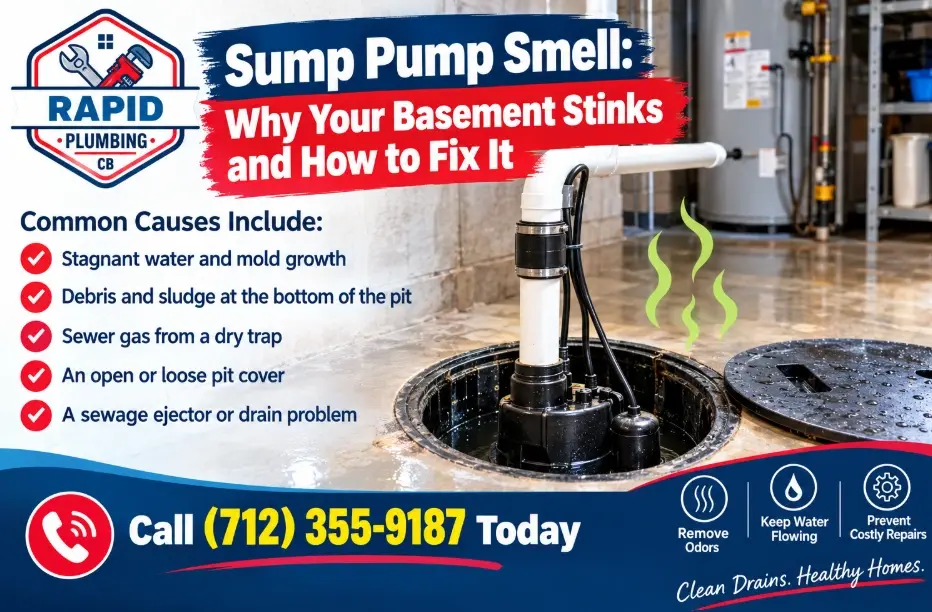
1. Stagnant Water and Bacteria
A sump pit holds water between pump cycles. When that water sits for days, bacteria and algae multiply and form a slimy film called biofilm on the pit walls and pump housing. Homes near the Missouri River often have a high water table, so the pit may stay wet for long stretches. That is when the smell builds.
2. Debris and Sludge at the Bottom of the Pit
Dirt, sand, leaves, and small stones wash into the pit over time. They settle, break down, and release odor. A pit that has not been cleaned in years can smell strongly even when the pump works perfectly.
3. Sewer Gas From a Dry Trap
Some basements have a sump pit connected to a floor drain or a nearby drain line. Water sitting in the trap blocks sewer gas from rising into the room. If that water evaporates, which happens in dry summers or in basements that are rarely used, gas can escape. This usually smells like rotten eggs or a sewer.
4. An Open or Loose Pit Cover
A missing, cracked, or loose cover lets humid basement air, mold spores, and odors move freely into the room. A tight, sealed cover is one of the cheapest fixes for both odor and basement humidity.
5. A Sewage Ejector or Connected Drain Problem
In some older homes, the pit is part of a sewage ejector system that moves waste up to the sewer line. If the sealed lid, vent, or check valve fails, raw sewage odor can escape quickly. This is not a do-it-yourself fix. If you suspect it, read about our sewer line repair services and call a licensed plumber right away.
How to Clean a Smelly Sump Pit: Step-by-Step
If you are not sure where your pit is or how it works, start with our guide to what a sump pump pit is and how it should look. Then follow these steps. Before you start, unplug the pump at the outlet. If the pump is hardwired, switch off its breaker. Never reach into a pit with the power on.
- Remove the pit cover and look inside. Note any debris, slime, or strong odor.
- Lift the pump out carefully and let the water drain back into the pit. Keep the discharge hose attached if you can.
- Scoop out sludge, leaves, and sediment with a cup or a wet vacuum. Dispose of it outside the house.
- Scrub the pit walls and the pump housing with a stiff brush, warm water, and a little mild dish soap. Rinse well.
- For stubborn odor, mix one cup of white vinegar with one gallon of water. Let it sit for 10 to 15 minutes, then rinse. Never mix bleach with vinegar or ammonia-based cleaners, because the fumes can be dangerous.
- Check the pump intake screen and the check valve for debris. Make sure the float moves freely.
- Put the pump back, plug it in, and run a test by pouring a bucket of water into the pit. Confirm the pump turns on and shuts off properly.
- Replace the cover so it sits tight.
Not sure if your pit needs repair or a cleaning? Our team can inspect your sump pump and tell you exactly what is causing the smell.
View Sump Pump Repair ServicesHow to Stop Sump Pump Smell From Coming Back
- Clean the pit once or twice a year, ideally before spring thaw and again before winter.
- Keep the lid sealed and check it after storms and hard freezes.
- In dry months, run water into floor drains and other traps every few weeks to keep the water seal full.
- Test the pump every few months. Our guide on how to test a sump pump in Council Bluffs walks you through it.
- Consider a backup or alarm system so you know when the pit is filling or the pump has stopped. Read about battery backup sump pump options for Council Bluffs homes and sump pump alarms.
Smell still there after cleaning? Do not keep guessing. A quick call can rule out a drain or sewer problem before it gets worse.
Call (712) 355-9187 TodayWhen a Sump Pump Smell Means Call a Plumber
Cleaning the pit yourself is usually enough for a musty or swampy smell. Call a professional if any of these apply:
- The smell is raw sewage, or it returns within a few days of cleaning.
- You smell rotten eggs and it is strong near a gas appliance or the gas meter. Leave the house, do not use light switches or flames, and call your gas utility or 911 from outside.
- The pump runs constantly or keeps cycling on and off. See our explanation of why a sump pump runs constantly.
- The pump does not turn on at all. Read why a sump pump is not working to narrow down the cause.
- Sinks, tubs, or floor drains back up when water is discharged, which can point to a drain line problem.
Rapid Plumbing CB handles sump pump repair and sump pump replacement across Council Bluffs. We look for the real source of the smell instead of just masking it. Before any major plumbing work, check permit requirements with the City of Council Bluffs Building Division.
If your smell is not sump related, it may be a different issue. Sulfur odor in tap water is covered in our guide to why your water smells like sulfur in Council Bluffs, and a clogged or slow drain may need drain cleaning.
Can a Smelly Sump Pit Mean Radon?
Radon is odorless, so a sump pit that smells fine does not mean the air is safe. Sump pits can be an entry point for radon in basements. The Iowa Department of Health and Human Services radon program explains testing and mitigation options. Visit the Iowa HHS radon information page. A tight pit cover can help limit radon entry, but only a test can tell you the actual level in your home.
Sump Pump Smell FAQs
Why does my sump pump smell like sewage?
A sewage smell usually means sewer gas is escaping through a dry trap or a connected drain, or that a sewage ejector system needs attention. Raw sewage odor should be checked by a plumber promptly.
Is it safe to clean a sump pit myself?
Yes, as long as the pump is unplugged or its breaker is off and you do not mix cleaning products. If you notice a sewage or gas smell, call a professional instead of working in the pit.
Can I use bleach to get rid of a sump pump smell?
Diluted bleach can kill some bacteria, but it does not remove sludge, and it should never be mixed with vinegar or ammonia. Remove the debris first, then use mild soap and a vinegar rinse for most pits.
How often should I clean my sump pit?
Once or twice a year is a good schedule for most Council Bluffs homes, plus a quick check after heavy rain or spring thaw.
Does a musty sump pump smell mean mold?
A musty smell can come from mold or mildew in a damp pit. Look for visible growth on the walls, lid, and nearby surfaces. Fix the moisture source and clean the area.
Need Help With a Sump Pump That Smells?
Call Rapid Plumbing CB at (712) 355-9187 for a fast diagnosis and clear repair options in Council Bluffs.
Call (712) 355-9187