
If you’ve been comparing reverse osmosis vs water filter systems for your Council Bluffs home, you’re not alone — it’s one of the most common questions homeowners ask once they start looking into better-tasting, cleaner tap water. Both options improve water quality, but they work in very different ways, cost different amounts, and fit different households. Here’s a straight, no-sales-pitch breakdown to help you decide.
Reverse Osmosis vs Water Filter: How They Actually Work
How a Reverse Osmosis System Works
A reverse osmosis (RO) system forces tap water through a semi-permeable membrane under pressure, physically blocking dissolved solids, heavy metals, and many contaminants that simpler filters can’t catch. Most residential RO systems also include pre-filters (sediment and carbon) and a post-filter, so water passes through several stages before it reaches your glass. The result is water that’s been reduced almost to its base molecular form, then usually re-mineralized slightly for taste.
How a Standard Water Filter Works
A standard water filter — whether it’s a pitcher, faucet-mount, or whole-house carbon filter — relies on activated carbon (and sometimes a fine mesh) to trap chlorine, sediment, and certain organic compounds as water passes through. It doesn’t use pressure or a membrane, which makes it simpler, cheaper, and faster to install, but it’s also less effective against dissolved contaminants like nitrates, arsenic, or heavy metals.
Reverse Osmosis vs Water Filter: Key Differences at a Glance
| Factor | Reverse Osmosis | Standard Water Filter |
|---|---|---|
| What it removes | Dissolved solids, nitrates, arsenic, lead, fluoride, most heavy metals | Chlorine taste/odor, sediment, some organic compounds |
| Upfront cost | $200 – $600 (under-sink); more for whole-home units | $20 – $200 depending on type |
| Installation | Requires drilling, drain line & dedicated faucet — best done by a plumber | Simple — pitcher or screw-on, some faucet units are DIY-friendly |
| Maintenance | Membrane and filter changes every 6–24 months | Cartridge changes every 2–6 months |
| Water waste | Produces some wastewater per gallon filtered | No water waste |
| Mineral content | Strips most minerals (some units re-mineralize) | Leaves minerals intact |
What’s Actually in Council Bluffs Tap Water?
Before choosing a system, it helps to know what you’re filtering out. Council Bluffs Water Works draws its supply from the Missouri River and treats it through a conventional lime-softening process before it reaches your home — you can review exactly how that treatment train works, along with current testing results, in the Council Bluffs Water Works Water Quality report. For a broader look at the source water itself, the Iowa DNR Source Water Protection tracker for our system shows how the utility monitors and protects the Missouri River supply upstream. Municipal treatment meets federal safety standards, but “safe” and “how it tastes in your kitchen” are two different things — which is exactly the gap RO systems and filters are built to close.
Cost Comparison: Reverse Osmosis vs Water Filter
A basic water filter pitcher or faucet-mount unit is the cheapest way in the door — usually $20 to $200 — but you’re replacing cartridges every couple of months and it only treats water at that one tap. A professionally installed under-sink RO system runs $200 to $600 including the unit itself, with installation labor typically adding a few hundred dollars depending on your existing plumbing. Whole-home RO or filtration systems cost significantly more upfront but treat every tap in the house, not just the kitchen sink.
Installation and Local Permit Considerations
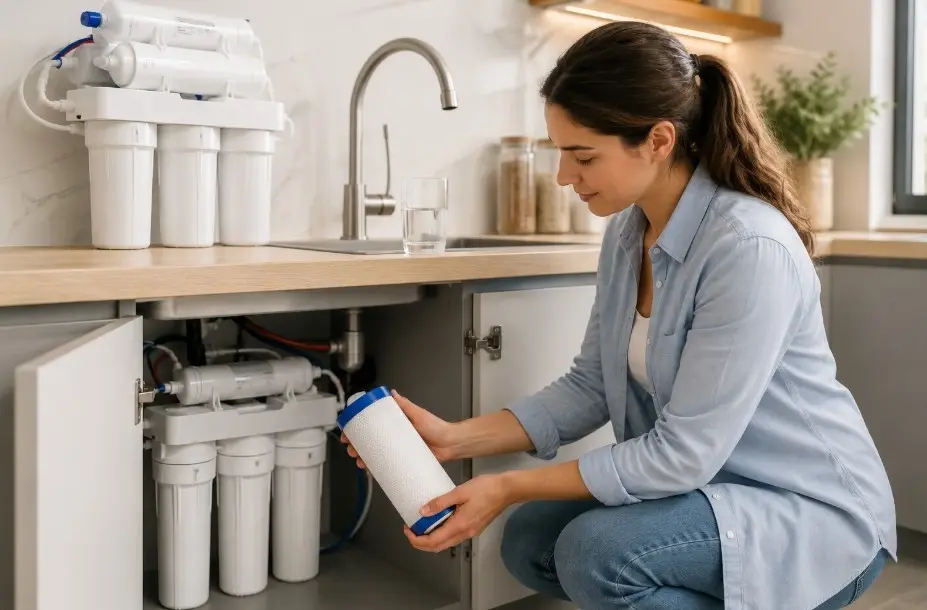
Under-sink RO systems tie into your cold water line and typically need a drain connection and a dedicated faucet through your countertop — small jobs, but ones that are easy to get wrong (a bad drain-line tap is a common source of hidden under-sink leaks). Whole-house systems involve larger plumbing work and, depending on scope, may fall under the City’s permitting requirements — you can confirm current rules through the City of Council Bluffs Building Division. Homeowners on a private well rather than municipal service should also check in with the City of Council Bluffs Utilities page to confirm what applies to their property before installing anything permanent.
Pros and Cons of Reverse Osmosis
Pros: removes the widest range of contaminants, including dissolved solids that carbon filters can’t touch; produces noticeably cleaner-tasting water; long membrane life with proper maintenance.
Cons: higher upfront cost and professional installation; wastes some water in the filtration process; strips beneficial minerals along with contaminants unless the system re-mineralizes; slower flow rate than a straight tap.
Pros and Cons of Standard Water Filters
Pros: low cost, easy or no installation, keeps natural minerals in your water, immediate improvement in chlorine taste and odor.
Cons: doesn’t remove dissolved contaminants like nitrates, arsenic, or most heavy metals; cartridges need frequent replacement; only treats water at the point of use unless you install a whole-house carbon system.
Which One Is Right for Your Council Bluffs Home?
If your main concern is chlorine taste and odor and you want the cheapest, simplest fix, a standard filter is usually enough. If you’re dealing with nitrates, hard water minerals building up on fixtures, or you just want the highest water quality possible for cooking and drinking, reverse osmosis is the stronger long-term investment. Households with private wells — more common in some of the outlying areas we serve — often lean toward RO or a combined softener-plus-filtration setup, similar to the water heater and plumbing service upgrades we get asked about together in older homes.
Why Homeowners Trust Rapid Plumbing CB for Water Filtration Installation
At Rapid Plumbing CB, we install both under-sink RO systems and whole-house filtration setups throughout Council Bluffs, and we’ll walk you through which option actually fits your water, your budget, and your home’s existing plumbing before you spend a dollar. We’re the same team homeowners call for drain cleaning, sewer line repair, and emergency plumbing — learn more about our team on our About page.
Frequently Asked Questions
Is reverse osmosis better than a regular water filter?
RO removes a wider range of contaminants, including dissolved solids that standard filters can’t catch, but it costs more upfront and needs more maintenance. A regular filter is often enough if chlorine taste and odor are your only concern.
Do I need a water filtration system if my Council Bluffs tap water already meets EPA standards?
Meeting federal compliance standards doesn’t mean water is free of every mineral or contaminant homeowners want removed — it means levels are within legal limits. Many homeowners install additional filtration for taste, hardness, or peace of mind rather than because the water is unsafe.
How much does it cost to install a reverse osmosis system?
Most under-sink RO systems run $200 to $600 including the unit, plus installation labor. Whole-house systems cost significantly more depending on your home’s size and existing plumbing.
Do reverse osmosis systems remove healthy minerals from water?
Yes, standard RO systems strip most dissolved minerals along with contaminants. Many modern systems include a re-mineralization stage afterward if that’s a priority for your household.
Can I install a water filtration system myself?
A basic pitcher or faucet-mount filter is DIY-friendly. Under-sink RO systems and whole-house units involve drain connections and water line modifications that are easy to get wrong, which is why we recommend professional installation for anything beyond a simple filter.
Related Reading
- The Benefits of Hiring a Local Plumber in Council Bluffs, IA — why local expertise matters when choosing a filtration system.
- Tankless vs. Traditional Water Heaters: Which Is Right? — another side-by-side comparison for your home’s water system.
- 7 Signs You Have a Hidden Water Leak in Your Home — under-sink RO installations are a common spot for hidden leaks.
- What to Ask Before Hiring a Plumber in Council Bluffs — the right questions to ask before any installation.
- How Much Does Drain Cleaning Cost in Council Bluffs? — see how pricing compares across common plumbing services.
- Residential vs. Commercial Plumbers: What’s the Difference? — filtration needs scale differently for commercial properties.
Ready to find out which system actually fits your water and your budget?
Need to fix whole-house hard water? Filters and RO treat drinking water. For scale on fixtures and appliances, learn about water softener installation in Council Bluffs.