What Does “Plumbing Up to Code Iowa” Actually Mean?
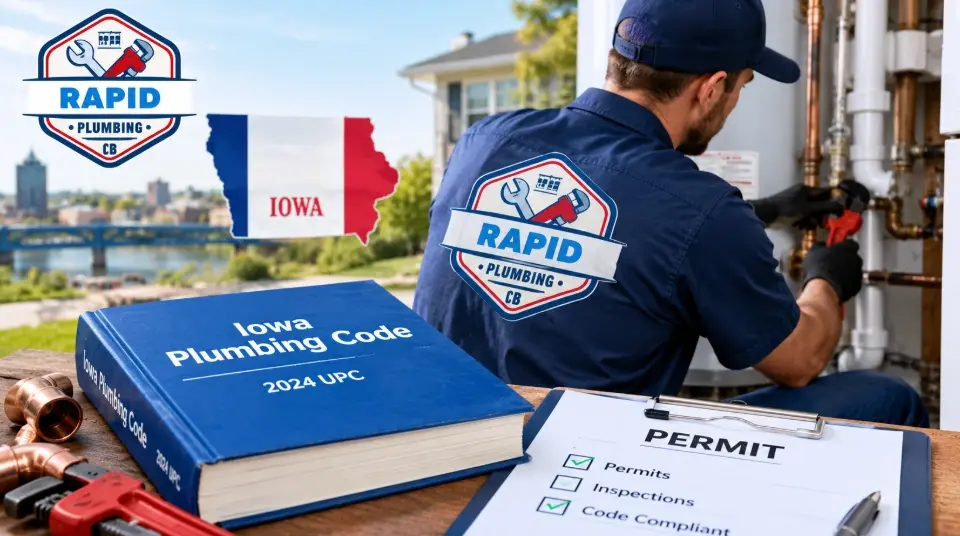
When a Council Bluffs homeowner hears a plumber say a job is “up to code,” it means the work meets the minimum legal standards set by the Iowa State Plumbing Code – not just industry best practice, but an actual legal requirement enforced by the state and the city. Iowa is a Uniform Plumbing Code (UPC) state, currently operating under the 2024 UPC edition as adopted by the Iowa Plumbing and Mechanical Systems Board (PMSB), part of the Iowa Department of Inspections, Appeals, and Licensing (DIAL). That’s an important local distinction: several neighboring states, including Nebraska, follow the International Plumbing Code (IPC) instead – a different code family with different technical requirements. A plumber licensed and experienced under Nebraska’s code isn’t automatically fluent in what Iowa actually requires.
Iowa law is also specific about who can set the rules: local jurisdictions are not allowed to adopt a different plumbing code than the state’s, though cities like Council Bluffs can and do administer their own permitting, inspection, and enforcement process for work performed within city limits.
The Three Pillars of a Code-Compliant Plumbing Job
- The right materials and methods – pipe sizing, venting, trap seal protection, backflow prevention, and material types must all match UPC specifications for the type of work being done.
- A pulled permit – most plumbing work beyond simple fixture replacement (new installations, sewer line repair, water heater replacement, re-piping, gas line work) legally requires a permit through the City of Council Bluffs Building Division before work begins.
- A passed inspection – a local inspector verifies the completed work against code before it’s signed off, creating an official record that the job was done correctly.
Skip any one of these three, and a job might look finished but isn’t actually “up to code” – even if the workmanship itself looks clean.
Why This Matters More Than It Seems
Homeowners sometimes assume code compliance is paperwork that only matters to contractors. In practice, it protects you directly:
- Insurance claims – unpermitted plumbing work is a common reason insurers deny water damage or fire claims tied to that work.
- Home resale – unpermitted plumbing shows up in inspections and can delay or derail a sale, or force costly retroactive permitting.
- Safety – code requirements around venting, backflow prevention, and gas line installation exist specifically to prevent sewer gas exposure, contaminated water supply, and gas leaks. See our gas line installation guide for how seriously this is treated on gas work specifically.
- Long-term cost – non-compliant work often has to be torn out and redone correctly, which almost always costs more than doing it right the first time. Our drain clog case study shows the same “fix it right the first time” math applied to a smaller repair.
Want plumbing work done right, permitted, and inspected the first time?
How to Know Your Plumber Is Actually Following Plumbing Up to Code Iowa
- Ask if a permit is required for your job, and confirm they’re the ones pulling it – not leaving it to you.
- Verify their Iowa license through the Iowa Plumbing and Mechanical Systems Board rather than taking their word for it.
- Ask which code edition applies – a plumber who can answer clearly is one who actually works within it regularly, not just references it in marketing.
- Confirm an inspection is scheduled after the work is complete, not skipped to save time.
- Get it in writing – a written scope of work and permit number gives you a paper trail if anything is ever questioned later.
If you’re not sure what to ask before hiring in the first place, our guide on what to ask before hiring a plumber and our breakdown of licensed vs. unlicensed plumber risks cover this in more depth.
How Rapid Plumbing CB Keeps Every Job Code-Compliant
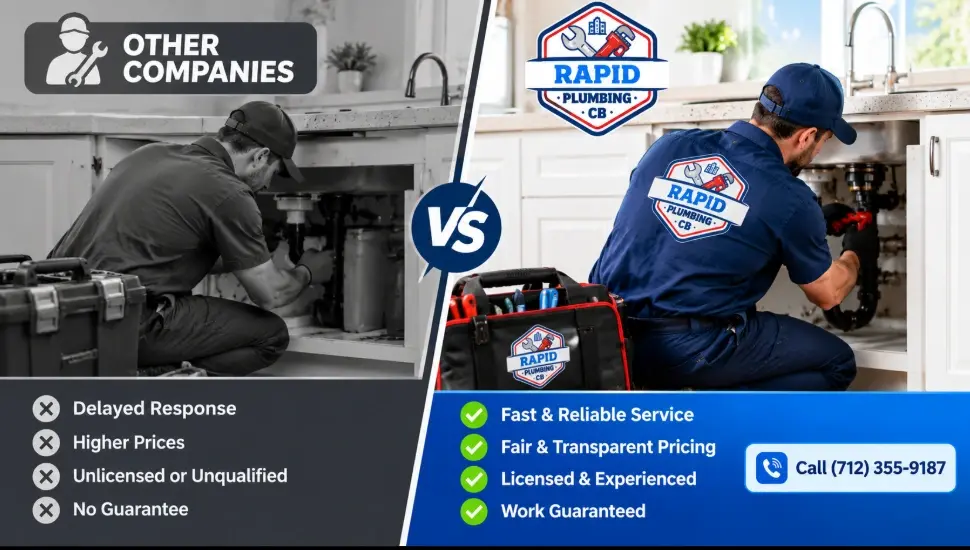
Every licensed plumber on our team works within the current Iowa UPC edition as a baseline, not an afterthought. When a job needs a permit, we pull it – and we schedule and stand behind the required inspection. That applies across the board, whether it’s a straightforward water heater swap, a full whole-home repipe, a sewer line repair, or new gas line work. We’d rather explain a permit requirement up front than have you discover a compliance gap later.
Not sure if your planned project needs a permit? Ask us before you start.
Frequently Asked Questions
What plumbing code does Iowa use?
Iowa uses the Uniform Plumbing Code (UPC), not the International Plumbing Code used by many neighboring states. The current adopted edition is the 2024 UPC, administered statewide by the Iowa Plumbing and Mechanical Systems Board.
Do I need a permit for plumbing work in Council Bluffs?
Most plumbing work beyond minor fixture swaps – new installations, sewer line repairs, water heater replacements, re-piping, and gas line work – requires a permit through the City of Council Bluffs Building Division, along with a follow-up inspection.
Can I tell if plumbing work is up to code myself?
Some signs are visible, like proper venting and code-compliant materials, but most requirements involve details a homeowner can’t easily verify. The safest way is confirming your plumber pulled the required permit and passed inspection.
What happens if plumbing work isn’t up to code?
Unpermitted or non-compliant work can cause insurance claim denials, complications at resale, safety hazards, and forced re-work to bring the job into compliance – often at a much higher cost than doing it right the first time.
Helpful Iowa & Council Bluffs Government Resources
- Iowa Plumbing and Mechanical Systems Board (PMSB) – sets and enforces the Iowa State Plumbing Code and licenses plumbers statewide
- Council Bluffs Building Division – handles local plumbing permits and inspections
- Council Bluffs Permit Applications – where permits for plumbing work are filed
- Council Bluffs Contractor Licensing – verify a plumbing contractor is licensed to work in the city
- Council Bluffs Permits and Licenses – general overview of required permits for home improvement work
- Council Bluffs City Clerk – public records for permits and licensing filed with the city
Work with a plumber who takes Iowa code seriously, not just as a checkbox.
Related Reading
- Licensed vs. Unlicensed Plumbers: What to Watch For
- What to Ask Before Hiring a Plumber in Council Bluffs
- The Benefits of Hiring a Local Plumber in Council Bluffs
- Why Homeowners Trust Family-Owned Plumbers Over the Big Guys
- Gas Line Installation in Council Bluffs
- Signs You Need Whole-Home Repiping in Council Bluffs
- Sewer Line Repair Cost in Council Bluffs
- Why We Use Camera Inspections Before Every Sewer Repair
- Best Water Heater Brands for Council Bluffs Homes
- Water Heater Repair Cost in Council Bluffs
- Why Your Basement Floor Drain Backs Up
- Low Water Pressure in Council Bluffs: Causes & Fixes
- Common Toilet Problems in Council Bluffs Homes
- Sump Pump Installation Cost in Council Bluffs
- Slab Leak Signs & Cost in Council Bluffs
- 7 Signs of a Hidden Water Leak in Your Home
- How Much Does Drain Cleaning Cost in Council Bluffs?
- Why Chemical Drain Cleaners Damage Your Pipes
- Tree Roots in Sewer Lines: What Homeowners Need to Know
- Sump Pump Running Constantly? Here’s What It Means
- Noisy Pipes: Causes & How to Fix Them
- Drain Clog Case Study: How a Small Fix Saved Big Money
- How to Prepare Your Plumbing for Iowa & Nebraska Winters
- What Happens When You Call an Emergency Plumber
- Residential vs. Commercial Plumbers: What’s the Difference?
- Common Plumbing Problems Homeowners Face in Council Bluffs
- Annual Plumbing Checklist for Council Bluffs Landlords
- Plumbing Inspections for Rental Properties: What to Expect
- Water Softener Guide for Council Bluffs Homes
- Tankless vs. Traditional Water Heaters
- Reverse Osmosis vs. Water Filter: Which Is Right for Your Home?
Serving Council Bluffs and nearby neighborhoods including The Heights, North Broadway, Lake Manawa, and Downtown Council Bluffs. Explore our full plumbing services, or learn more about our licensed team.
Every job, permitted and inspected the right way – no shortcuts.
Call (712) 355-9187 Contact Us Online