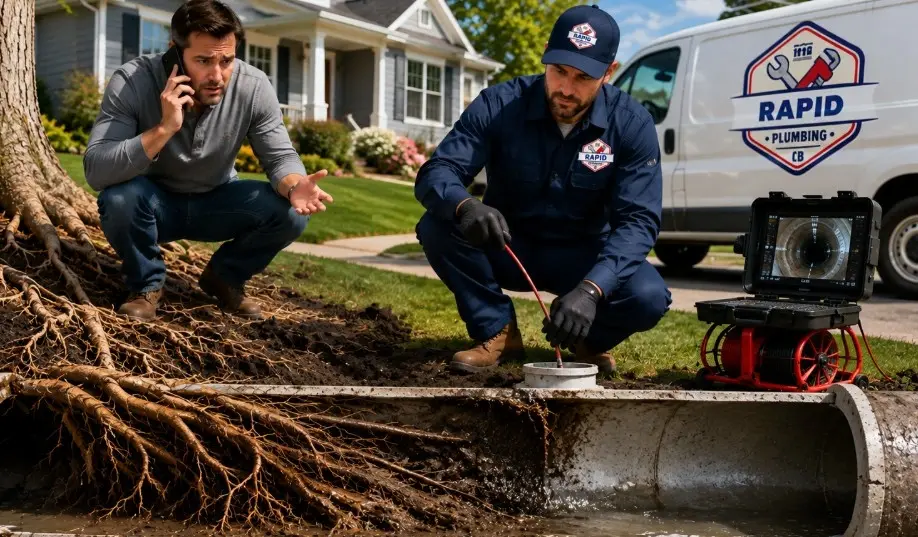
A mature tree in the yard is one of the best features a Council Bluffs home can have — right up until its roots find their way into your sewer line. Tree roots in sewer lines are responsible for a majority of residential sewer blockages nationwide, and they rarely announce themselves with sudden failure. Instead, they build slowly, one small crack at a time, until a homeowner is dealing with a full backup. Here’s exactly what to watch for and what to do about it.
Tree Roots in Sewer Lines: What Homeowners Need to Know
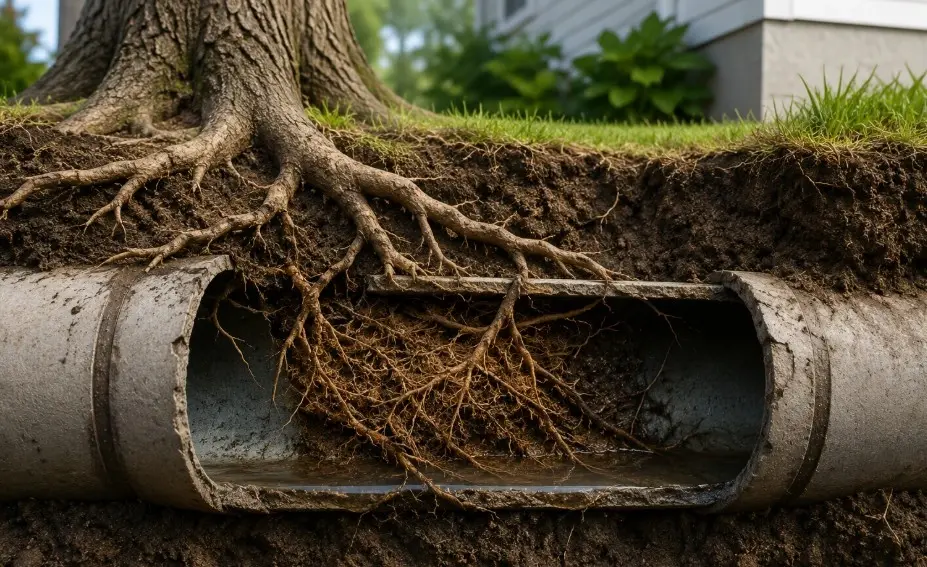
Sewer line backups are one of the most disruptive common plumbing problems homeowners face, and tree roots are behind most of them. Roots don’t punch through healthy, intact pipe — they exploit tiny cracks and joint separations that develop naturally as sewer lines age, then grow inside toward the moisture and nutrients a sewer line reliably provides. A local plumber who works regularly in Council Bluffs’ older neighborhoods sees this pattern constantly, especially in homes with clay or cast-iron sewer laterals installed before the 1970s.
Why Council Bluffs Homes Are Especially at Risk
Older sewer lines, mature trees, and clay pipe joints are a common combination throughout Council Bluffs’ established neighborhoods — exactly the conditions that make root intrusion more likely. Root problems typically develop gradually over 5 to 15 years depending on tree species, proximity to the pipe, and the pipe’s existing condition, which means a line that seems fine today can already be at risk.
Worried about roots in your sewer line right now?
Call (712) 355-9187 NowWarning Signs of Tree Roots in Your Sewer Line
1Slow Drains Throughout the House
A single slow drain is usually a localized clog. But when multiple fixtures — sinks, tubs, toilets — all drain slowly at the same time, the restriction is likely in the main sewer line itself, exactly where root growth typically occurs. This is one of the clearest indicators covered in our guide to signs of a hidden water leak, since a compromised sewer line can leak into the surrounding soil just as easily as it backs up into your home.
2Gurgling Sounds From Drains or Toilets
When roots partially block a sewer line, trapped air has to go somewhere — often bubbling back up through your drains as a gurgling sound when you flush a toilet or run water elsewhere in the house.
3Sewage Odors Indoors or Outdoors
Roots can pry pipe joints open just enough for sewer gas — and eventually wastewater — to escape into the surrounding soil and air. A persistent sewage smell near a cleanout or along the likely path of your sewer line is worth investigating right away.
4Sinkholes or Soft, Soggy Spots in the Yard
As roots crack a sewer line, escaping wastewater saturates the surrounding soil, which can eventually cause a sinkhole or a noticeably soft, depressed area in your lawn — a safety hazard as much as a plumbing one.
5One Tree Growing Noticeably Faster Than Others
A tree whose roots have tapped into your sewer line for a steady, nutrient-rich water source often grows visibly faster and greener than its neighbors — an odd but genuinely useful clue worth watching for.
Noticed two or more of these signs? It’s time for a professional look.
Request Your Free EstimateWhat Happens If You Ignore It
Left unaddressed, root intrusion doesn’t stay the same size — it grows into a complete blockage over a period of years, and the pipe itself can eventually crack, collapse, or burst under the pressure. That can mean sewage backing up into your home, soil erosion that damages your foundation, and repeated strain on connected systems, including a water heater or other equipment installed in a basement utility area that ends up in the path of a backup.
Most standard homeowner insurance policies do not cover damage from gradual root intrusion, since insurers typically classify it as a lack of routine maintenance rather than a sudden loss — one more reason catching the early warning signs matters.
Don’t Reach for a DIY Chemical Root Killer First
Store-bought root-killing chemicals promise a quick fix, but they carry the same risks we cover in our guide on why chemical drain cleaners damage your pipes — and they rarely address roots that have already caused structural cracking. If you’re unsure whether a problem is something you can safely handle yourself, our guide on when to call a plumber instead of fixing it yourself is worth reading before you buy anything.
Already tried a DIY root treatment with no luck? Let’s get an actual diagnosis.
Call (712) 355-9187 NowHow Professionals Diagnose and Fix Root Intrusion
Camera Inspection
A sewer camera is the only reliable way to confirm root intrusion and see exactly where it’s located, how severe it is, and whether the pipe itself has been structurally compromised.
Hydro Jetting
For a line that’s structurally sound but choked with roots and debris, high-pressure hydro jetting scours the pipe interior clean without damaging the pipe itself — often the same method used for a standard professional drain cleaning, just scaled to the sewer line.
Pipe Lining or Replacement
When a camera inspection shows the pipe itself has cracked or deteriorated, a flexible epoxy liner can often restore it without full excavation. In more severe cases, replacing the damaged section is the more durable long-term fix.
Ready for a camera inspection to see what’s really going on?
Get a Same-Day QuotePermits and Council Bluffs Requirements for Sewer Line Work
Sewer line repair or replacement typically requires a permit through the city’s Building Division, which you can apply for through the city’s Permit Applications system. Sewer infrastructure in Council Bluffs falls under the city’s Public Works department, and what your home sends down the line is ultimately processed at the Water Pollution Control Plant. If root damage extends to an outdoor drainage area near your property, the city’s Storm Water Management program is a useful resource, and if you notice a persistent sewage odor or a sinkhole affecting a shared or public area, you can report it through Report a Nuisance.
Preventing Repeat Root Intrusion
- Schedule periodic camera inspections, especially for homes with mature trees near the sewer line
- Consider root barriers between aggressive tree species and known sewer line paths
- Plant new trees at a safe distance from the sewer line, choosing slower-growing species when possible
- Address minor pipe defects — like a single joint issue — before roots have a chance to exploit them
- Prepare your plumbing for seasonal changes; our guide on winterizing your plumbing for Iowa & Nebraska winters covers how saturated, freezing ground adds extra pressure on already-compromised pipe joints
Root Removal vs. Standard Drain Cleaning: What’s the Difference?
| Factor | Standard Drain Cleaning | Sewer Line Root Removal |
|---|---|---|
| Typical cause | Hair, grease, soap buildup | Root intrusion through cracked joints |
| Diagnosis method | Visual/manual assessment | Camera inspection |
| Treatment method | Snaking or standard jetting | Root-cutting hydro jetting, lining, or replacement |
| Recurrence risk | Low if properly maintained | High without prevention (barriers, periodic inspection) |
Choosing the Right Plumber for Root Removal
Sewer line work is not the place to cut corners on who you hire. Review our guide on what to ask before hiring a plumber in Council Bluffs before booking anyone, and make sure whoever you choose is properly licensed — our breakdown of licensed vs. unlicensed plumber risks explains exactly why that matters for work this significant. A backup can also strain nearby equipment, including a water heater — worth a look at the signs your water heater is about to fail if yours sits low in a basement utility area. This applies whether the property is a home or a commercial building with mature landscaping near its sewer connection.
Why Homeowners Trust Rapid Plumbing CB With Root Intrusion
At Rapid Plumbing CB, we diagnose root intrusion with camera inspection before recommending a fix, so you know exactly what you’re dealing with before we start — no guessing, no unnecessary excavation. If you’re also weighing broader water quality questions for your home, our comparison of reverse osmosis vs. water filter systems may be worth a look while we’re already on-site. Learn more about our team on our About page.
Don’t wait for a full backup — get ahead of root intrusion now.
Call (712) 355-9187 NowFrequently Asked Questions
How do I know if tree roots are in my sewer line?
Common signs include slow drains throughout the house, gurgling sounds from fixtures, sewage odors indoors or outdoors, sinkholes or soggy spots in the yard, and one tree growing noticeably faster than others nearby. A camera inspection is the only way to confirm it for certain.
Does homeowners insurance cover tree root sewer line damage?
Usually not. Most standard policies classify gradual root intrusion as a maintenance issue rather than a sudden loss, though some insurers offer optional sewer line coverage worth reviewing.
Can I remove tree roots from a sewer line myself?
Minor maintenance can sometimes be DIY-friendly, but root intrusion severe enough to cause backups or structural pipe damage requires professional equipment, including camera inspection and hydro jetting, to diagnose and treat properly.
How much does sewer line root removal typically cost?
Cost varies significantly based on severity and method — a straightforward hydro jetting is far less expensive than pipe lining or full replacement. A camera inspection is the best way to get an accurate quote for your specific situation.
Get a clear diagnosis before roots turn into a full backup.
Contact Rapid Plumbing CB TodayOlder clay and cast iron lines have more joints and cracks for roots to enter. See how pipe materials in older Council Bluffs homes affect your risk.
Think roots are in your pipe? The fastest way to confirm is a sewer camera inspection in Council Bluffs, which shows where the roots enter and how far they have spread.