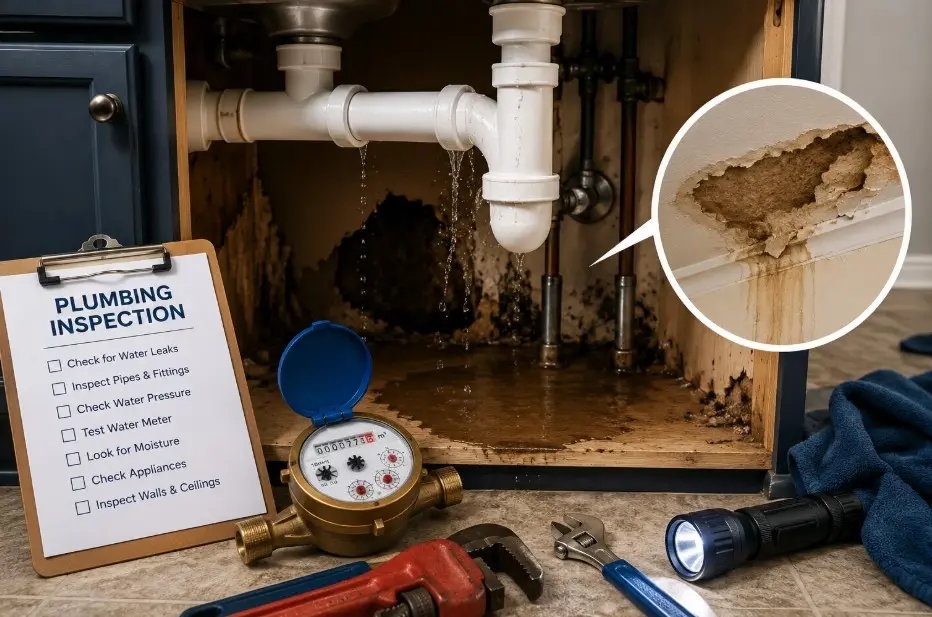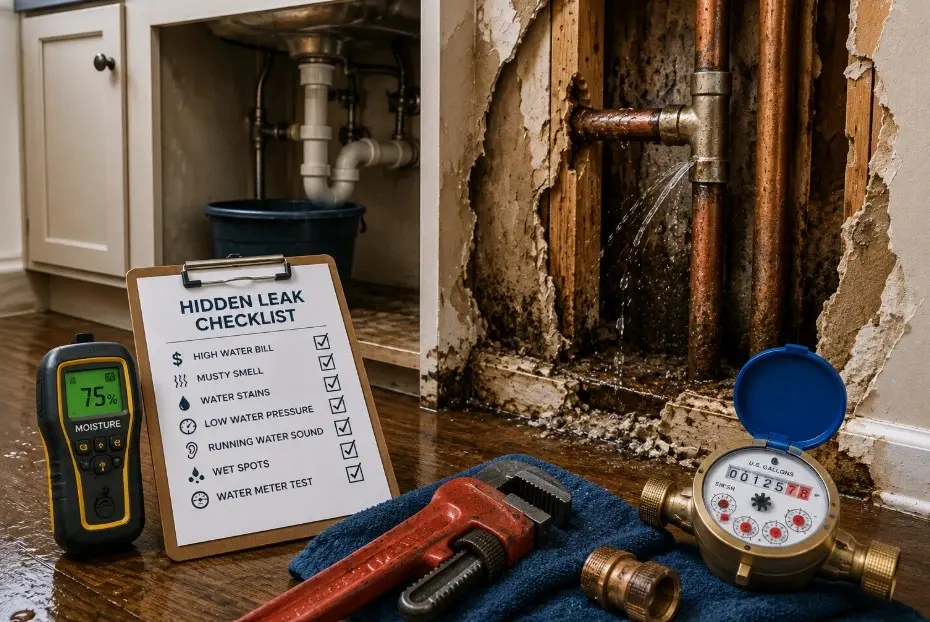
7 Signs of a Hidden Water Leak in Your Home
Most homeowners never see the leak that ends up costing them the most. The clear signs of a hidden water leak usually show up somewhere else entirely — a water bill that suddenly jumps, a faint musty smell in a room that’s never been wet, or a patch of ceiling that’s slightly the wrong color. By the time water is actually visible, it’s often been running behind a wall or under a floor for weeks. This guide walks through the seven warning signs Council Bluffs homeowners should never ignore, plus a simple test you can run yourself in the next ten minutes.
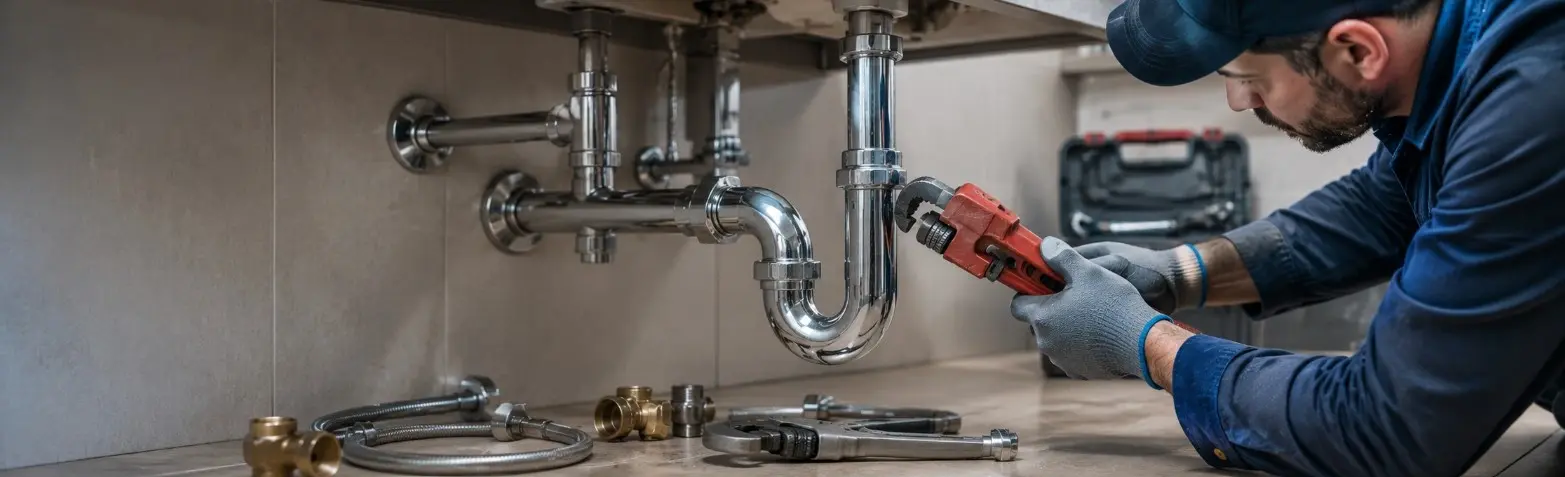
Why Hidden Leaks Are More Dangerous Than the Leaks You Can See
A dripping faucet is annoying, but at least you know it’s there. A hidden leak behind drywall, under a slab, or inside a ceiling cavity does its damage quietly — swelling wood framing, feeding mold growth, and slowly undermining drywall and subfloor long before anything looks visibly wrong. The U.S. Environmental Protection Agency notes that household leaks waste an enormous amount of water nationwide every year, and many of those leaks go unnoticed for months simply because homeowners don’t know what to watch for.
Source: EPA WaterSense — Fix a Leak Week
The 7 Signs of a Hidden Water Leak in Your Home
1Your Water Bill Suddenly Goes Up for No Reason
If your household routine hasn’t changed — no extra guests, no new appliances, no obvious increase in usage — but your water bill climbs month over month, that’s one of the earliest and most reliable signs of a hidden water leak. Even a small, constant drip can add up to thousands of gallons over a billing cycle.
2You Hear Running Water When Every Tap Is Off
Walk through the house, turn off every faucet and appliance, and listen. A faint hissing, trickling, or gurgling sound with nothing running is a strong indicator that water is moving somewhere it shouldn’t be — often inside a wall cavity or beneath the floor.
3Water Pressure Drops Across Multiple Fixtures
A single weak shower head might just need cleaning. But when water pressure drops noticeably at several fixtures throughout the house at the same time, it often means a leak somewhere in the main line is diverting water before it reaches your faucets.
4A Musty or Damp Smell With No Obvious Source
Trapped moisture behind walls, under cabinets, or beneath flooring creates the perfect environment for mold and mildew, and that often shows up as a musty odor long before any visible staining appears. According to the CDC, mold grows wherever there is ongoing moisture — including around leaks in pipes and walls — which is exactly why an unexplained damp smell deserves a closer look rather than an air freshener.
Source: CDC — About Mold
5Discoloration or Staining on Walls, Ceilings, or Floors
Yellow, brown, or copper-colored rings on a ceiling or wall are a classic sign that water has been soaking into drywall from behind. These stains often start small and spread gradually, so don’t wait for the “obvious” version of this sign — even a faint, slowly-growing patch is worth investigating.
6Warped Flooring, Peeling Paint, or Bubbling Wallpaper
Wood floors that cup or warp, tile that feels slightly loose, or paint and wallpaper that bubble and peel without an obvious cause are often the visible result of moisture that has been present for a while. These physical changes to your home’s surfaces are a later-stage sign, meaning a leak has likely been active for some time already.
7Unusually Green or Soggy Patches in Your Yard
An underground leak in a water line or sewer lateral often shows up outdoors before it shows up indoors — a section of lawn that’s greener and lusher than the rest, ground that stays soggy even during dry weather, or a warm spot in the yard during winter can all point to a leaking line beneath your property.
Noticed one or more of these signs at home? Don’t wait for it to get worse.
Call (712) 355-9187 NowHow to Test for a Hidden Leak Yourself in 10 Minutes
Before calling a professional, you can run a simple water meter test to confirm whether a leak is actually present:
- Make sure no faucets, appliances, or irrigation systems are running anywhere in the house.
- Locate your water meter and note the current reading (or check the small leak-indicator dial if your meter has one).
- Wait one to two hours without using any water at all.
- Check the meter again. If the reading changed, or the leak-indicator dial moved, water is flowing somewhere in your system even though nothing is turned on.
This same basic method is recommended by water utilities and municipal water departments across the country as the most reliable do-it-yourself way to confirm a hidden leak before calling in a professional.
Ran the test and confirmed a leak? Let’s find the exact source before it causes more damage.
Request Your Free EstimateQuick Reference: Sign vs. What It Usually Means
| Sign | What It Often Means |
|---|---|
| Rising water bill | Slow, continuous leak somewhere in the system |
| Running water sound, taps off | Leak inside a wall, floor, or supply line |
| Dropping water pressure | Leak diverting water before it reaches fixtures |
| Musty smell | Trapped moisture and possible mold growth |
| Ceiling/wall stains | Water soaking through drywall from behind |
| Warped floors/peeling paint | Longer-term moisture exposure |
| Soggy or overly green yard patch | Underground water or sewer line leak |
When to Call a Professional Plumber
If your water meter test confirms a leak, or if you’re noticing two or more of the signs above at the same time, it’s time to bring in a licensed plumber rather than guessing at the source. Locating a hidden leak often requires specialized tools, and any repair involving supply lines, water heaters, or main connections should be handled — and permitted — correctly the first time. You can review Council Bluffs’ local requirements around plumbing and utility work through the city’s own Public Works department, and confirm any contractor’s license status through the Iowa Plumbing and Mechanical Systems Board.
At Rapid Plumbing CB, our technicians are equipped to trace hidden leaks quickly and accurately, without unnecessary demolition, and repair them properly the first time. Learn more about our team and approach on our About page.
Not sure if what you’re seeing is a leak? Get a professional opinion today.
Get a Same-Day QuoteFrequently Asked Questions
What are the most common signs of a hidden water leak?
The most common signs of a hidden water leak are a sudden increase in your water bill, the sound of running water when nothing is turned on, dropping water pressure, musty odors, and staining on walls or ceilings.
How can I test for a hidden water leak myself?
Turn off every faucet and water-using appliance in the home, note your water meter reading or leak-indicator dial, wait one to two hours without using any water, and check the meter again. If the reading changed, water is flowing somewhere in the system.
Can a hidden water leak cause mold?
Yes. Ongoing moisture from a hidden leak creates the damp conditions mold needs to grow, which is why a musty smell with no obvious source is one of the clearest early warning signs of a leak behind a wall or under a floor.
How much water can a small hidden leak waste?
Even a small, continuous leak can waste thousands of gallons of water over the course of a few months, which is why household leaks nationwide add up to a substantial amount of wasted water every year according to EPA WaterSense data.
Related Reading
- The Benefits of Hiring a Local Plumber in Council Bluffs, IA — see why a plumber who knows your neighborhood’s plumbing history spots hidden leaks faster.
- How Much Does Drain Cleaning Cost in Council Bluffs? — if your leak turns out to be a drain or sewer line issue, see what fair pricing looks like.
- Residential vs. Commercial Plumbers: What’s the Difference? — hidden leaks can happen in commercial buildings too; learn how the two differ.
- 5 Signs Your Water Heater Is About to Fail — a failing water heater is another common source of hidden household leaks.
Protect your home before a hidden leak turns into major damage.
Contact Rapid Plumbing CB Today