Backflow Testing & Backflow Preventer Services in Council Bluffs, IA
Protect your drinking water and stay compliant. Rapid Plumbing CB tests, installs, repairs and replaces backflow preventers for Council Bluffs homes, restaurants, shops and commercial properties. Clear reports, honest pricing and no call out fees.
Call (712) 355-9187 Schedule Backflow TestingWhat Is a Backflow Preventer, and Why Does It Matter?
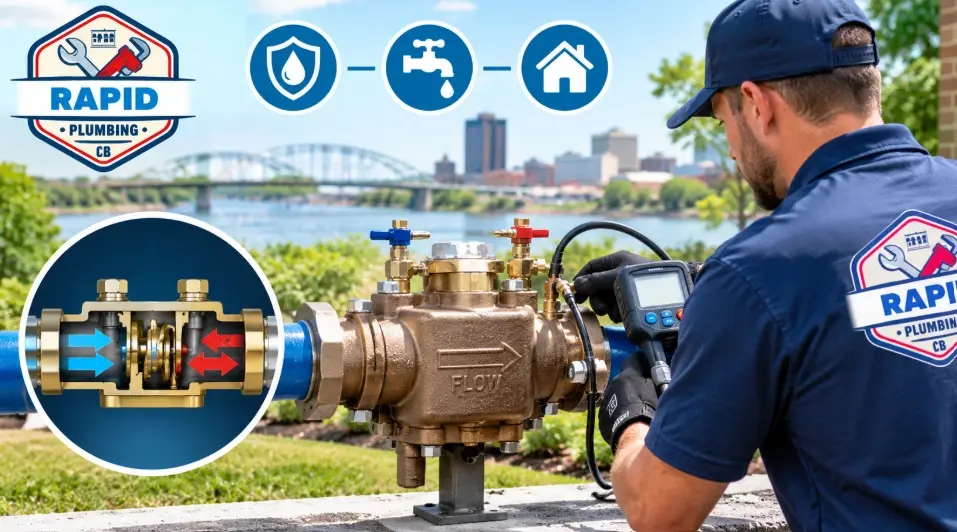
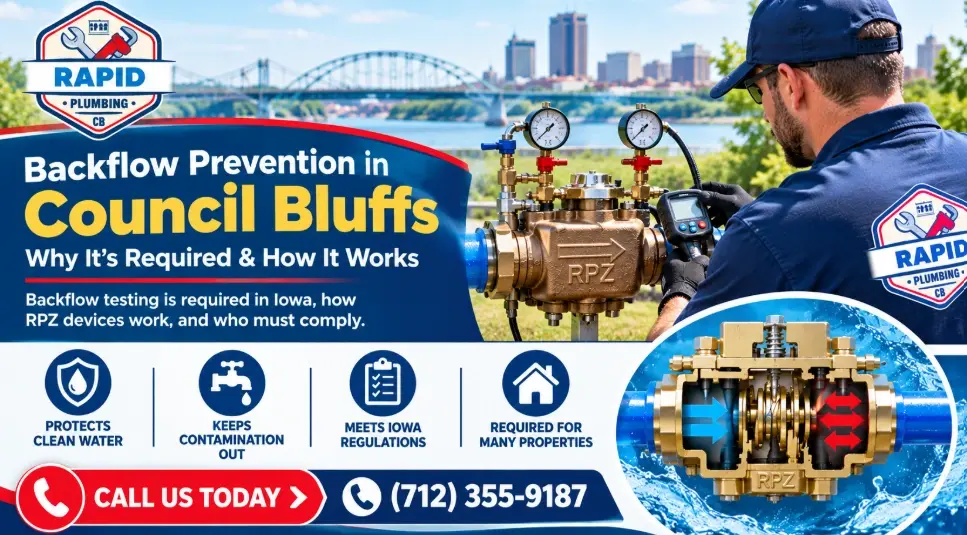
Water should only flow one way: from the city main into your property. Backflow happens when it reverses, because of a pressure drop in the main or high pressure in your own system, pulling water from sprinklers, boilers, hoses or equipment back into the drinking supply. A backflow preventer is a one-way safeguard that stops this. Like a smoke detector, it only protects you if it is tested and working.
Who Needs Backflow Testing or a Backflow Preventer?
Lawn sprinkler systems
Irrigation lines can hold fertilizer and ground water. A preventer keeps it out of your home’s water.
Restaurants and food service
Dishwashers, carbonators, mop sinks and boilers are common cross-connections. See our commercial plumber services for Council Bluffs restaurants.
Commercial and industrial buildings
Boilers, fire sprinkler lines, cooling systems and process equipment usually need protection. Learn the residential vs commercial plumber difference.
Rental and multi-unit properties
Landlords stay compliant and protect tenants. Read our plumbing inspection guide for rentals and Council Bluffs rental plumbing page.
Homes with wells or hose connections
Hose-bib vacuum breakers and dedicated devices prevent contaminated water siphoning back from hoses and pools.
Properties that got a notice
If your water provider sent a test notice, we can test the device and prepare the report you need.
Exact requirements depend on your property and your water utility, so always confirm with them. Our team will tell you what applies to your setup.
Our Backflow Services
- Annual backflow testing: we check that each check valve and relief valve holds and opens as designed, and give you a written result.
- Backflow preventer installation: the right device for the hazard, correctly sized, placed and code compliant. Review our guide to plumbing up to code in Iowa and the Council Bluffs plumbing permit guide.
- Repair and rebuild: we replace worn seals, springs and check valves to bring a failed device back into service.
- Full replacement: when a device is damaged, corroded or obsolete.
- Winterization help: exposed devices and irrigation lines must be protected. See how to prepare your plumbing for Iowa and Nebraska winters and our weather plumbing checklist.
Common Types of Backflow Preventers
| Device | Typical use |
|---|---|
| Reduced Pressure Zone (RPZ) assembly | High-hazard sites such as boilers, commercial kitchens and chemical use. |
| Double Check Valve assembly | Lower-hazard lines such as some fire sprinkler systems. |
| Pressure Vacuum Breaker (PVB) | Lawn irrigation systems, installed above the highest sprinkler head. |
| Hose bibb vacuum breaker | Outdoor faucets and utility sinks with hose connections. |
How Our Backflow Testing Works
- Book a visit. Tell us the device type, location and whether you received a notice. We schedule the earliest slot.
- Brief shut-off. We notify you before closing water to the device, which usually takes only a short time.
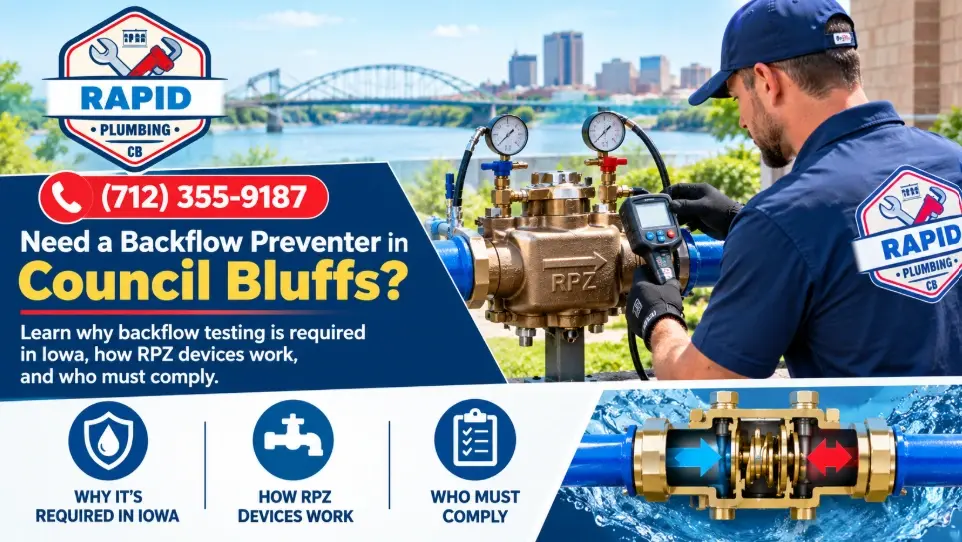
- Test the assembly. We use a test kit to check every valve, relief port and seal against its specification.
- Report and repair. If it passes, you get the results. If it fails, we explain why and quote the repair upfront under our transparent pricing promise.
Signs a Backflow Preventer Is Failing
- Water spitting or continuously dripping from the relief valve.
- Sudden loss of water pressure. Also see low water pressure in Council Bluffs.
- Discolored or odd-tasting water. Read our Council Bluffs water quality guide.
- Visible corrosion, cracks or freeze damage on the device.
- A shut-off valve that will not close properly. Learn about a water shut-off valve not working.
Licensed and insured: The City of Council Bluffs requires plumbing contractors to be licensed through the State of Iowa, as explained on its contractor licensing page. For permits and city requirements, visit the City of Council Bluffs website and your water utility.
Areas We Serve
We test and install backflow devices across Downtown, The Heights, North Broadway, Lake Manawa, 51501 and 51503. See all service areas.
Related Plumbing Services
Commercial water heaters · Emergency plumber · Water heater services · Drain cleaning · All plumbing services
Backflow Testing FAQs
How often does a backflow preventer need testing?
Most testable devices are tested at installation and then annually. Your water utility sets the exact schedule, so confirm it with them.
How much does backflow testing cost in Council Bluffs?
Cost depends on the device type, the number of devices and access. We quote before we start and charge no call out fee.
How long does a backflow test take?
A single device usually takes under an hour. Repairs or rebuilds add time.
What happens if my backflow device fails the test?
We identify the cause, usually a worn seal or check valve, and quote a repair or replacement. After the work we retest the device.
Do homeowners with sprinklers need backflow testing?
Many irrigation systems have a preventer that should be checked regularly. Requirements vary, so confirm with your water utility.
Can you install a new backflow preventer?
Yes. We choose the correct device for your hazard, install it to code and handle permit questions with you.
Need Backflow Testing in Council Bluffs?
Call Rapid Plumbing CB to test, repair or install your backflow preventer. No call out fees, senior discounts available.
Call (712) 355-9187 Book OnlineRapid Plumbing CB · 112 S 18th St, Council Bluffs, IA 51501