Replacing a water heater is one of those decisions homeowners often make in a hurry — usually right after the old one fails. But if you have even a little time to plan, the tankless vs traditional water heaters decision is worth thinking through carefully, since it affects your upfront cost, your monthly utility bill, and how much space you give up for the next decade or more.
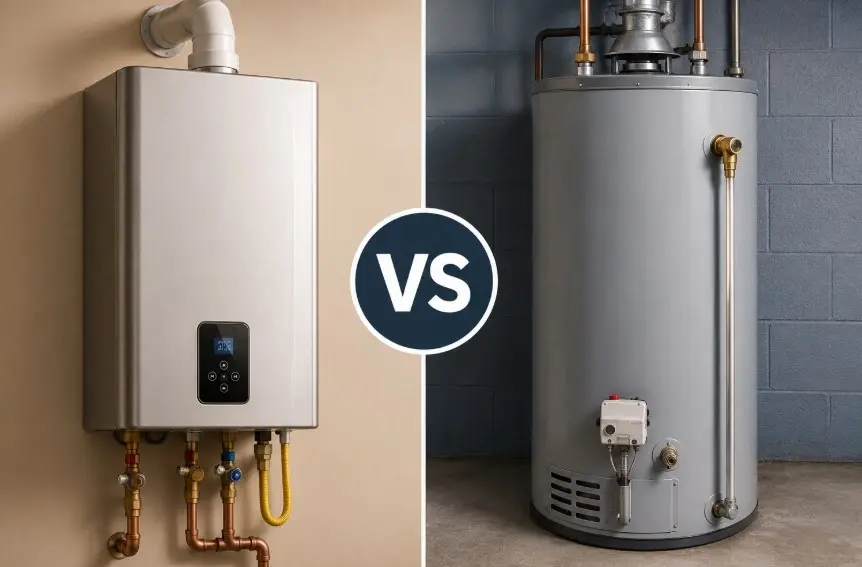
Tankless vs Traditional Water Heaters: How They Work
Traditional Tank Water Heaters
A traditional water heater stores 30 to 80 gallons of water in an insulated tank, keeping it heated and ready at all times using a gas burner or electric heating element. Because the water is heated continuously to stay at temperature, some energy is lost simply maintaining that reserve — a factor known as standby heat loss.
Tankless (On-Demand) Water Heaters
A tankless water heater doesn’t store water at all. Instead, cold water passes through a powerful heat exchanger the moment you turn on a hot water tap, and gas burners or electric elements heat it instantly as it flows. This eliminates standby heat loss entirely, since the unit isn’t keeping a reserve hot around the clock.
Not sure which type fits your household? Let’s talk through your options.
Call (712) 355-9187 NowCost Comparison: Upfront Price vs. Long-Term Savings
Traditional tank water heaters generally cost less upfront — typically in the range of $500 to $1,500 including installation — largely because the plumbing connections are usually already in place if you’re replacing an existing tank unit. Tankless water heaters cost more to purchase and install, and some homes may need upgraded gas lines, electrical work, or ventilation changes to support one. That higher upfront cost is offset over time by lower energy bills, since tankless units are typically 24-34% more energy efficient than a comparable tank model.
Lifespan: Which One Lasts Longer?
Traditional tank water heaters typically last 8 to 12 years, with corrosion and sediment buildup gradually reducing efficiency and eventually causing failure. Tankless water heaters generally last significantly longer — often 15 to 20 years or more with proper maintenance — since there’s no tank constantly holding water and no standing reserve to corrode over time.
Energy Efficiency and Utility Bills
Because tankless units only heat water when it’s actually needed, they avoid the standby heat loss that traditional tanks experience around the clock. The U.S. Department of Energy notes that this on-demand approach is a key reason tankless systems tend to be more energy efficient, particularly in households with moderate daily hot water use.
Source: U.S. Department of Energy — Water Heating
Curious how much you could save with a tankless upgrade?
Request Your Free EstimateSpace and Installation Requirements
Traditional tanks require a dedicated space — typically a utility closet, basement corner, or garage — sized to fit a 30-to-80-gallon cylinder. Tankless units mount directly to a wall and take up a fraction of that footprint, which makes them a popular choice for homes with limited utility space, including smaller Council Bluffs properties and additions where square footage is at a premium.
Maintenance Requirements
Traditional tanks need periodic draining to remove sediment buildup and an anode rod that should be inspected and replaced every few years to prevent corrosion. Tankless units require less routine maintenance overall, though homes with harder water may still need occasional descaling to keep the heat exchanger running efficiently.
Rebates and Incentives for Efficient Water Heaters
Incentive programs for energy-efficient water heaters change fairly often — federal, utility, and state programs come and go, and eligibility can depend on the exact model and efficiency rating. Rather than relying on outdated numbers, it’s worth checking the ENERGY STAR Rebate Finder directly for whatever federal, state, or local incentives are currently active in your area before you buy.
Source: ENERGY STAR Rebate Finder
Want help figuring out what applies to your household?
Get a Same-Day QuoteTankless vs. Traditional Water Heater: At a Glance
| Factor | Traditional Tank | Tankless |
|---|---|---|
| Upfront cost | $500 – $1,500 | Higher, plus possible gas/electrical upgrades |
| Typical lifespan | 8 – 12 years | 15 – 20+ years |
| Energy efficiency | Standby heat loss reduces efficiency | 24-34% more efficient on average |
| Space required | Dedicated closet or utility space | Compact wall-mounted unit |
| Best for | Larger households, tighter budgets | Long-term homeowners prioritizing efficiency |
Which Is Right for Your Council Bluffs Home?
If you have a larger household with high simultaneous hot water demand — multiple showers running at once, for example — and want the lowest possible upfront cost, a traditional tank is often the more practical choice. If you’re a long-term homeowner focused on lowering utility bills, maximizing space, and reducing how often you’ll need a replacement, a tankless system is generally the stronger long-term investment.
Permit and Licensing Requirements for Installation
Whether you choose a tank or tankless system, installation in Council Bluffs typically requires a permit, and gas-fired units in particular need to meet current venting and gas line code. You can review current requirements through the City of Council Bluffs Building Division, and confirm any contractor’s license status through the Iowa Plumbing and Mechanical Systems Board before hiring.
Why Homeowners Choose Rapid Plumbing CB for Water Heater Installation
At Rapid Plumbing CB, we install and service both traditional tank and tankless water heaters throughout Council Bluffs, and we’ll walk you through the real trade-offs for your specific household before you commit to either option. Learn more about our team on our About page.
Frequently Asked Questions
Is a tankless water heater worth the extra upfront cost?
For many homeowners, yes — tankless water heaters typically last significantly longer and use less energy than traditional tanks, which can offset the higher upfront cost over the life of the unit. The right choice depends on your household’s hot water demand and how long you plan to stay in your home.
How long does a traditional water heater last compared to a tankless one?
Traditional tank water heaters typically last 8 to 12 years, while tankless water heaters often last 15 to 20 years or more with proper maintenance.
Do I need to upgrade my gas line or electrical panel for a tankless water heater?
Some homes need upgraded gas lines, additional electrical capacity, or ventilation changes to support a tankless unit, depending on the model and your home’s existing setup. A licensed plumber can evaluate your home’s specific requirements before installation.
Are there current rebates for installing an energy-efficient water heater?
Rebate and tax credit programs for water heaters change over time, so it’s best to check the ENERGY STAR Rebate Finder directly for whatever federal, state, or local incentives are currently active in your area.
Related Reading
- The Benefits of Hiring a Local Plumber in Council Bluffs, IA — why local expertise matters for a decision this size.
- 7 Signs of a Hidden Water Leak in Your Home — an aging tank water heater can be a source of hidden leaks.
- How Much Does Drain Cleaning Cost in Council Bluffs? — see how pricing compares across common plumbing services.
- Residential vs. Commercial Plumbers: What’s the Difference? — sizing and demand considerations differ between homes and businesses.
- 5 Signs Your Water Heater Is About to Fail — know the warning signs before you’re forced into a rushed decision.
- When to Call a Plumber Instead of Fixing It Yourself — water heater installation is never a safe DIY project.
- How to Prepare Your Plumbing for Iowa & Nebraska Winters — both water heater types need winter-ready installation and maintenance.
- What to Ask Before Hiring a Plumber in Council Bluffs — vet your plumber with the right questions before any of this work begins.
Ready to compare your options with a straight answer, not a sales pitch?
Contact Rapid Plumbing CB Today
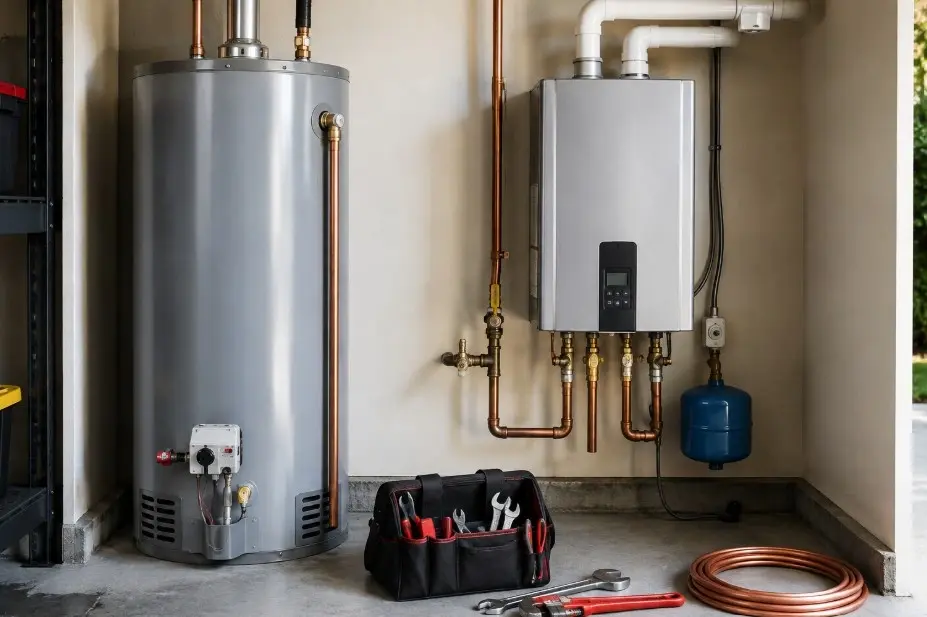
Whichever type you choose, our team offers reliable water heater installation in Council Bluffs with a clear estimate before work starts.