Plumbing After Flood: What to Check Before You Turn Anything Back On
Plumbing after flood damage is not a “flip the switch and see” situation. When the water drops, the real risks are still sitting inside your walls, your water heater, your drains and your gas controls. This guide walks Council Bluffs homeowners through what to check, in the right order, and what to leave to a licensed plumber.
If water is still rising in your basement, start with our guide to the first hour of basement flooding. This page picks up after the water is down.
Call (712) 355-9187 Emergency Plumber in Council BluffsQuick answer: Before turning things back on, confirm there is no gas smell, no standing water around electrical equipment, and no sewage in your drains. Then restore water slowly, test for leaks at the meter, and have a plumber inspect any water heater, gas appliance or sump pump that sat in floodwater.
Plumbing After Flood: The Three Checks That Come First
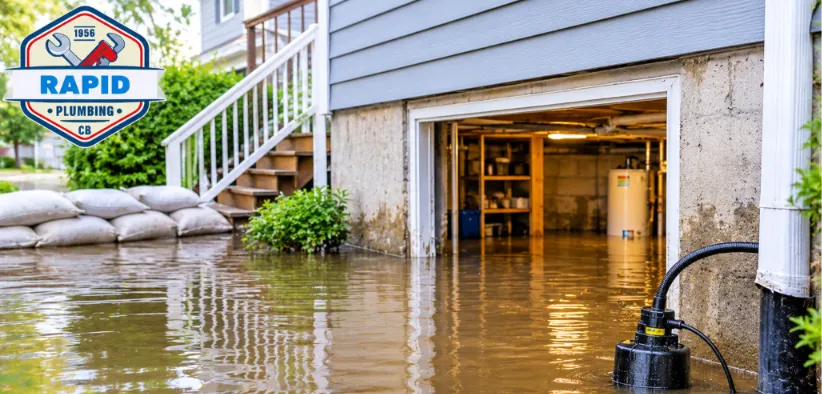
Floodwater does more than soak a basement. It carries silt, sewage and chemicals, and it can shift pipes, loosen fittings and ruin the safety controls on gas appliances. Before you open a single faucet, work through these three checks:
- Power and standing water. Never touch wet electrical equipment or stand in water near outlets, panels or appliances.
- Gas. If you smell gas, leave right away. Do not flip switches or use a phone inside.
- Water safety. Treat floodwater as contaminated. Do not drink it, cook with it or use it to wash dishes.
Smell gas? Get out first. Leave the house, then call 911 and your gas utility from outside. Not sure what you are smelling? Read what a gas leak smells like in Council Bluffs homes.
Is It Safe to Go Back In? Power, Gas and Standing Water
The CDC’s returning-home guidance and the FEMA flood safety fact sheet agree on the basics: return only when local officials say it is safe, keep electricity off if you are standing in water, and do not use any electrical device that got wet.
- Have an electrician inspect the panel, outlets and any appliance that was submerged.
- Do not use gas appliances, grills or generators indoors to dry the space or heat the home.
- If the basement still has standing water, do not step in until the power is confirmed off.
Water Heater After Flood: Gas Controls and Electric Elements
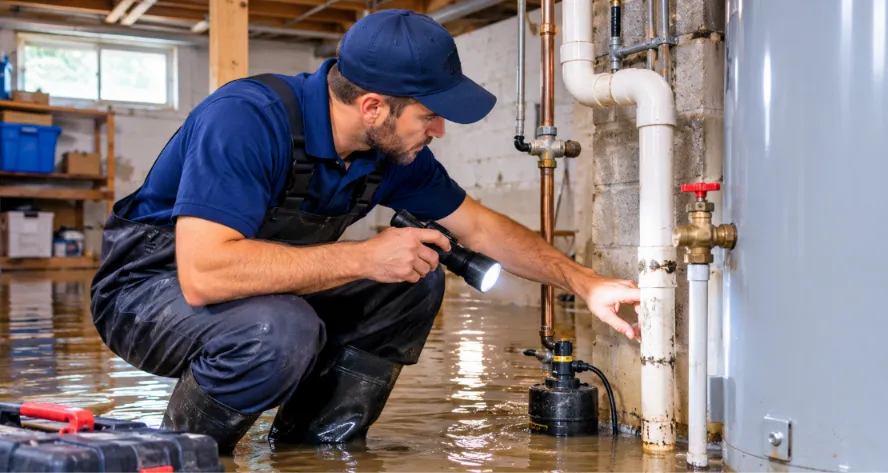
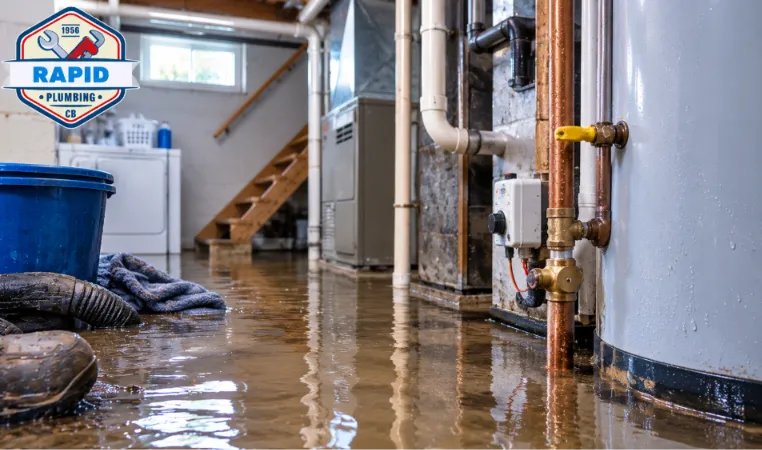
Your water heater is usually the first appliance that needs professional eyes. Flood safety guidance is blunt about gas appliances: if gas controls were under water, the safety features can be damaged even when the unit seems to work. Submerged gas control valves are not fit for reuse and need to be replaced.
Gas water heaters
Do not relight the pilot or run the burner if floodwater reached the gas valve, burner area or venting. A plumber will check the gas supply line, test for leaks, inspect the flue and decide whether the unit needs new controls or full replacement. If you are comparing options, see our breakdown of gas vs. electric water heaters in Council Bluffs.
Electric water heaters
Keep the breaker off until the unit has been inspected. Water in the wiring compartment, heating elements or thermostats can cause shorts and shock hazards.
Need a diagnosis? Our water heater repair team can inspect it, and if replacement makes more sense, we handle water heater replacement in Council Bluffs and full water heater installation. If the tank or relief valve is dripping after the flood, check why a water heater relief valve leaks before you assume the worst.
Water Supply: Turn It Back On Slowly and Test for Leaks
Once power and gas are cleared, restore water in a controlled way so a hidden break does not become a second flood:
- Look first. Check visible supply lines, valves and fittings for cracks, shifted pipes or mud and debris packed around them.
- Close every fixture. Shut all faucets and make sure appliances that use water are off.
- Open the main slowly. If the valve sticks or leaks, see what to do when a water shut-off valve is not working.
- Watch the water meter. With everything off, a dial that keeps moving points to a leak somewhere in the house or yard. Read more in our guide to signs of a hidden water leak.
- Flush the lines. Run cold taps for several minutes, then hot. If water stays cloudy, brown or smells off, stop using it and read what causes brown water after a main break.
If the City of Council Bluffs or Council Bluffs Water Works issues a boil advisory, follow it exactly. You can check city notices on the City of Council Bluffs website. Not sure what is normal for local water? Our Council Bluffs water quality guide explains it. Homes on a private well or septic system should not use either until the well is tested and the septic tank is inspected.
Drains, Sewer Backup and Backflow After a Flood
Heavy flooding can overload sewers and push contaminated water back up through floor drains, toilets and tubs. Until you know the lines are flowing, avoid flushing toilets, running the dishwasher or washing machine, and pouring water down drains.
- Sewage in a floor drain? Treat it as contaminated. Wear gloves and boots, keep kids and pets away, and see what causes a basement floor drain to back up.
- Slow drains after the water leaves? Silt and debris may be in the line. Professional drain cleaning clears it safely.
- Gurgling, sinkholes or repeated backups? The sewer may be cracked or shifted. A sewer camera inspection shows the damage, and our sewer line repair crew can fix it. Watch for a sinkhole in the yard too.
- Who is responsible? Check Council Bluffs sewer responsibility before you pay for a repair, and find your sewer cleanout so a plumber can get access fast.
To keep it from happening again, a backwater valve for basement sewer backup blocks wastewater from flowing the wrong way.
Sump Pump Check After Flooding
A sump pump that survived the flood may still be clogged with silt or have a stuck float. With power confirmed safe, look for debris in the pit, make sure the discharge line is clear and open, and follow our steps to test a sump pump. Sand and grit are common after river-related flooding, as explained in sand in sump pump discharge.
If it hums but does not pump, or never kicks on, see why a sump pump stops working. We offer sump pump repair and sump pump installation, and a battery backup keeps it running when storms knock out power. For homes near the river, read our guide to sump pumps and Missouri River flooding.
DIY Check or Call a Plumber? A Quick Decision Table
| What you find | What to do |
|---|---|
| Gas smell anywhere | Leave the house, call 911 and your gas utility from outside |
| Water heater or furnace was under water | Do not relight. Call a plumber to inspect gas controls and venting |
| Meter dial moves with every fixture off | Shut off the main and call a plumber. There is a hidden leak |
| Sewage in a floor drain, tub or toilet | Stop using water, avoid contact and call for drain and sewer service |
| Cloudy or discolored water after flushing the lines | Do not drink it. Call a plumber and check for city notices |
| Sump pump hums but does not pump | Check for debris if safe, then call for repair |
| Pipes look dry and the meter holds steady | Restore water gradually and keep watching for leaks for a few days |
Not sure which row you are in? Our guide on when to call a plumber instead of fixing it yourself helps you decide.
Council Bluffs Flood Resources and Documenting the Damage
Council Bluffs sits close to the Missouri River, and river-bottom areas have flooded before. County emergency management reported that Missouri River flooding in June 2024 affected homes in the Honey Creek and Goosehaven areas, according to WOWT. Whatever part of town you live in, these steps protect you:
- Report damage. Pottawattamie County asks residents to submit flood damage reports through Pottawattamie County Emergency Management. A report does not replace an insurance claim, so call your insurer too.
- Sign up for alerts. Pottawattamie Alert, listed on the county site, sends evacuation and recovery notices.
- Take photos before cleanup. Shoot the water line, the water heater, the sump pit and any damaged pipes. FEMA’s flood return-home fact sheet also covers documenting claims.
- Keep damaged parts. Hold on to failed valves, controls and pipe sections until your adjuster has seen them.
We serve homeowners across the city, including ZIP 51501 and ZIP 51503. See all neighborhoods on our service areas page.
Plumbing After Flood Checklist
- No gas smell, and local officials say it is safe to re-enter
- Electricity off until an electrician clears wet areas and appliances
- Photos taken of damage before anything is moved or thrown out
- Water heater and gas appliances inspected before use
- Main valve opened slowly, with the meter checked for leaks
- Cold and hot taps flushed, and water clarity confirmed
- Floor drains and sewer line cleared and checked for backup
- Sump pump tested and discharge line open
- Private well or septic system tested before use
Need a Plumber to Check Your Home After a Flood?
Do not guess about gas, sewage or hidden leaks. Call Rapid Plumbing CB and we will help you get your plumbing safe again.
Call (712) 355-9187 Request Service OnlineFrequently Asked Questions About Plumbing After Flood
How long after a flood can I use my plumbing again?
There is no fixed number of days. Use your plumbing again only after gas and electrical systems are cleared, the water supply tests leak-free at the meter, and drains are flowing. Water heaters and gas appliances that were submerged should be inspected first.
Is tap water safe to drink after a flood?
City water may be safe, but follow any boil advisory from the City of Council Bluffs or Council Bluffs Water Works. Flush your lines first, and never drink or cook with floodwater. Private wells need testing before use.
Do I need to replace my water heater after a flood?
Not always, but a gas water heater that had its controls under water needs those controls replaced, and many units are replaced instead. A plumber can inspect it and give you a clear answer.
Can I flush toilets after a basement flood?
Wait until you know the sewer line is flowing. If water is backing up in a floor drain, tub or toilet, stop using water and call for drain or sewer service.
Does homeowners insurance cover post-flood plumbing repairs?
Coverage varies by policy, and standard homeowners policies often treat flood damage differently from sewer backup. Take photos, keep damaged parts and contact your insurer before repairs, if it is safe to wait.