
Where Should Sump Pump Discharge? The Short Answer for Council Bluffs Homes
If you are asking where should sump pump discharge, the safe answer is simple: outside, downhill and well away from your foundation, onto ground that can take the water without sending it to a neighbor, a window well, a septic field or the sanitary sewer. Get that one pipe wrong and the same water just soaks back into the soil around your basement and cycles through your pump again.
In Council Bluffs the question matters more than usual. Many homes sit on loess hillsides, older neighborhoods are tightly spaced, and the Missouri River keeps groundwater high in low areas. Here is how to pick a discharge spot that protects your home and your neighbors.
- Discharge to a lawn or landscaped area that slopes away from the house.
- Extend the pipe several feet past the foundation. University extension guides commonly say 10 to 20 feet if your lot allows it.
- Never discharge into a basement floor drain, a septic system, a window well or your neighbor’s yard.
- Confirm any city rule before you tie into a storm drain, curb or street.
Not sure where your sump pump water ends up?
A licensed local plumber can trace the line and fix the discharge point.
Call (712) 355-9187Best Places for a Sump Pump to Discharge
There is no single perfect spot. The right choice depends on your slope, lot size and how often your pump runs. These are the options plumbers and extension services most often point to.
| Discharge location | Works best when | Watch out for |
|---|---|---|
| Lawn that slopes away from the house | You have a yard and gentle grade | Pooling, soggy turf and runoff onto a neighbor |
| Landscaped bed or rain garden | Water needs to soak in slowly | Needs space and the right plants; overflow path still required |
| Dry well or buried drain line | Pump runs often and the soil drains well | Clay or saturated soil can back it up; needs proper installation |
| Storm sewer, curb or street | The city allows it and no yard option exists | Rules vary, and street discharge can freeze into ice sheets |
If your pump runs constantly, the problem may be your drainage setup and not just the pipe. Our guide on why a sump pump runs constantly covers the causes, and the comparison of a sump pump vs French drain helps you decide if extra drainage makes sense.
Where a Sump Pump Should Never Discharge
Some destinations cause expensive damage or legal trouble. Avoid all of these:
- The sanitary sewer or a basement floor drain. Clear groundwater floods sewer capacity during heavy rain, and many Iowa cities prohibit it. Extra flow in a stressed sewer is also a common reason for backups, which is why a backwater valve for basement sewer backup is worth considering.
- A septic system. North Dakota State University Extension warns that sump water added to a septic system can overload the drainfield, and the same logic applies in Iowa. Not sure which you have? See how to tell septic from city sewer.
- Window wells. The water simply runs back against your foundation.
- Your neighbor’s lot. Extension guidance says sump water should not be directed onto an adjoining property.
- Right next to the foundation. A pipe that ends at the wall recirculates the same water. A short, cracked or disconnected line is a frequent cause of a pump that never seems to catch up.
How Far Should a Sump Pump Discharge Pipe Run From the House?
The question of sump pump drain pipe length comes up on almost every service call. Extension services such as South Dakota State University Extension suggest discharging at least 20 feet from the house when possible, while other drainage guides use 10 feet as a minimum. Longer is better, as long as the pipe keeps a steady downhill slope and the end lands on ground that drains away from the house.
Use these rules of thumb:
- Size the discharge pipe to the pump outlet or larger so it does not restrict flow.
- Slope the line so water drains out and does not sit inside the pipe.
- Use a splash block or diffuser so water spreads out and does not carve a trench in your lawn.
- Keep the end of the pipe visible and accessible so you can check it after storms.
If the pipe is already in place, a leaky joint or a weak check valve can also make water return to the pit. See our notes on sump pump check valve noise and the full sump pump troubleshooting guide.
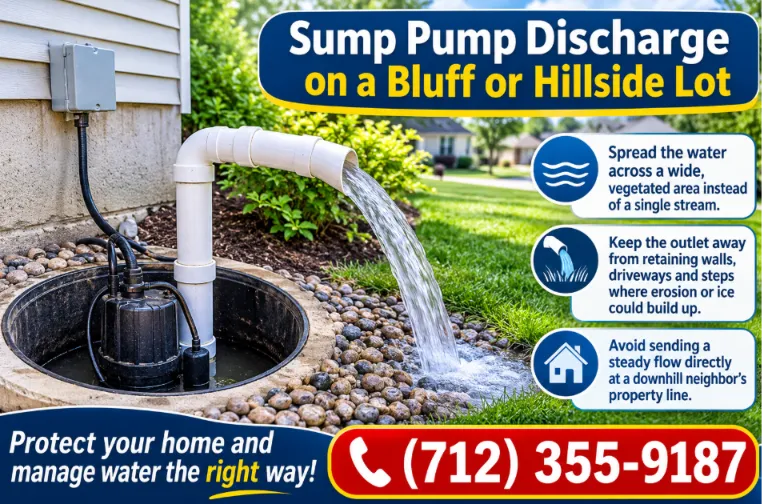
Sump Pump Discharge on a Bluff or Hillside Lot
Hillsides change the math. Gravity helps water move away from the house, but it also means your discharge can travel toward the homes below you. Neighborhoods built on the bluff, such as Fairmount Park, are a good example, since the area sits on the bluff top, according to the National Park Service documentation.
On a slope, aim to:
- Spread the water across a wide, vegetated area instead of a single concentrated stream.
- Keep the outlet away from retaining walls, driveways and steps where erosion or ice could build up.
- Avoid sending a steady flow directly at a downhill neighbor’s property line.
Because the Missouri River valley holds groundwater high in low areas, homes at the bottom of a slope often need a pump that runs more. Our article on sump pumps near the Missouri River explains why, and crawl space sump pump options cover homes without a basement.
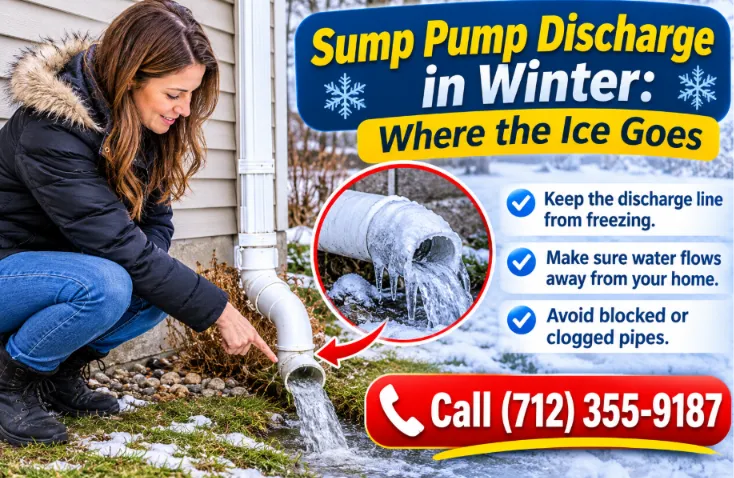
Sump Pump Discharge in Winter: Where the Ice Goes
Winter adds a second question to where should sump pump discharge: where will the water freeze? A line that empties onto a sidewalk, driveway or the street can build an ice patch that a neighbor, mail carrier or delivery driver slips on. Pick an outlet that sends water onto grass or a graded area and not across a walking path.
This post is about placement. If your line is already frozen or blocked, follow the steps in our guide to a frozen or clogged sump pump discharge line. For power loss during storms, review sump pump battery backup options.
Council Bluffs Rules to Check Before You Move the Pipe
Local rules decide what is allowed, and they differ from city to city. We have not found a published Council Bluffs rule we can quote here, so treat any storm drain, curb or sanitary connection as something to confirm first. A quick call to the City of Council Bluffs Building Division will tell you what applies to your address, and the City of Council Bluffs website is the place to start for other departments.
If your project involves new piping or changes to your plumbing, also read our guide to the Council Bluffs plumbing permit. For sewer questions, see who is responsible for the sewer line in Council Bluffs.
How to Check Your Own Sump Pump Discharge in 6 Steps
- Find where the discharge pipe leaves the house, usually through the rim joist.
- Follow the pipe outside and note where the water actually lands.
- Check that the end is several feet or more from the foundation and points downhill.
- Confirm the water does not reach a window well, septic field, neighbor’s lot, walkway or street.
- Pour a bucket of water into the sump pump pit and watch the outlet while the pump runs.
- Look for pooling, erosion, leaks at joints or water that flows back toward the house.
Need the discharge line moved or repaired?
We handle sump pump installation in Council Bluffs and sump pump repair in Council Bluffs.
Call (712) 355-9187When to Call a Plumber About Sump Pump Discharge
Call a licensed plumber if the discharge point is too close to the house, ends in a sewer or floor drain, floods a neighbor, or you cannot tell where the water goes. A plumber can reroute the line, add a longer run, fix the check valve and make sure the pump is sized for your pit. If the pump itself is failing, compare costs in our sump pump replacement cost guide. During active flooding, use our basement flooding first-hour checklist, and for after-hours help see emergency plumber in Council Bluffs.
Frequently Asked Questions About Sump Pump Discharge
Can a sump pump discharge into the street?
It depends on local rules, so check with the city first. Even where it is tolerated, a steady flow can freeze into ice on the pavement in winter, so a lawn outlet is usually the better choice.
How far from the house should the sump pump discharge?
Extension guides commonly recommend 10 to 20 feet when your lot allows it. The most important thing is that the water drains away from the foundation instead of soaking back in.
Can I connect my sump pump to a floor drain or sewer?
You should not. Extension services advise against pumping into a basement floor drain, and many Iowa cities prohibit sump pumps connected to the sanitary sewer. Ask the city about your property.
Can a sump pump discharge onto my neighbor’s yard?
You should avoid it. Extension guidance says sump water should not be directed onto a neighbor’s lot, and it can lead to disputes and damage.
Should I bury the sump pump discharge line?
Burying helps in some yards, but a buried line needs a steady downhill slope and a proper outlet or it can hold water and freeze. Have a plumber design it if you are unsure.
What if my sump pump discharge is too close to the house?
Extend the pipe with a downhill run and a splash block or diffuser. If the pump seems to run nonstop, have the line and check valve inspected.
This guide is general information, not a code or legal ruling. Discharge rules and soil conditions vary by property, so confirm requirements with the City of Council Bluffs and a licensed plumber before changing your system.